

How Reclaimed Slate Durability Holds Up Over Time
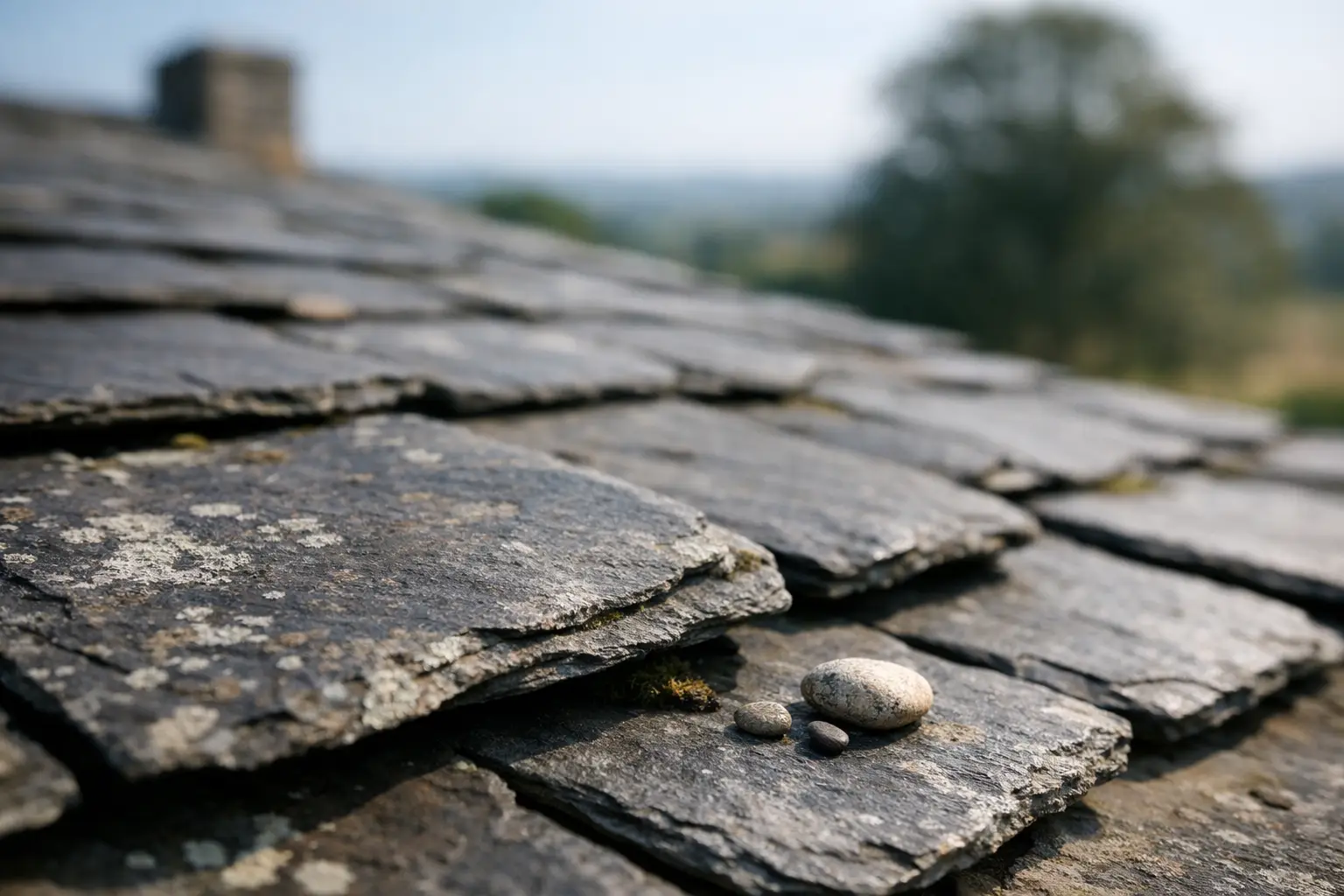
A reclaimed slate has already done the hardest part of its job: it has spent decades, and often well over a century, exposed to British rain, frost, wind and summer heat. That service history can be a strong indicator of reclaimed slate durability, but it is not a guarantee that every slate from an old roof is fit to be laid again. The difference lies in the slate itself, how it was removed, and how carefully it has been sorted before it reaches site.
For a repair to a period roof, durability is not just about avoiding a leak next winter. It is about finding a slate that will sit correctly with the existing covering, weather at a similar rate and retain the roof’s established character. For larger reroofing work, it is about creating a sound, consistent covering from materials with proven long-term performance.
What Reclaimed Slate Durability Really Means
Natural slate is a metamorphic stone formed under pressure over millions of years. Its defining quality is cleavage: the ability to split into thin, relatively flat sheets along its natural grain. A good roofing slate is dense, low in water absorption and able to resist repeated wetting and freezing without breaking down.
Many traditional Welsh and Burlington slates have earned their reputation because they possess these qualities in abundance. Properly selected slates from these sources can last for generations. In fact, it is common for a sound reclaimed slate to have considerable useful life remaining after it has been stripped from its first roof.
However, age alone does not make a reclaimed slate superior. Some roofs are stripped because the building is being altered or demolished, not because the slates have failed. Others are removed after years of poor maintenance, damaged fixings, unsuitable coatings or movement in the roof structure. Reclaimed material must therefore be judged slate by slate, rather than by its age or appearance in a stack.
The best indication of durability is proven service combined with careful inspection. A slate that has remained intact, flat and weather-tight through decades of exposure is usually a far safer proposition than an untested material of uncertain origin. But it still needs checking for hidden fractures, worn fixing holes and edge damage caused during removal.
Why Old Slates Can Still Offer Long Service
A slate roof is a system, and the slate is only one part of it. When a roof fails, the cause is often corroded nails, degraded mortar, failing flashings, damaged battens or poor detailing around valleys and abutments. The slates may remain perfectly serviceable.
This is why reclaimed slate is particularly valuable for conservation work. It allows roofers to retain or reinstate materials that are visually and technically appropriate for older properties. A well-matched reclaimed Welsh slate, for example, can blend into an existing roof in a way that a new, uniform slate may not. Variations in tone, texture, thickness and dressed edges are often part of the roof’s original character.
There is also a practical environmental benefit. Reusing a durable natural material avoids sending viable slates to landfill and reduces demand for newly quarried stone. That benefit only stands when the reclaimed slate is genuinely fit for further use. Sound sorting and honest grading are essential.
Assessing Reclaimed Slate Durability Before Installation
Professional selection starts before a slate is loaded onto a lorry or laid on a batten. A reputable supplier will inspect and sort reclaimed stock, but roofers and buyers should still understand what they are looking for, particularly where an exact size, thickness or colour match is needed.
The most useful checks include:
- Soundness: A slate should feel firm and dense, without obvious delamination, soft patches or layers beginning to separate.
- Flatness: Slight variation is normal in hand-dressed reclaimed slates, but pronounced twist, bowing or warping can prevent a close lap and make fixing difficult.
- Edges and corners: Small dressing marks may be acceptable, especially for repairs, while major breaks can reduce cover or create weak points.
- Fixing holes: Existing nail holes need to be sound and correctly positioned. Holes that are enlarged, split or too close to an edge can make secure fixing impossible.
- Thickness and size: Slates should be sorted to suit the roof gauge, headlap and existing courses. Mixing incompatible thicknesses can affect line, cover and weathering.
The traditional tap or ring test can provide a quick indication of condition. A clear, crisp note may suggest a sound slate, while a dull sound can point to a crack or internal weakness. It should not be treated as the only test, however. Thickness, surface condition and the way a slate is supported all influence the sound it makes.
Look closely at the face and underside as well. Fine surface marks are not automatically a problem, but visible cracks running from a nail hole, a corner or an edge deserve caution. A slate with signs of lamination can continue to split after laying, particularly through frost cycles. It is better set aside during sorting than discovered after the roof is complete.
The Factors That Shorten a Slate’s Working Life
Even excellent reclaimed slates can underperform if they are used incorrectly. The roof pitch is a major consideration. A slate that has performed well on a steep roof may not be suitable at a lower pitch where water drains more slowly and wind-driven rain has greater opportunity to track beneath the covering. Follow the appropriate pitch guidance for the slate size, headlap and exposure of the property.
Fixing choice matters just as much. Corroded ferrous nails are a familiar reason for slate loss on older roofs. Copper or stainless steel fixings are commonly selected for long-term work, subject to the roofing specification and local conditions. Nails should not be driven tight enough to restrain the slate rigidly. Slates need to sit securely while allowing for slight movement.
Poor handling is another avoidable cause of failure. Reclaimed slates may be durable stone, but edges can chip and corners can break if stacks are dropped, overfilled or moved carelessly. Store them on stable, level ground and keep different sizes and grades clearly separated. This saves time during laying and prevents sound repair slates being mixed with cut or damaged stock.
Compatibility with the rest of the roof should not be overlooked. New battens, breathable membrane, leadwork, ridge details and valley construction all need to support the performance of the finished covering. Reclaimed slates are not a shortcut around good roofing practice. They are a premium heritage material that deserves correct preparation and installation.
Matching Durability to the Job
For a small repair, the priority is usually a replacement slate that matches the existing roof in length, width, thickness, colour and texture. A visually similar slate that is substantially thicker can stand proud of neighbouring courses. One that is too thin may sit low or require unsuitable packing. Measure an intact slate from the roof where possible, including the exposed length, before ordering replacements.
For a full reroof, sorting becomes even more significant. Slates should be graded and laid with a considered approach to thickness and size. Heavier or larger slates may be appropriate at lower courses, while smaller slates can be used higher up where the gauge reduces. The exact arrangement depends on the roof design and available stock, but consistency across each course is what creates a neat, weather-tight finish.
A reclaimed slate supply may include minor variations because it is genuine recovered material, not a factory-finished product. That is often an advantage on traditional buildings. The trade-off is that it requires more care in selection and laying than a fully uniform modern product. For heritage projects, that extra attention is usually what delivers the right result.
Sourcing With Confidence
The quality of reclaimed slate depends heavily on the route it takes from the stripped roof to your site. Material that has been carefully recovered, stored and sorted is far more useful than mixed, ungraded slates with uncertain condition. Ask about origin, available sizes, average thickness, quantities and whether the stock is suited to repair work or a full roof covering.
For projects where continuity matters, it is sensible to allow for future maintenance. Keeping a small number of matching spare slates on site can make later storm repairs or alterations far easier. This is particularly worthwhile where the roof uses a distinctive Welsh, Burlington or regional stone slate that may be difficult to match several years from now.
ReclaimedRoofSlates.com supplies reclaimed roof materials for repairs, restoration work and larger roofing projects, with supporting fixings and accessories available to help complete the job properly. The right slate is not simply the one that looks closest from the ground. It is the one that is sound, correctly sized, properly fixed and capable of protecting the building for many years to come.
When reclaimed slates are selected on condition rather than assumption, their past service becomes a genuine advantage. A careful inspection, accurate measurements and sound roofing practice give old slate the opportunity to keep doing what it has done well for generations.

