

Matching Reclaimed Roof Slates Properly
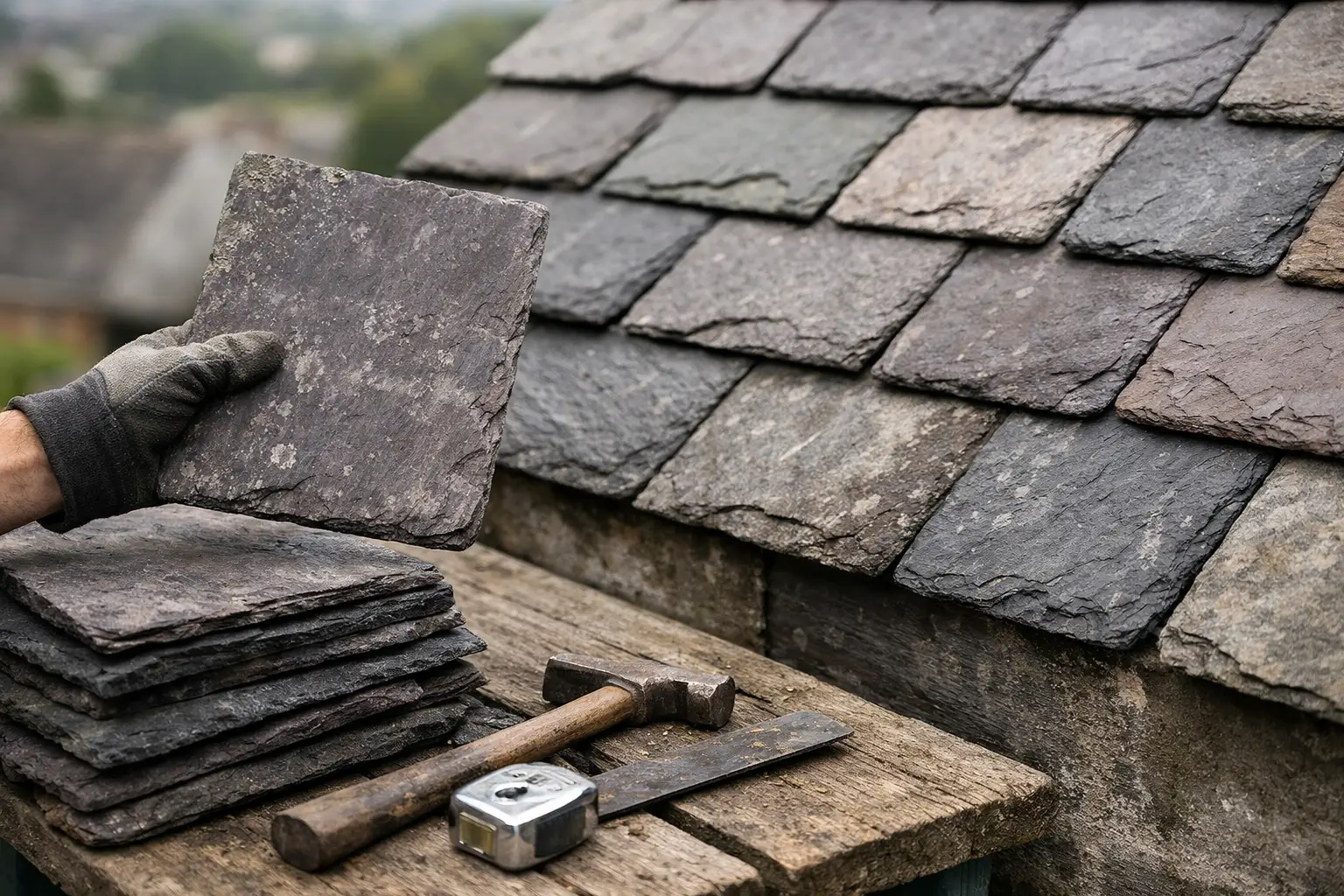
A roof repair can go wrong before the first slate is fixed if the replacement does not truly match what is already on the roof. Matching reclaimed roof slates is not just about finding something that looks close enough from ground level. On period properties, and even on more modest older homes, the wrong slate can stand out immediately, weather unevenly, and create avoidable problems for the roofer and the property owner.
When a roof has been repaired in stages over decades, there may already be a mix of materials in place. That makes careful identification even more important. A proper match needs to consider slate type, size, thickness, finish, hole position and the way the existing roof has aged in service.
Why matching reclaimed roof slates matters
A good match protects more than appearance. It helps preserve the laying pattern, the gauge, and the general balance of the roof. If the replacement slate is too thick, too thin or too different in texture, it can affect the way courses sit together and how water sheds across the surface.
On heritage and conservation work, visual continuity matters for obvious reasons. On standard repair work, it still matters because mismatched slates often make a repair look patchy and can reduce the overall finish of an otherwise sound job. For contractors, that usually means more time spent managing expectations. For homeowners, it can mean paying for a repair that still looks unfinished.
There is also a supply issue to consider. New slate is not always the right answer when only a small area needs replacing. Reclaimed materials often give the best chance of achieving a like-for-like result, especially where the original roof was laid in Welsh slate, Burlington slate or stone slate that has weathered over many years.
What to check before sourcing replacements
The first step is identifying what is already on the roof. That sounds straightforward, but many slates look similar from a distance. A proper check usually starts with one or two sample slates taken from the roof, ideally from an area that reflects the general field rather than an earlier repair.
Size is the obvious starting point, but it is only one part of the picture. Length and width must be measured accurately, and so must thickness. Some reclaimed slates vary slightly because they were originally dressed by hand or sorted on site. Even so, there will usually be a workable range that allows a consistent repair.
The slate type matters just as much. Welsh slates tend to have their own character, usually with a fine texture and reliable durability. Burlington slates are different again, often with distinctive colouring and a heavier presence. Yorkshire stone slates are a separate category altogether, with variable dimensions and a very different roof build-up. Treating these materials as interchangeable is where matching problems usually start.
Fixing details should not be overlooked. Hole position, headlap, and whether the slate has been centre-nailed or twice-nailed all affect compatibility. If the holes on the reclaimed replacement do not work with the existing setting out, extra labour follows and the repair may lose its neatness.
Matching reclaimed roof slates by appearance
Colour is usually the first thing clients notice, but colour alone can be misleading. Reclaimed slates change over time depending on exposure, pitch, location and the roof’s orientation. A north-facing slope can age differently from a south-facing one. Slates near chimneys or under trees may also weather in a particular way.
That is why a fresh reclaimed slate from the yard may appear slightly different at first glance yet still be the correct match once laid and exposed. The reverse is also true. A slate that looks similar when dry on the ground can become obviously wrong once fixed on the roof in wet weather.
Texture and edge finish are often better indicators than shade alone. Some slates have a flatter, cleaner look, while others show more riven texture or more variation across the face. Edge dressing can also give away a poor match. On a traditional roof, machine-cut edges among older hand-dressed slates can stand out sharply.
For this reason, sample matching is worth doing properly. A clear photo helps, but an actual sample slate is better. For larger repairs, it is sensible to confirm the match before the full quantity is delivered to site.
Thickness, weight and roof performance
One of the most common mistakes in matching reclaimed slates is focusing on plan size and ignoring thickness. Slate thickness affects coursing, lap, and how well the roof sits once the repair is complete. A thicker batch may cause proud courses. A thinner batch can leave dips or require awkward packing and adjustment.
Weight matters too, particularly where a roof structure has settled over time or where a localised repair sits among older battens and fixings. A small difference may not matter on every job, but on delicate or historic roofs, it can be part of the wider decision.
This is especially relevant with stone slates and heavier regional materials. They are not simply decorative choices. They belong to a specific roofing method, and the replacement needs to respect that method.
When an exact match is not possible
Sometimes the original slate is no longer available in a practical quantity, or the roof contains a mix of old repairs that make one exact match impossible. In that case, the best approach is usually to get as close as possible on the key technical points first, then manage the visual effect carefully.
For isolated repairs, roofers may be able to use the best-matched reclaimed slates in the most visible area and shuffle existing slates across less prominent parts of the slope. On larger areas, a blend from the same source can often produce a more natural result than a supposedly perfect but limited batch.
There is always a balance between authenticity, budget and availability. Clients should know that a reclaimed match is about compatibility, not artificial uniformity. Older roofs rarely look identical course by course, and in many cases that slight variation is part of their character.
Supply consistency and grading
Not all reclaimed slates on the market are sorted to the same standard. That matters because a repair is only as good as the consistency of the batch supplied. Slates should be checked for soundness, usable condition and reasonable consistency in the dimensions that matter for the job.
For trade buyers, reliable grading saves time on site. For homeowners arranging a repair, it reduces the risk of paying for labour while unsuitable slates are being rejected on the scaffold. A specialist supplier with broad stock is usually better placed to match by type, size and appearance than a general salvage source with mixed, unverified material.
This is where stock depth becomes valuable. A single odd slate may solve a one-off replacement, but many repairs need enough quantity to allow sorting, selection and waste. For larger restoration work, access to tonne-based orders or substantial batch quantities can be the difference between a coherent roof finish and a stop-start job.
Matching reclaimed roof slates for heritage work
On listed buildings and period properties, the standard for matching is usually higher. Planning conditions, conservation expectations and the character of the building all come into play. Here, reclaimed slates are often the most suitable route because they preserve the visual language of the roof.
That does not mean every heritage project needs the rarest or most expensive slate available. It means the replacement should respect the original material and method of construction. A competent match considers the roof as a whole, not just the damaged area.
In practice, that often means discussing the project early, using samples, and confirming whether the repair is localised or part of a wider programme. A supplier with specialist knowledge can help identify what is likely to work before material reaches site.
Getting the order right
When ordering reclaimed slates, clear information avoids wasted time. The useful details are slate type if known, exact size, approximate thickness, required quantity, and photos of both the roof and a sample slate. If there are known issues such as nail sickness, mixed batches or previous repairs, mention them from the outset.
It also helps to allow for a sensible overage. Reclaimed materials are selected for use, but roofing work still needs room for sorting and fitting. Trying to order the bare minimum on a matching job often leads to delays if the repair expands once the roof is opened up.
For buyers working on heritage and repair projects across Yorkshire, London and wider UK sites, practical support matters just as much as stock. ReclaimedRoofSlates.com focuses on that exact requirement – helping customers source compatible reclaimed slates and the supporting roofing materials needed to complete the job properly.
A well-matched repair should not draw attention to itself for the wrong reasons. If the slate is right in type, size, thickness and character, the finished roof usually speaks for itself.

