

Heritage Restoration Roofing Done Right
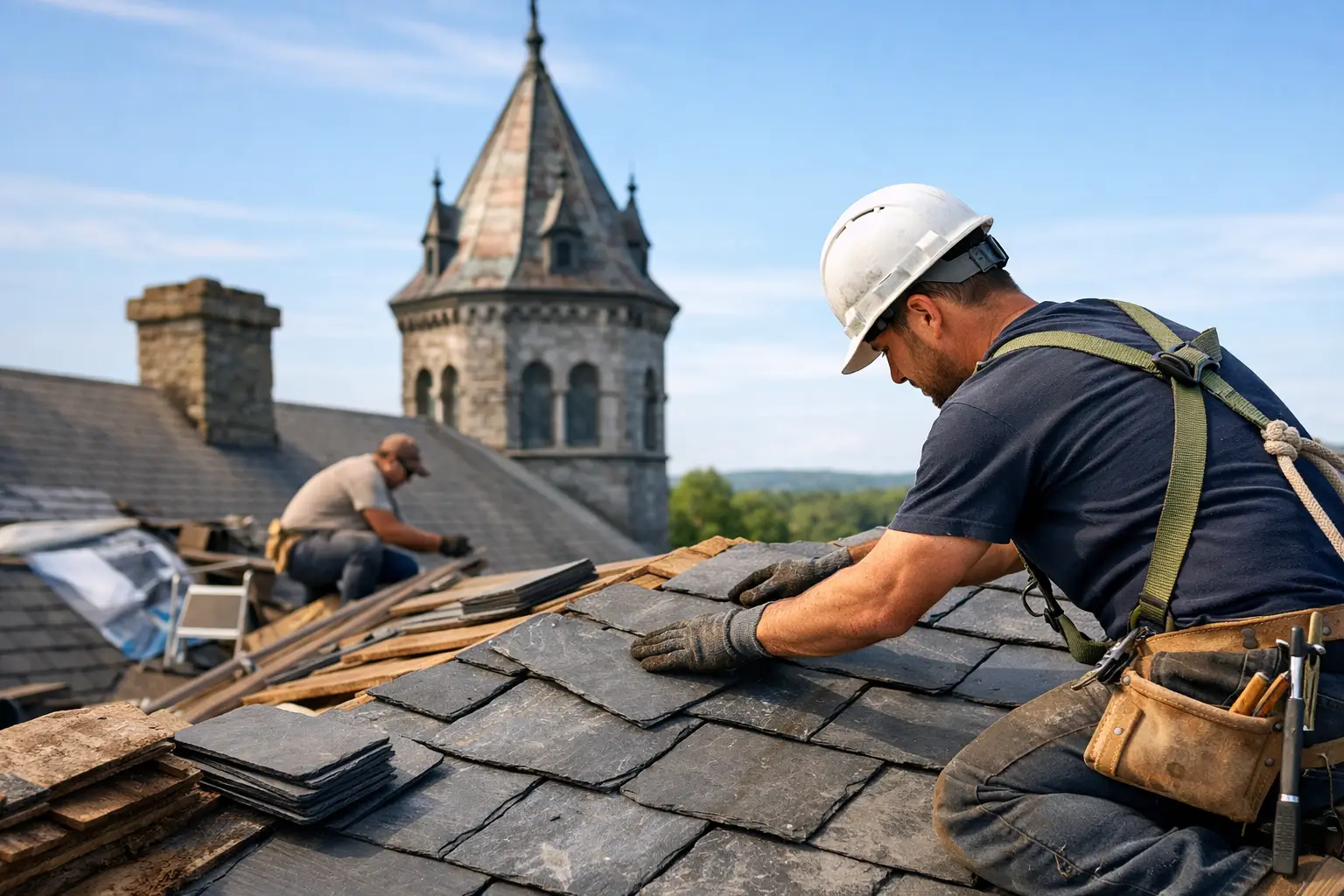
A mismatched patch repair stands out for years on a period roof. The wrong slate size, the wrong tile profile or a poor colour match can turn a straightforward repair into a visible compromise. That is why heritage restoration roofing starts with material accuracy, not guesswork.
Whether you are replacing a handful of storm-damaged slates or planning a full re-roof on a listed or traditional property, the roof needs to do more than keep out the weather. It needs to respect the building’s age, proportions and local character while delivering dependable performance. In practice, that means getting close to the original in type, size, thickness, texture and finish, and making sure the supporting products are right as well.
What heritage restoration roofing actually involves
Heritage restoration roofing is not just about using old-looking materials. It is about selecting roof coverings and accessories that are genuinely compatible with the building and the way it was originally roofed. On many period properties, that points to reclaimed slate or reclaimed clay tile rather than a modern substitute with a similar outline.
Compatibility matters because older roofs were often built around specific materials. Welsh slate, Burlington slate, Yorkshire stone slate and handmade clay tiles all behave differently. They vary in weight, thickness, lap requirements and appearance. Swap one for another without considering those differences and you can create issues with gauge, loading, detailing and visual consistency.
For contractors and renovators, the job is usually a balance of conservation standards, client budget and practical availability. Some projects require a very tight match for planning or listed building reasons. Others allow more flexibility, but still need a roof that looks right from the street and performs properly in exposed British weather.
Why reclaimed materials are often the best fit
New roofing materials have their place, but on heritage work reclaimed stock is often the closest match available. The surface weathering, edge character and tonal variation of reclaimed slates and tiles are difficult to replicate convincingly with new-made alternatives. On a roof that has aged over decades, that difference is obvious.
Reclaimed materials also solve a common repair problem. If only one slope or one section has failed, a full replacement may be unnecessary and expensive. A well-matched batch of reclaimed slates or tiles allows a targeted repair that preserves more of the original roof and avoids an obvious patch.
There is a sustainability benefit as well. Reusing serviceable slate and tile keeps quality materials in circulation and reduces waste. For many clients, that is not just a secondary advantage. It sits alongside authenticity as a reason to choose reclaimed stock.
That said, reclaimed does not mean suitable by default. Quality inspection matters. Slates and tiles need to be checked for condition, consistency and practical reusability. A mixed, poorly sorted load may look economical at first, but it can cost time on site and produce an uneven finish.
Matching slate and tile properly
The most common mistake in heritage work is reducing the match to one detail only. Colour alone is not enough. Nor is a rough width and length. A good match usually depends on several factors working together.
Size, thickness and coursing
Roof slates need to sit into the existing coursing without forcing irregular laps or awkward adjustments. Even small differences in length or width can cause problems across a repair area. Thickness matters too, especially where the repaired section meets older material. If the new batch sits proud or too flat, the repair will show.
Stone slates add another layer of complexity because they are often laid in diminishing courses. On those roofs, selection needs to be especially careful. Random substitution can disrupt the whole appearance of the slope.
Texture, edge detail and weathering
A smooth, square-edged replacement can look out of place among older slates with natural variation and softened edges. The same applies to clay tiles. Handmade and machine-made products differ in more than appearance. Their surface texture and subtle irregularity are part of the roof’s character.
Weathering also affects colour. A reclaimed slate that looks slightly different in the yard may settle more naturally once laid, but only if the base material is genuinely similar. If the geology or manufacturing type is wrong, the mismatch tends to remain obvious.
Fittings and finishing details
Heritage restoration roofing is rarely just about field slates or tiles. Ridge tiles, bonnet hips, valley tiles, lead, fixings and underlay details all influence the final result. You can source the correct slates and still undermine the job with an unsuitable ridge profile or poor leadwork.
That is why experienced buyers tend to look at the whole roof package. Getting the main covering right is essential, but so is making sure the supporting materials suit the job and work together on site.
Where projects tend to go wrong
The pressure on many restoration jobs is simple enough – find a match quickly, keep the cost under control and keep the programme moving. The problem is that speed can lead to poor substitution.
One issue is assuming that any reclaimed slate of a similar size will do. In reality, origin and quality matter. Welsh and Burlington slates, for example, are not interchangeable just because their dimensions are close. The visual result and long-term behaviour may differ.
Another problem is underestimating quantity. Heritage roofs often involve breakage allowances, selection time and wastage that need to be built into the order. If stock is sourced in small batches from multiple places, consistency becomes harder to maintain.
There is also the temptation to mix modern accessories into a traditional roof without thinking through the finish. Sometimes that is perfectly acceptable. Sometimes it jars badly. It depends on the building, the visibility of the detail and whether the priority is strict restoration or practical repair.
Heritage restoration roofing for repairs vs full reroofing
Not every project needs the same approach. A localised repair after slipped slates or storm damage usually calls for the closest possible match to preserve continuity. In that case, buying a modest quantity of reclaimed materials that align with the existing roof is often the most sensible route.
A full reroof raises broader questions. If much of the original covering has failed, the client may need to decide whether to salvage and relay usable material, blend reclaimed stock into the roof, or replace the whole covering with a heritage-appropriate product. Budget, planning constraints and the condition of the structure all come into play.
For listed buildings or architect-led restorations, documentation and provenance can matter more than on a standard domestic repair. For a non-listed period property, the priority may be visual compatibility and durability rather than exact historical replication. Both are valid, but they lead to different buying decisions.
Choosing a supplier for heritage roofing materials
A specialist supplier should do more than hold stock. They should understand what they are supplying, how it is used and what a credible match looks like. That is especially important when customers are trying to identify hard-to-find replacements from photographs, sample measurements or site descriptions.
Depth of inventory matters because heritage work is rarely straightforward. One customer may need a single replacement ridge tile. Another may need tonne quantities of reclaimed slate for a complete reroof. In both cases, confidence comes from dealing with a supplier that can offer inspected stock, practical guidance and the supporting roofing materials needed to complete the job properly.
This is where a specialist reclaimed merchant adds real value. Instead of piecing together slates from one source, lead from another and fittings from a third, buyers can secure a more coherent specification and avoid delays caused by product mismatch.
When exact matching is not possible
Sometimes the perfect match simply is not available. Certain slate sizes, tile patterns or aged fittings can be difficult to source in volume. When that happens, the best outcome usually comes from being honest about the compromise and managing it carefully.
That might mean using the closest reclaimed alternative on a less visible elevation, blending salvaged original material with replacement stock, or reroofing a full slope to maintain a consistent appearance. None of those options is ideal in every case, but they are often better than forcing a poor patch repair into a prominent position.
If the project is sensitive, sample checking before ordering in quantity is worth the effort. It saves arguments later and helps align expectations between contractor, owner and conservation stakeholders.
A practical standard worth aiming for
Good heritage roofing work should not draw attention for the wrong reasons. The roof should sit naturally on the building, perform properly through winter and look as though the repair or restoration belongs there. That only happens when the materials are chosen with care.
For period property work, the right reclaimed slate, tile and fittings are not an afterthought. They are the job. If you start with sound matching, inspected stock and a supplier that understands heritage roofs, the finished result has a far better chance of looking right and lasting well.

