

A Guide to Roof Slate Grading for Repairs
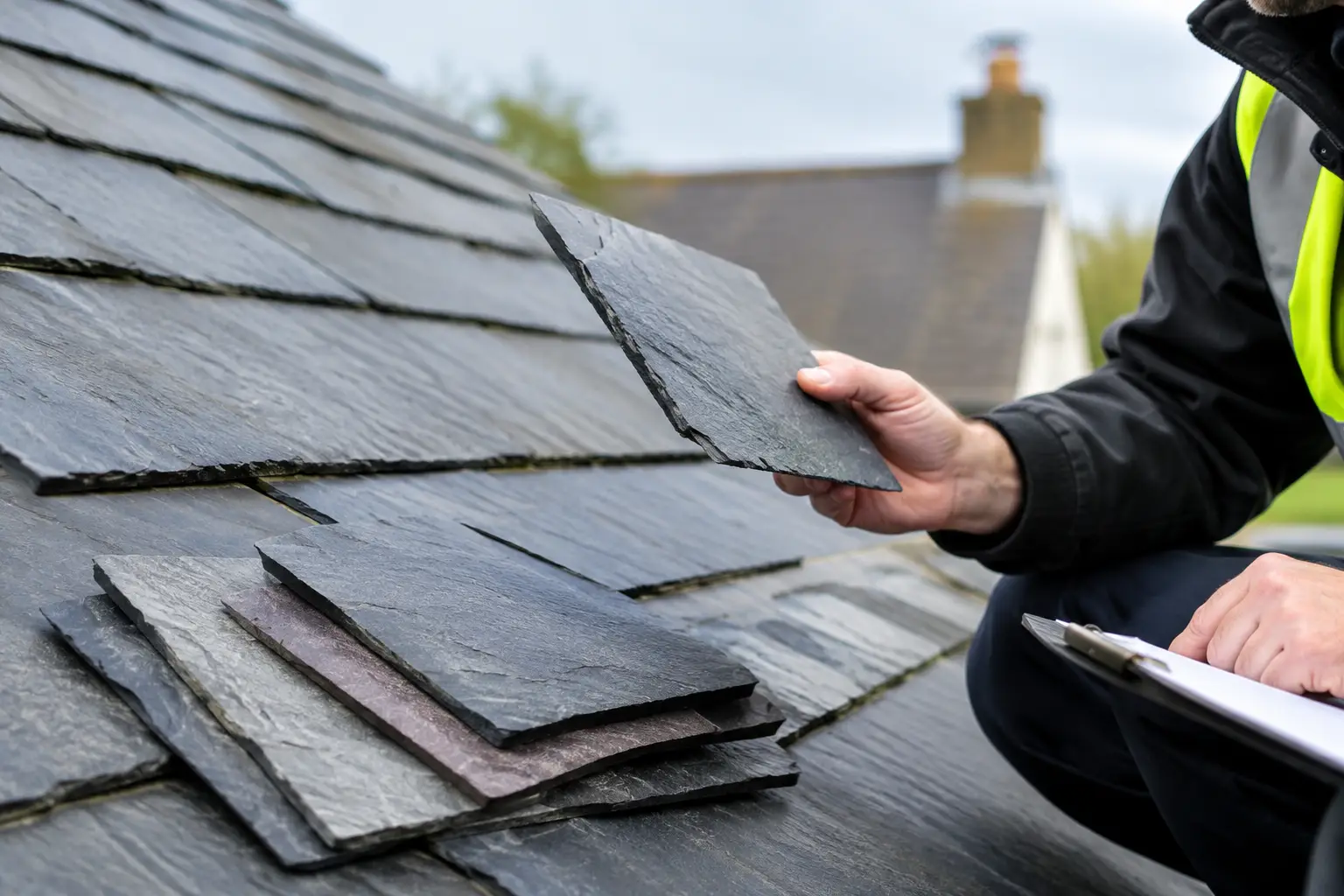
A roof repair can be spoiled by one poor slate. It may be the wrong thickness, sit proud of the surrounding courses, weather differently or crack when fixed. This guide to roof slate grading explains how reclaimed slates are assessed, sorted and specified so that replacement work looks right and performs properly for the long term.
For period properties in particular, grading is not simply a matter of finding the cleanest-looking slate. The right material must suit the roof’s existing slate type, coursing, pitch, fixing method and visual character. A reliable reclaimed slate supplier should help establish those details before material is selected.
What roof slate grading actually means
Roof slate grading is the process of sorting slates according to their suitability for use. With new natural slate, product grades may refer to geological testing, durability classifications and declared performance. With reclaimed slate, the process is more hands-on: it centres on condition, dimensions, thickness, soundness and consistency within the batch.
There is no single universal reclaimed-slate grade that every merchant uses in precisely the same way. Descriptions such as first quality, roofing grade or second-hand slate can be useful, but they should not replace clear information about the material itself. Ask what has been inspected, how the slates have been sorted and whether the stated sizes are nominal or actual.
A sound reclaimed slate has already demonstrated something valuable – it has survived decades, often well over a century, on a roof. That does not mean every recovered slate is fit to be used again. Careful grading separates reusable material from slates with hidden weakness, excessive wear or dimensions that make them unsuitable for a particular roof.
The key checks in a guide to roof slate grading
Slate type and geological source
Start by identifying the slate already on the roof. Welsh slate, Burlington slate, Westmorland slate and imported natural slates can differ in colour, texture, cleft, thickness and weathering pattern. A close match is particularly important on prominent elevations, traditional buildings and repair areas that meet original work.
Colour alone is not enough. Two grey slates can have very different surfaces and thicknesses, while a blue-grey slate can mellow over time in a way that a fresh replacement will not. Reclaimed material usually offers the best chance of achieving a settled, convincing match, but only when it is selected from a compatible source.
Length, width and coursing
Slate size determines where it can be used. Length affects the required headlap and gauge, while width influences bond and the arrangement of each course. A replacement slate that is even slightly too short may compromise lap; one that is too narrow or wide can interrupt the roof’s pattern.
Many older roofs use random-width slates laid in diminishing courses. These roofs require more than a bundle of similarly sized replacements. The material must be sorted into suitable lengths and widths, then allocated to the correct part of the slope. The largest slates normally sit at the eaves, with smaller slates progressing towards the ridge.
When ordering, measure several existing slates rather than relying on a single sample. Record the exposed length, full length, width range and thickness. If the roof has been repaired before, check that you are measuring original material rather than later substitutions.
Thickness and weight
Thickness is one of the most overlooked parts of slate grading. A thin slate fitted among heavier original slates may look recessed and can be more vulnerable to breakage. A thick replacement can stand proud, affect the lie of adjacent slates and make fixing difficult.
Thickness also affects roof loading. This matters on traditional rafters and where a large area is being recovered rather than locally repaired. Do not assume that a heavier slate is automatically better. The objective is a slate that is sound and appropriate for the existing roof structure, pitch and detail.
A good batch will be sorted into reasonably compatible thicknesses. Natural variation is expected, especially with hand-cleft reclaimed Welsh or Cumbrian slates, but excessive variation should be managed rather than ignored.
Surface condition and delamination
Examine both faces and all edges. Surface weathering can be entirely normal and often desirable on reclaimed slate. The concern is structural deterioration: laminations lifting apart, deep fractures, soft patches, pronounced scaling or cracking around nail holes.
Delamination is a particular warning sign. Slate is formed in layers, but those layers should remain tightly bound. If flakes lift easily from the surface or the edges show repeated splitting, the slate may not withstand handling and future freeze-thaw cycles.
A clear ringing sound when lightly tapped is often used as a quick check for soundness. It can be helpful, but it is not a complete test. Dirt, moisture, thickness and the way the slate is supported can alter the sound. Visual inspection, edge condition and experienced handling remain just as valuable.
Nail holes and fixability
Reclaimed slates frequently have existing fixing holes, which can be useful where they remain clean, correctly positioned and free from cracking. Holes that are elongated, too close to the head, badly chipped or surrounded by fractures need careful judgement.
A slate may be redrilled where its dimensions allow and the new hole leaves sufficient strength around the fixing point. However, redrilling reduces usable head length and can make a slate unsuitable for the intended gauge. It should never be treated as an automatic solution for damaged holes.
For repairs, the fixing approach matters as much as the slate. Copper, stainless steel or galvanised fixings should be chosen to suit the roof specification and local exposure. A sound reclaimed slate can still fail early if it is fixed incorrectly or forced tight against uneven surrounding courses.
Sorting reclaimed slates for the job
The best sorting method depends on whether the work is a small repair, a full slope recovery or a heritage restoration. For a handful of slipped or broken slates, the priority is an accurate visual and dimensional match. For larger work, the priority shifts to a consistent batch that can be laid efficiently while maintaining the intended roof pattern.
Before installation, slates should be separated by length, width and thickness. Any doubtful pieces should be set aside rather than mixed into the main stack. This gives the roofer enough control to place stronger, more consistent slates in exposed areas and retain awkward but usable pieces for cuts or less prominent positions where appropriate.
A useful grading record should state more than a broad product name. For a sizeable order, it should cover:
- slate type or known origin where available;
- usable length and width range;
- approximate thickness range;
- condition and level of sorting carried out;
- quantity, usually by piece count, square coverage or tonne.
This information makes it easier to compare quotations fairly. Two tonne-based offers may represent very different numbers of usable slates if their average size, thickness and breakage allowance are not comparable.
Match the grade to the roof, not just the budget
The cheapest reclaimed slate is rarely the best value if it requires excessive sorting, produces high waste or leaves an obvious mismatch on a visible slope. Conversely, premium, highly uniform material may be unnecessary for a modest rear elevation where the existing roof is already varied and weathered.
Roof pitch is central to the decision. Lower pitches require adequate slate length and headlap to resist wind-driven rain. Exposure also matters. A roof in an open, elevated location needs careful attention to fixing, lap and slate condition, whereas a sheltered repair may allow more flexibility in appearance.
Listed buildings and conservation-area properties bring another consideration: authenticity. Planning conditions or conservation officers may expect a close match in material, size and finish. Reclaimed Welsh or Burlington slate can be the right choice because it preserves the roof’s established character, but the individual slates still need grading for safe reuse.
Questions to ask before buying reclaimed slate
A specialist supplier should be able to discuss the batch in practical terms. Ask whether the slates have been hand-sorted, whether they are supplied with old holes or redrilled, and what range of sizes and thicknesses is available. For a repair, provide photographs alongside measurements and a sample where possible.
Allow a sensible margin for breakages, cuts and final selection. The exact allowance depends on the condition of the roof, the complexity of valleys and abutments, and whether the work involves random-width coursing. A roofer familiar with traditional slate work can advise on the quantity needed once the roof has been measured properly.
At ReclaimedRoofSlates.com, the value of reclaimed material lies in more than its age or appearance. The right slate is one that has been inspected, sorted to suit the work and supplied with enough supporting detail for the roofer to lay it with confidence.
A well-graded batch gives a repair its best chance of disappearing into the roof rather than drawing attention to itself. Take the time to measure the existing slates, assess the roof’s construction and choose material on condition as well as colour – that is how reclaimed slate earns another long service life.

