

How to Replace Broken Roof Slates
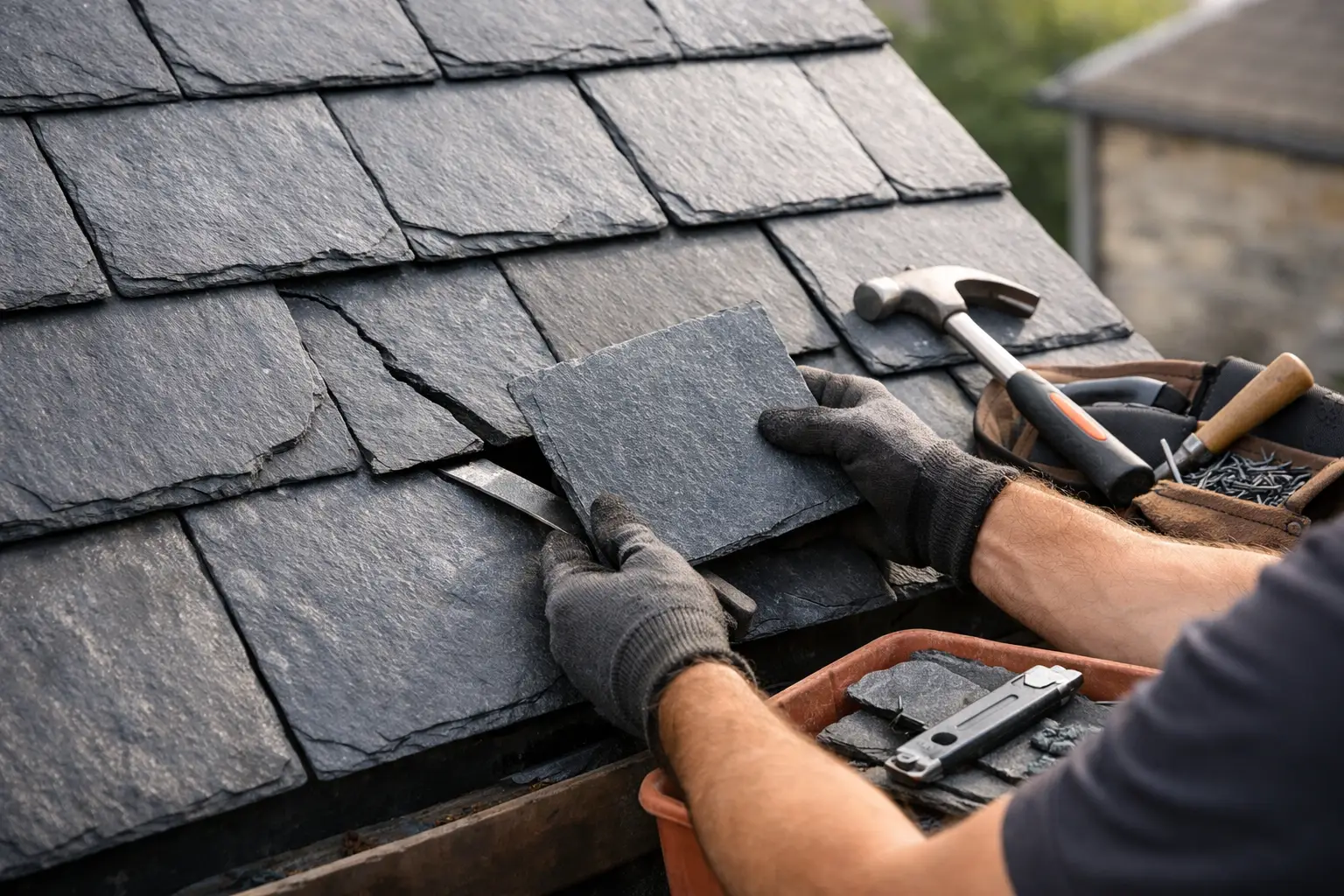
A cracked slate rarely stays a small problem for long. Once a slate slips, breaks or loses its fixing, wind-driven rain can get beneath the covering, battens can start to suffer, and matching the repair becomes harder the longer it is left. If you need to know how to replace broken roof slates, the job itself is only part of it. The real difference between a sound repair and a poor one usually comes down to safe access, the right size and type of replacement slate, and using a fixing method that suits the roof.
For straightforward isolated damage, replacing a single slate is often a practical repair. For widespread slipping, heavy nail fatigue, failing battens or signs of underlay deterioration, a patch repair may only buy time. That matters especially on period properties, where the wrong slate can stand out immediately and the wrong repair method can shorten the life of surrounding materials.
Before you replace broken roof slates
Start by checking whether the problem is genuinely limited to one or two slates. From ground level, look for slipped pieces, fresh break lines, uneven courses and any obvious difference in slate thickness where earlier repairs may have been carried out with mismatched materials. Inside the loft, look for staining, damp timbers or daylight showing through.
The next step is identification. Slate repairs go wrong when the replacement is chosen by colour alone. You need to match length, width, thickness, edge detail and hole position as closely as possible. On older roofs, reclaimed slates are often the best route because they are more likely to sit properly within the existing coursing and maintain the character of the roof slope. Welsh, Burlington and Yorkshire stone slates all behave differently on the roof, and a modern substitute may look acceptable at first glance but still create problems with gauge, lap or appearance.
If the roof is steep, high, difficult to access or close to a public area, treat it as a professional roofing job rather than a quick DIY task. Working from a ladder alone is not suitable for most slate replacement work. Safe scaffolding or properly managed roof access is usually the right starting point.
Tools and materials for replacing roof slates
For a typical slate repair, roofers will usually work with a slate ripper, slate hammer, a replacement slate, copper or aluminium tingles, and suitable fixings. On some repairs, especially where access allows and adjoining slates can be carefully lifted, a traditional nailed fixing may be possible. In many single-slate repairs, a tingle is used because it allows the new slate to be secured without dismantling a larger section of the roof.
Material quality matters here. A replacement slate should not just fit the opening – it should also match the roof’s exposure, pitch and detailing. The fixing metal matters too. Copper is widely used because it offers long-term corrosion resistance and works well with slate. Cheap or unsuitable fixings can fail early and create another call-back.
How to replace broken roof slates step by step
First remove the damaged slate. This is usually done with a slate ripper slid up beneath the broken piece to catch and cut or pull the old nails. Take your time. If you force the tool, you can crack the neighbouring slates and turn one repair into three.
Once the fixings are released, slide the broken slate out. Check the battens beneath if you can. If the batten is split, rotten or badly worn where the slate was fixed, the repair may need to go further than replacing the slate itself. There is little point fitting a sound reclaimed slate onto a failing base.
Offer up the replacement slate and make sure the size is correct. It should sit flush within the course, align with adjacent margins and maintain the same headlap as the surrounding slates. If it is too thick, it can rock and sit proud. If it is too thin, it may leave an uneven finish and become vulnerable under wind load.
If you are using a tingle, fix the tingle to the batten below the slate position using a non-ferrous nail. Then slide the replacement slate into place so it sits over the tingle. Fold the lower end of the tingle up neatly over the tail of the slate to secure it. The finished repair should hold the slate firmly without drawing attention to itself from ground level.
Where a nailed repair is possible, the replacement slate is holed correctly and fixed in line with the existing slating pattern using appropriate non-ferrous nails. This approach can be neater, but it depends on access and the condition of surrounding slates. On fragile or aged roofs, disturbing too much of the existing covering can cause more breakage.
Matching reclaimed slates properly
This is where many repairs succeed or fail. A roof slate is not a decorative tile that can simply be swapped for something similar-looking. Even small differences in width or thickness affect coursing, lap and how water sheds across the roof.
On heritage and period roofs, reclaimed slates are often the correct choice because they offer a closer match in weathering, texture and finish. That is particularly useful where the repaired area is visible from the roadside or where planning and conservation considerations make material authenticity more important. A good reclaimed slate should be sorted and inspected, not simply pulled from a stack and guessed at.
If you are sourcing replacement slates for a patch repair, measure more than one existing slate. Roofs are not always perfectly consistent, particularly on older properties. It is sensible to check whether previous repairs have introduced mixed sizes. A dependable stockist with a broad reclaimed range can usually help narrow down the right type rather than selling on colour alone.
Common mistakes when replacing broken roof slates
The first mistake is assuming the broken slate is the only issue. Slipped slates can be a symptom of nail sickness, which means the fixings across a wider area may be reaching the end of their life. Replace one slate today, and another may slip next month.
The second is using the wrong replacement material. A slate that is too short affects lap. One that is too narrow alters the side joints. One that is too thick can lift the adjacent slate tails. These are not cosmetic details – they affect weather tightness.
The third is poor fixing practice. Face-fixing through the exposed lower section of a slate might look like a quick answer, but it is usually a compromise and often the wrong one for a visible roof slope. Likewise, relying on mastics as the main means of support is not a proper substitute for mechanical fixing.
Finally, there is access. Many roof leaks get worse because someone tried to carry out a quick repair without proper edge protection or stable working conditions. Slate is durable on the roof, but brittle underfoot.
When a single slate repair is not enough
Sometimes replacing broken roof slates is the right repair. Sometimes it only masks a larger problem. If several slates have slipped in the same area, if the roof is showing widespread repair patches, or if the battens and fixings are deteriorating, it may be more cost-effective to plan a wider strip and re-slate repair rather than dealing with one piece at a time.
That is also true where matching becomes difficult. If a roof has been repaired repeatedly with mixed slates over the years, a more considered approach may give a better visual and technical result. For contractors and renovators, it often makes sense to source enough matching reclaimed material in one go so the repair can be completed consistently rather than piecemeal.
A specialist supplier with strong stock depth can make a real difference here. For hard-to-match repairs, especially on older roofs, access to reclaimed Welsh slates, Burlington slates or other heritage-compatible materials can save time on site and avoid a visibly patchy finish.
Final checks after the repair
Once the replacement slate is fixed, inspect the surrounding area carefully. Make sure neighbouring slates have not been cracked during the work and that the repaired slate sits correctly in plane with the rest of the roof. If possible, check the repair again after the next period of heavy rain or high wind.
A good slate repair should be quiet, accurate and hard to spot. If the slate matches, the fixing is sound and the underlying roof structure is still in serviceable condition, a single replacement can extend the life of the roof without disturbing more of the covering than necessary. On any roof where age, heritage detail or matching is a concern, taking a bit longer to source the right reclaimed slate is usually time well spent.

