

Repairing Period Property Roofs Properly
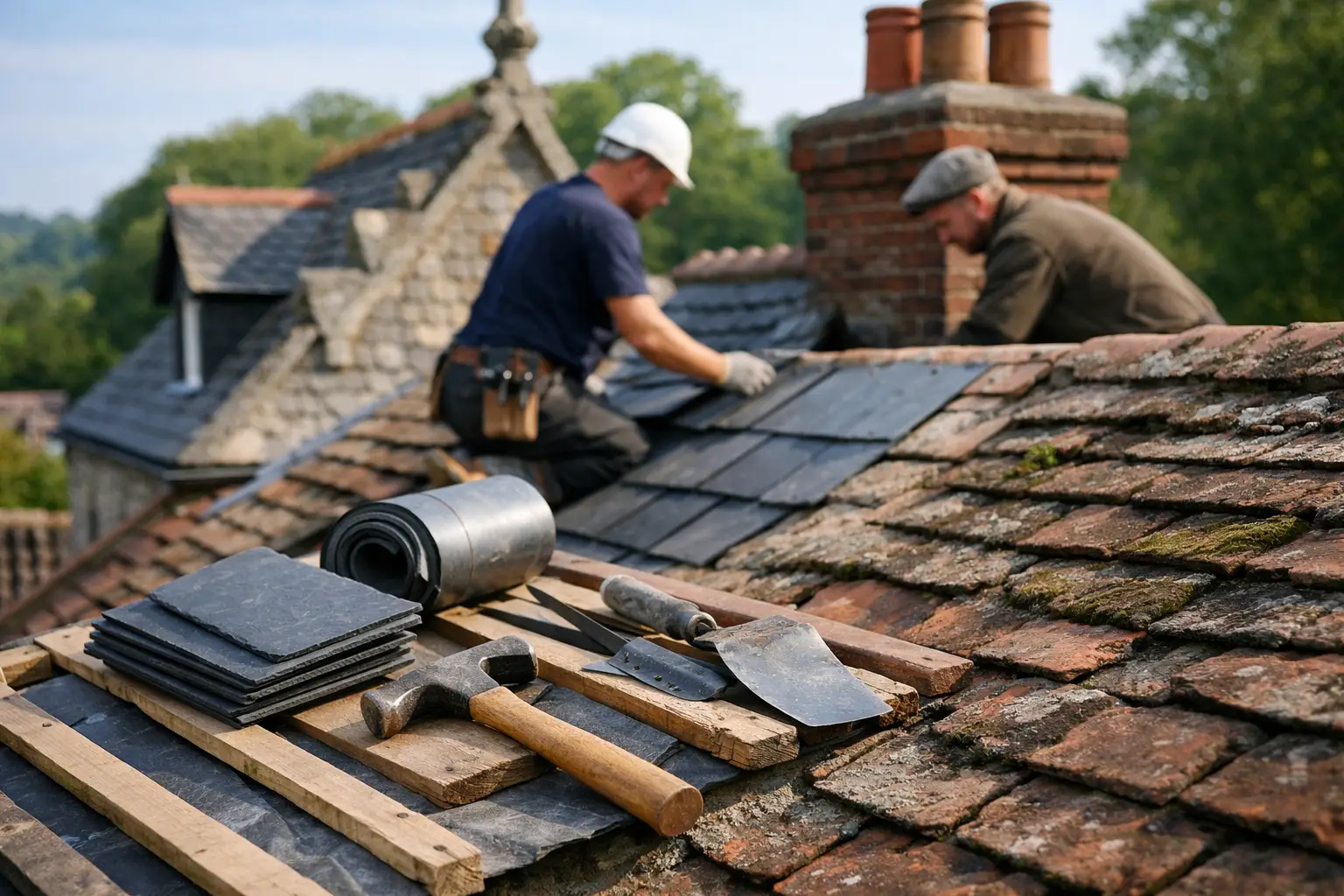
A slipped slate on a Victorian terrace or a patch of failed tiles on a stone cottage rarely stays a small job for long. Water finds its way in, fixings continue to fail, and what looked like a local repair can expose wider issues with underlay, battens, flashings or previous poor workmanship. That is why repairing period property roofs needs a different standard of decision-making from a straightforward modern reroof. The aim is not just to make the roof watertight again. It is to keep the building looking right, performing properly and retaining the character that made it worth preserving in the first place.
Why repairing period property roofs is rarely a like-for-like job
Older roofs were built with materials and methods that do not always match modern stock or modern roofing practice. Natural slates vary in size, thickness and weathering. Clay tiles can differ in nib position, camber and colour even when they look similar from the ground. Stone slates are especially irregular and rely on graded courses that need careful sorting. On top of that, many period roofs have already had decades of piecemeal repairs, so one slope may contain a mix of original and later materials.
That matters because a poor visual or technical match is obvious very quickly. New machine-made tiles on an aged handmade clay roof can look out of place from the street. Slates that are too thick, too thin or wrongly sized can affect lap, gauge and loading. A repair that ignores the existing roof build-up may solve one leak but create another around abutments, valleys or ridges.
In practice, the best repairs begin with identifying exactly what is already there. That means more than calling a slate a slate. Welsh, Burlington and Yorkshire stone each behave differently and suit different roof pitches and detailing. The same applies to classic clay products such as Rosemary tiles and associated fittings like ridge tiles and valley tiles. Getting the product right at the start saves time on site and avoids expensive compromises later.
Start with diagnosis, not just replacement
A period roof should be inspected as a roof system, not as a collection of isolated defects. A few broken slates may be the visible symptom of nail fatigue, storm movement, failed leadwork or decayed battens. Moss build-up may point to drainage problems. Damp staining internally may come from a flashing issue rather than the covering itself.
For contractors and property owners alike, the useful question is this: is the failure local, or is it evidence of broader decline? If the surrounding slates or tiles remain sound, a targeted repair using matching reclaimed material is often the right call. If fixings are failing across whole elevations, patching only the obvious breakages can become false economy.
This is where experience with reclaimed stock becomes valuable. On many period properties, a localised repair is perfectly viable if you can source enough compatible material in the right size, thickness and appearance. If you cannot, the temptation is to fit the nearest modern equivalent. That may keep weather out temporarily, but it can also undermine both the appearance and performance of the roof.
Matching materials is the job, not an extra
The success of a repair usually comes down to how well the replacement material matches the original roof. With slates, that means looking at length, width, thickness, edge character, hole position and weathered face. With clay and concrete heritage tiles, profile, nib location, gauge and surface finish all matter. On period properties, colour matching is only part of the picture. Texture and age are just as important.
Reclaimed materials are often the best route because they offer the visual continuity modern products cannot. A reclaimed Welsh slate repair on an existing Welsh slate roof sits more naturally than a bright new imported slate. Reclaimed clay tiles can blend into older roofs without the stark contrast that comes with fresh production batches. For listed buildings and conservation-sensitive projects, that is often essential rather than preferable.
There is a practical side as well. Reclaimed stock that has been sorted and checked gives roofers a better chance of installing repairs efficiently, especially where exact dimensions and consistent batches are needed. For larger repair programmes or partial reroofs, access to volume matters too. There is a big difference between finding a handful of salvage pieces and securing enough matching slates or tiles to complete the work properly.
The details that often cause the leak
Roof coverings get most of the attention, but period roof repairs often succeed or fail at the junctions. Lead flashings, soakers, valleys, ridge bedding and verge details take a lot of weather exposure, and they are common failure points on older properties. Replacing a few cracked slates while leaving split leadwork in place rarely solves the problem for long.
Lead in particular needs careful handling on heritage roofs. Correct code selection, jointing and allowance for thermal movement matter. Too often, leaks around chimneys and abutments are blamed on the slates or tiles when the actual issue is tired flashing or poor previous patching. The same goes for valleys. A valley repair needs the right valley tiles or lead arrangement to suit the roof covering and pitch.
Supporting components should not be treated as secondary. Battens, breathable membranes where appropriate, fixings, sealants and ridge systems all need to be compatible with the repair strategy. On some older roofs, retaining traditional detailing is the correct approach. On others, discreet upgrades in the background can improve durability without changing the roof’s appearance. It depends on the building, its status and the condition of the existing roof.
When to repair and when to reroof
This is the question most owners ask, and there is no honest one-size-fits-all answer. If the roof covering is largely sound and the failures are isolated, a well-matched repair makes sense. It preserves original material, controls cost and avoids unnecessary disturbance to the building. This is often the best route after storm damage or localised breakage.
If failures are widespread, however, repeated patching can become expensive and unreliable. A roof with extensive nail sickness, slipping across multiple slopes, significant batten decay or long-term water ingress may need more than sectional attention. In those cases, salvaging reusable original material and supplementing it with reclaimed stock for a more comprehensive reroof can be the better investment.
For heritage work, the decision should not be driven by the easiest product to source. It should be driven by what gives the building the right appearance and the roof the right service life. Sometimes that means sourcing one hard-to-find slate to save an elevation. Sometimes it means planning a full replacement with carefully matched reclaimed materials and all the correct ancillary products.
Sourcing for consistency, not just convenience
Anyone can claim to have matching slates or tiles. The real test is whether the material supplied is genuinely suitable in quantity, quality and consistency. Trade buyers know the risk of mixed salvage batches that arrive with wide variation in thickness, excessive breakage or sizes that do not tally with the job. Homeowners usually discover the same issue only when the roofer starts rejecting half the load on site.
A specialist supplier reduces that risk by understanding the roofing product rather than simply moving stock. That means identifying slate type properly, checking reclaimed materials, and helping match associated items such as ridge tiles, valley tiles, lead, fixings and day-to-day roofing essentials. For period work, that joined-up supply approach matters because delays and mismatches quickly turn small repairs into drawn-out projects.
For projects in Leeds, West Yorkshire, London and across the wider UK, reliable access to reclaimed heritage roofing products can make the difference between a repair that blends and one that stands out for the wrong reasons. ReclaimedRoofSlates.com is built around exactly that requirement – helping customers source authentic reclaimed slates, heritage tiles and supporting materials with the depth of stock these jobs often demand.
What good repair work looks like on a period roof
A proper repair should be hard to spot once weathered in. The courses should run true, the replacement pieces should sit naturally within the roof, and the detailing should respect the original character of the property. More importantly, the repair should address the cause of failure, not just the visible symptom.
That usually means taking a measured approach. Reuse sound original materials where possible. Introduce reclaimed replacements that match in size and character. Renew flashings or valleys if they are part of the problem. Check the supporting structure and fixings before closing up the work. And avoid over-modernising visible details simply because those products are easier to get hold of.
Period buildings are unforgiving of shortcuts. A repair that looks acceptable on a newer roof can look jarring on a Georgian townhouse, an Edwardian villa or a traditional stone property. The roof is one of the building’s most visible features, and once the wrong material is laid, it tends to announce itself immediately.
The best approach is practical and disciplined: identify the existing roof correctly, match the replacement material properly, and treat the detail work with the same care as the covering itself. If you get those three things right, repairing a period roof is not just about stopping a leak. It is about keeping the building honest for the next round of weather.

