

Roofing Circular Economy for Lasting Roofs
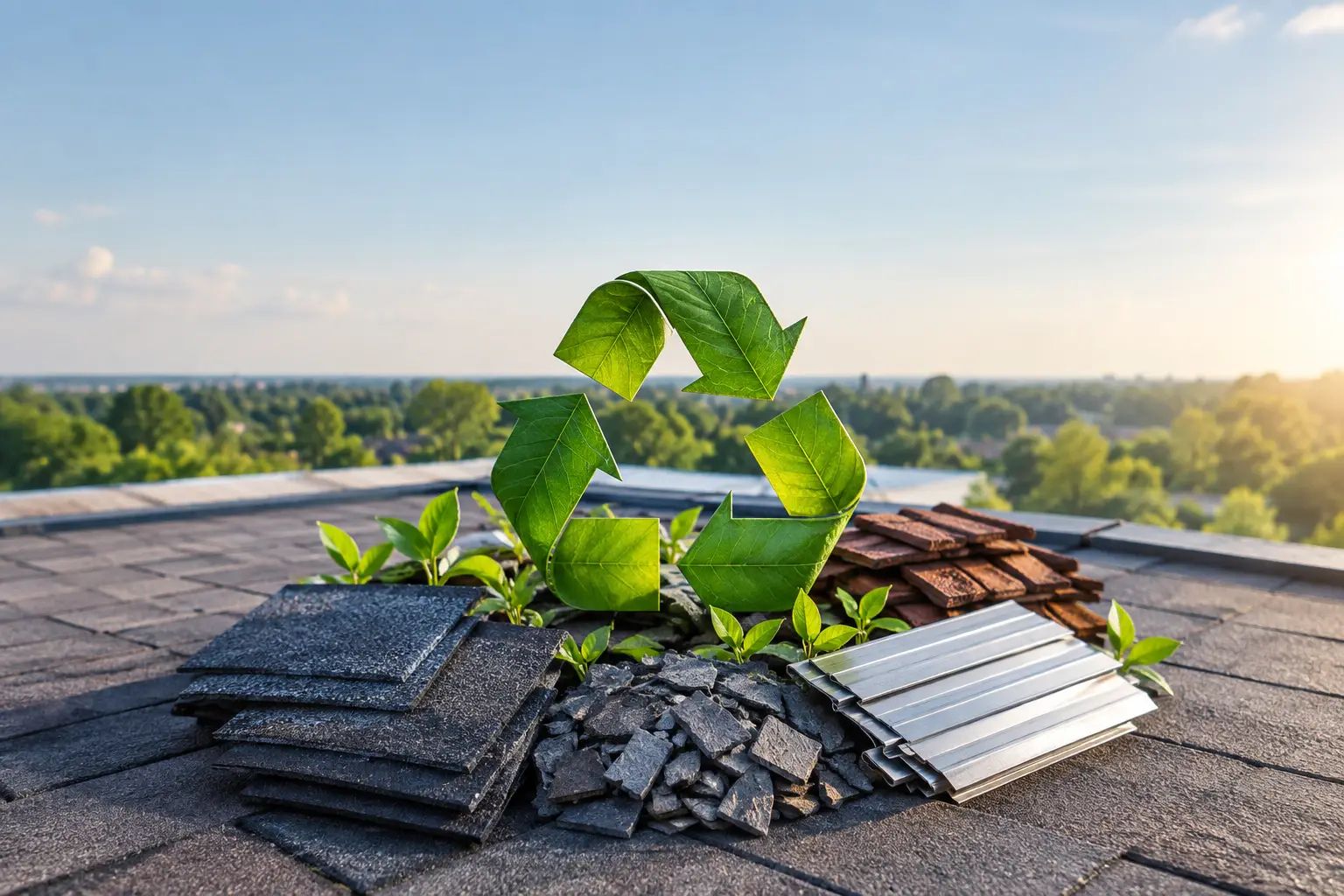
A sound Welsh slate roof can outlast several generations of owners. Replacing it wholesale because a small area has failed is rarely the best answer, either for the building or for the materials already in service. The roofing circular economy takes a more practical view: retain what is sound, recover what can be reused, and introduce compatible materials only where they are needed.
For roofers, builders and period-property owners, this is not a theoretical environmental exercise. It is often the most sensible route to a durable repair. A reclaimed slate that matches the existing roof in texture, thickness and weathering can protect a property’s character while avoiding unnecessary disposal and new material demand.
What the roofing circular economy means in practice
A circular approach keeps roofing materials at their highest useful value for as long as possible. In a traditional roof, that usually means careful inspection before strip-out, selective repair instead of blanket replacement, and recovery of serviceable slates or tiles for reuse.
The order matters. The first question should be whether the existing covering can remain in place with local repairs. If it cannot, the next question is which materials can be salvaged, sorted and returned to use. Recycling has a role, but it is lower down the chain. Crushing a usable slate into aggregate may divert it from landfill, but it loses a material that could otherwise give decades more service on a roof.
This principle is particularly relevant to natural slate. Quality Welsh, Burlington and Yorkshire stone slates have already proved their durability through years of exposure. Their age is not automatically a weakness. Provided they are properly assessed for condition, thickness, sound edges and fixability, reclaimed slates can be a highly credible roofing material.
Why reuse makes sense on heritage and repair work
Period roofs are not uniform products. Slates vary by quarry, geological source, size, thickness, colour and surface character. Clay tiles also change over time, acquiring a weathered finish that new materials cannot instantly replicate. A visually close match is often essential on a prominent elevation, within a conservation area, or where planning and heritage requirements apply.
Reclaimed materials offer a practical advantage here. They allow a roofer to replace isolated broken or missing units without creating a conspicuous patch of new slate or tile. On larger projects, a consistent batch of reclaimed material may make it possible to re-cover a roof in a way that respects the original building.
There is also a straightforward carbon and waste benefit. Recovering and reusing a slate avoids the extraction, processing and transport associated with a newly quarried replacement. It also keeps a valuable material out of a skip. The precise saving will depend on the material, its source and haulage distance, so broad environmental claims should be treated carefully. Even so, extending the life of a durable product is generally preferable to discarding it prematurely.
Recovery starts before the roof is stripped
Circular roofing depends on decisions made at survey stage, not after the lorry has arrived to collect waste. A competent inspection should distinguish between the condition of the roof covering and the condition of the roof structure. Failed nails, worn battens, damaged underlay or localised flashing defects can make a roof look beyond repair when much of the slate or tile remains perfectly usable.
Where stripping is necessary, slates and tiles should be lifted with care rather than pushed into a mixed waste stream. They need to be kept separate from timber, insulation, mortar and general site debris. This takes more time than a rapid demolition approach, but it can preserve significant value, especially on roofs carrying good natural slate, handmade clay tiles or stone slates.
Once recovered, materials need sorting. Broken pieces, badly delaminated slates, units with enlarged fixing holes and tiles affected by frost damage should be rejected. Sound pieces can be graded by type, size and condition. On a slate roof, thickness and headlap requirements deserve particular attention. Mixing incompatible slates simply because they are both grey can create uneven courses, awkward detailing and poor weather performance.
Reuse is not the same as using anything old
The circular economy does not mean fitting reclaimed material without checks. Good roofing practice remains non-negotiable. Slates must be suitable for the roof pitch, exposure level and fixing method. Tiles must interlock correctly and sit properly at hips, valleys, verges and ridges. Accessories such as leadwork, fixings, ventilation products, battens and underlay must be selected for the roof’s present-day performance requirements.
In some cases, a mix of reclaimed and new materials is the right answer. A repair may use reclaimed slates across the visible roof slope, with new battens, breathable membrane and corrosion-resistant fixings beneath. A reclaimed clay tile roof may require new matching ridge fixings or replacement valley components. Circularity is about making informed choices, not forcing every component to be old.
The trade-offs to consider before specifying reclaimed slate
Reclaimed roofing has clear strengths, but it is not automatically the best option for every job. Availability can be the deciding factor. A small repair may need only a few matching slates, while a full re-roof can require several tonnes of consistent material. Obtaining enough of one type, size and thickness can take planning, particularly where the roof has complex details or an exact match is required.
Cost should also be assessed in full. The price per slate is only one part of the job. Sorting, grading, wastage allowance, transport and laying time all affect the final figure. Conversely, a good reclaimed match can avoid the visual compromise and possible consent issues associated with an unsuitable new replacement. For a listed building or high-value period property, that can be a worthwhile investment.
Performance is another consideration. Reclaimed material should be inspected by a knowledgeable supplier and checked again by the contractor before installation. A trusted source will be clear about the material’s origin, approximate dimensions, condition and quantity. This matters more than a vague description such as ‘old roof slates’, which tells a buyer little about what will arrive on site.
Building a circular roofing specification
A practical specification begins with a measured survey. Record slate or tile size, thickness, exposed length, coursing, roof pitch and fixing arrangement. Photograph details such as eaves, valleys, abutments, ridges and verges. For repair work, take a sample where possible. A single slate can reveal far more than a broad description and helps avoid ordering a near-match that is wrong in practice.
Allow for waste and selection. Reclaimed stock is not factory-uniform, and that is often part of its value. However, a roofing contractor still needs sufficient quantity to select the best pieces for prominent areas, cut units where required, and set aside any questionable items. Ordering to the absolute minimum quantity is a false economy.
Think beyond the covering. A roof is a system, and longevity depends on the details beneath and around the slate or tile. Correct battens, suitable fixings, properly formed lead flashings, ventilation and sound drainage all help a reclaimed roof perform as intended. Retaining a slate while overlooking a failing valley or inadequate fixing method does not deliver a circular outcome. It merely postpones another repair.
For projects requiring heritage-compatible reclaimed slate, tile and complementary roofing essentials, ReclaimedRoofSlates.com can help contractors and property owners source materials with the consistency needed for repair and restoration work.
A longer view of roofing materials
The best circular roof is not necessarily the one with the highest percentage of reclaimed content. It is the roof that is correctly specified, properly installed and maintained so that it does not need to be replaced before its time. Routine checks after severe weather, prompt replacement of slipped slates, and attention to gutters and flashings can protect both the building and the materials already in use.
A roof that retains its original character, uses sound reclaimed materials where they are appropriate, and is detailed for another long service life is a practical achievement. It reduces waste, respects the building and gives good materials the working life they were made for.

