

What Causes Tile Frost Damage on Your Roof?
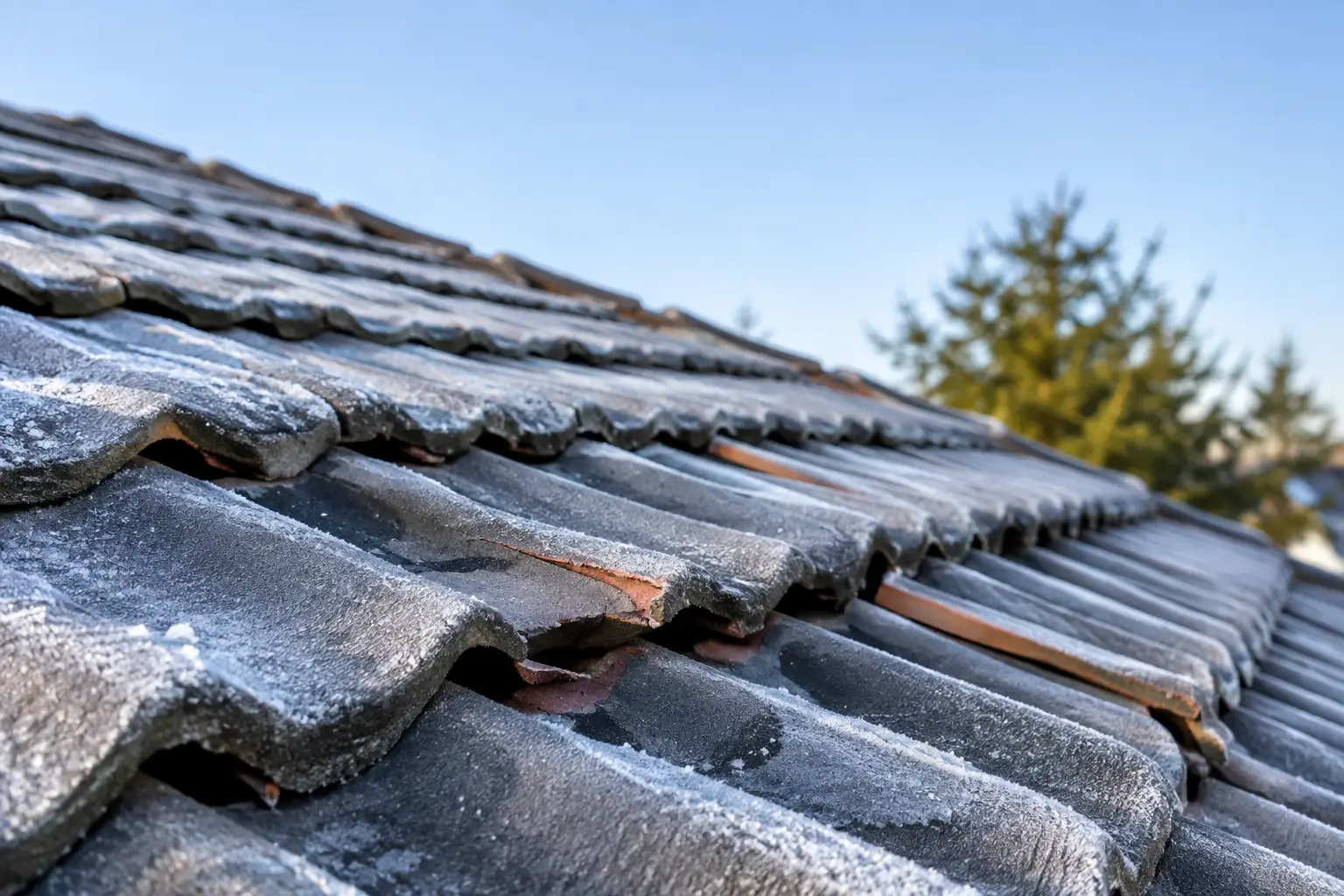
A roof can look sound in autumn and show cracked, spalled or slipped tiles after only a few hard frosts. What causes tile frost damage is rarely the cold alone. The real issue is water entering a vulnerable tile, slate or fitting, then expanding as it freezes. Repeated freeze-thaw cycles gradually force the material apart until its surface breaks down or the tile fails altogether.
For period properties, the risk is not limited to the roof covering itself. Porous heritage tiles, worn mortar, blocked drainage routes and unsuitable repairs can all allow water to sit where it should not. Understanding the cause before replacing materials is the best way to avoid carrying the same problem into a new repair.
What causes tile frost damage?
Water expands by roughly nine per cent when it turns to ice. If moisture has entered the pores, cracks or laminations of a roof tile, that expansion exerts pressure from within. When temperatures rise, the ice melts and the water can penetrate a little further. Each subsequent frost repeats the process.
This is why frost damage is often progressive rather than dramatic. A tile may first develop a fine crack, a roughened face or a small patch of surface loss. After several winters, the face can spall away, edges can break off, and the tile may no longer shed water properly. Once its protective surface has gone, it absorbs water more readily and deterioration accelerates.
Clay tiles, concrete tiles and natural stone slates respond differently, but the basic mechanism is the same: moisture enters, freezing pressure develops, and a material with insufficient frost resistance begins to break down.
Water absorption is the starting point
A sound roofing material should shed rain quickly and take up very little water. Older tiles can become more absorbent through age, weathering, manufacturing differences or surface wear. Some historic clay tiles were made and fired in a way that gives them character and a softer appearance, but also leaves them more vulnerable if they are constantly wet.
Concrete tiles can suffer when their factory-applied surface wears away, exposing a more open matrix beneath. Frost then causes pitting, flaking and loss of the tile face. With stone slates, the concern is often lamination. Water can work into natural bedding planes and frost can encourage thin layers of stone to split away.
Not every old tile that absorbs some moisture is unfit for service. Many traditional roof coverings have performed for generations. The question is whether the material can dry between wet periods and whether its condition remains consistent across the roof. A localised failed patch may point to a drainage or repair issue; widespread spalling usually calls for a more thorough assessment.
Freeze-thaw cycles cause more harm than one cold night
A prolonged cold spell can create problems, but repeated movement above and below freezing is usually more damaging. British winter weather often provides exactly those conditions: rain or sleet, a sharp overnight frost, a daytime thaw and then another freeze.
North-facing roof slopes, shaded valleys and areas beneath overhanging trees tend to remain damp longer. These are common places to find early frost damage. A roof in an exposed upland setting may also face more frequent cycles than one in a sheltered urban location, although wind can help a roof dry more quickly if ventilation and detailing are sound.
The practical point is that water retention matters as much as temperature. A dry tile can tolerate a severe frost far better than a saturated one.
Poor drainage keeps tiles saturated
Blocked gutters, overflowing outlets and debris-filled valleys do not simply create inconvenience at eaves level. They can keep the lower courses of tiles wet for long periods, allowing water to wick into overlaps and edges. Moss and leaf debris have a similar effect, holding moisture against the roof surface and slowing drying after rainfall.
Valleys deserve particular attention. They collect the highest volume of water on many roofs, and a restricted valley channel can force water back beneath tiles. Mortar fillets that have cracked or lifted, damaged leadwork, and poorly formed junctions around chimneys or dormers may all introduce water behind the primary covering.
Cleaning should be careful and proportionate. Aggressive pressure washing can strip surfaces from concrete tiles, disturb old clay tiles and drive water under laps. Clearing gutters and valleys by hand, removing obvious organic debris and correcting the reason for persistent wetting is the safer route.
Cracks, failed fixings and poor repairs let water in
Frost often exposes an existing weakness rather than creating one from nothing. Hairline cracks, chipped corners and damaged nibs give water a direct route into the body of a tile. Once freezing begins, a small defect can become a full fracture.
Loose or corroded nails are another common issue on older roofs. A tile that has moved out of line may create an open lap where rain can enter. Repeated movement in wind can enlarge the gap, while trapped water damages battens, underlay and adjacent tiles. On heritage roofs, incorrect replacement tiles can make matters worse if their profile, gauge or thickness does not match the existing covering.
Cement-heavy repairs also require caution. Rigid mortar can crack as the roof covering moves naturally with thermal change. Where it breaks away, it may leave a route for water or concentrate stress along the edge of an older tile. The right repair method depends on the roof construction, tile type and exposure, not simply on what is quickest to apply.
Frost damage can affect mortar and fittings too
Roof tiles are not the only components at risk. Ridge and hip bedding mortar can absorb water, crack and crumble after frost. Damaged pointing around valleys, abutments and flashings can open up joints that admit rain. Clay ridge tiles can suffer the same surface spalling seen on the main roof slope, particularly where their exposed position leaves them wet and cold.
If sections of ridge or hip mortar have failed, check whether the underlying tiles and fixings remain secure. Re-bedding without addressing loose fittings, deteriorated battens or water ingress below can lead to a short-lived repair. Modern dry-fix systems may suit some re-roofing projects, but they are not automatically the right visual or technical answer for every listed or period property.
How to spot frost damage before it becomes a leak
A ground-level inspection with binoculars can reveal a great deal. Look for tiles with a pale, rough or flaky face; broken lower edges; fine cracks; and small fragments collecting in gutters or at the base of downpipes. On stone slate roofs, watch for delamination and unusually thin areas around exposed edges.
Inside the roof space, signs of damp staining, wet battens, drips after rain or daylight visible through the covering need prompt attention. Do not walk on an aged tile or slate roof to investigate unless it is safe to do so and you have the right experience. A fragile tile can break underfoot, and access itself can create further damage.
Where only a handful of tiles have failed, a like-for-like replacement is normally the best result. Matching the size, gauge, colour variation and weathered character matters, particularly on a visible slope. Reclaimed roof tiles and slates are often the practical choice for retaining the appearance and performance of a period roof, provided each piece is properly selected and checked for suitability.
Preventing further frost damage
Prevention begins with keeping the roof able to drain and dry. Maintain gutters, outlets and valleys, remove debris that traps water, and deal with slipped or fractured tiles promptly. Check flashings, soakers, mortar junctions and ridge details before winter rather than waiting for water to enter the roof space.
When replacement work is needed, avoid mixing incompatible materials without considering the roof as a whole. A thicker tile can alter lap and fixing positions; a different profile can leave gaps; and an overly dense modern tile may look out of place among handmade clay units. For slate repairs, the replacement should match the original slate’s dimensions, thickness and laying pattern as closely as possible.
A few failed tiles may be a straightforward repair. Widespread surface loss, repeated breakages in the same area or evidence of timber decay suggests a wider issue that merits a roofer’s inspection. The aim is not merely to replace what has broken, but to restore a roof that sheds water cleanly and can withstand the next freeze-thaw cycle.
The most dependable frost repair is one that respects the existing roof: sound drainage, correct detailing and properly matched materials give older coverings their best chance of lasting through many more winters.

