

Victorian Roof Repair for Period Properties
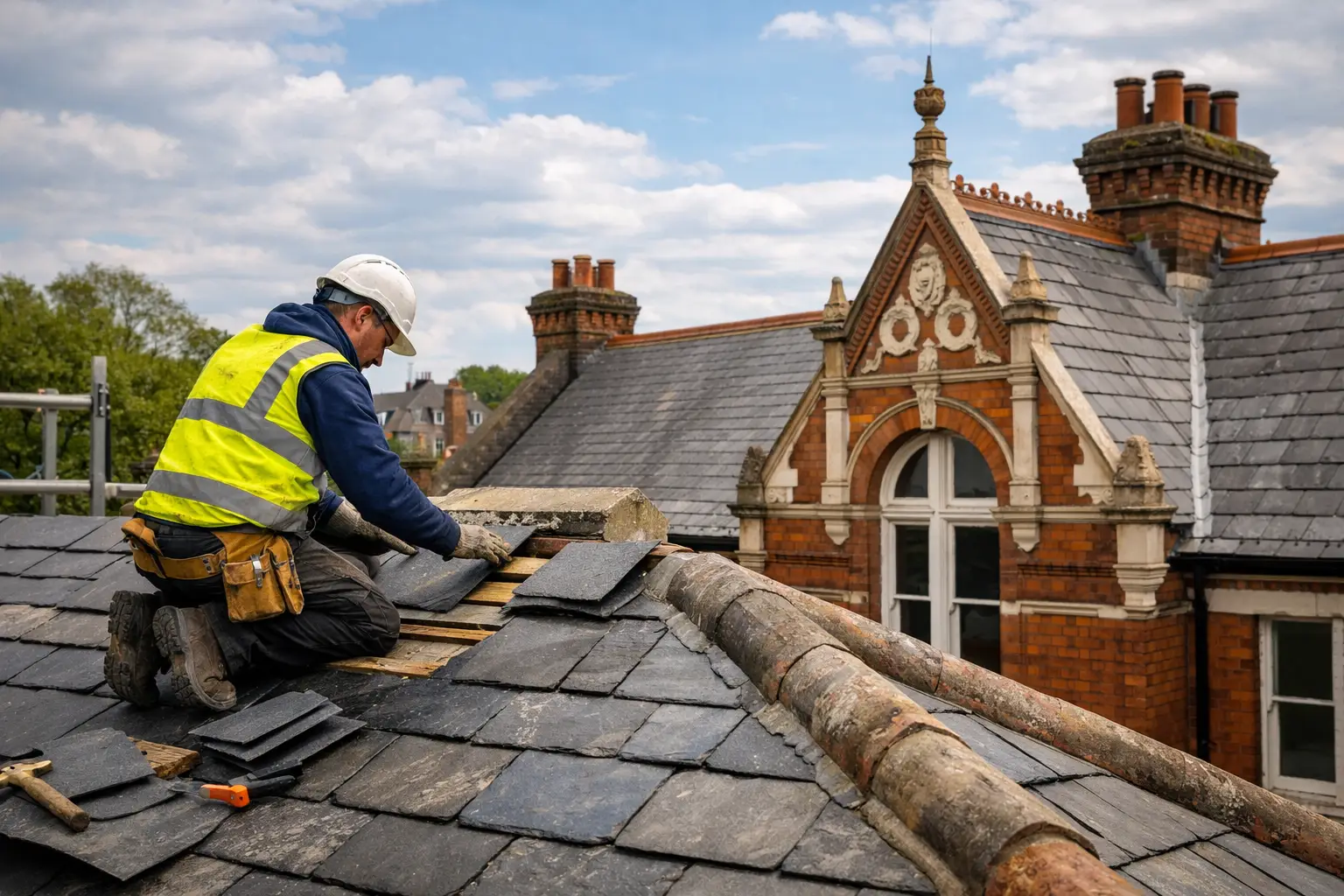
A slipped slate on a Victorian roof is rarely just a slipped slate. It can point to exhausted fixings, failed flashings, decayed battens or a roof that has been repaired piecemeal with unsuitable materials. Good Victorian roof repair starts by understanding what is already there, then making the smallest effective intervention with materials that preserve the roof’s character and weathering performance.
For homeowners, the priority may be stopping a leak without making the roof look patched. For contractors and restoration specialists, it is also about working safely, identifying the slate correctly and ensuring every replacement component performs with the original construction. The right approach protects both the building and the value of the work.
What Makes Victorian Roof Repair Different?
Victorian roofs were built over a long period and vary considerably by region, status of property and available local materials. A terrace in Leeds may have Welsh slate, while a rural property might carry thick Yorkshire stone slates. Elsewhere, you may find Burlington slate, clay plain tiles, Rosemary tiles or a mixture introduced during previous repairs.
That variation matters. Slate is not interchangeable simply because two pieces look broadly grey. Thickness, size, texture, edge finish, weathering pattern and headlap all affect how the roof lays and sheds water. A modern imported slate may be sound in isolation but still look visibly wrong beside an established roof, particularly once it has been exposed to rain and sunlight.
Victorian roof construction can also conceal defects until they become serious. Original timber battens may have reached the end of their serviceable life, nails may be corroding, and old leadwork may have split at folds or joints. Repairing only the visible fault can be false economy if the surrounding area is close to failure.
Start With a Proper Roof Assessment
A close inspection should establish whether the problem is localised or part of wider decline. This does not always mean stripping the roof. A competent roofer can assess the covering from ground level, internally where access permits, and from a safe working platform.
Look for slipped, cracked or delaminating slates; open laps; uneven courses; loose ridge tiles; damaged valleys; and staining around chimneys, parapets or roof windows. Inside the loft, dampness, daylight showing through the covering, water marks and timber decay all give useful evidence. However, condensation can resemble a roof leak, so the source should be confirmed before specifying work.
The condition of the fixings deserves particular attention. Many Victorian slates were fixed with iron nails, which can rust away while the slate itself remains perfectly usable. This is known as nail sickness. If isolated slates are slipping, careful replacement or re-fixing may be enough. If slates are failing across several elevations, widespread fixing failure may indicate that re-roofing is the more dependable option.
A sensible assessment also checks the roof’s details. Valleys, lead soakers, flashings, gutters, verges and ridges often cause leaks before the main slate field does. Water can travel along battens or rafters, so the point where it appears internally is not necessarily where it enters.
Matching the Existing Slate Matters
The most convincing repairs use reclaimed slates that match the original roof as closely as possible. This is about more than appearance. A compatible slate is easier to dress, cut and lay into the existing coursing without creating high spots, irregular laps or a weak weathering line.
Before ordering replacements, establish the slate’s average length, width and thickness. Measure several pieces rather than relying on one slate, as hand-sorted Victorian roofs are rarely perfectly uniform. Note the colour range, surface texture and whether the slates have square, shouldered or irregular edges. A reclaimed slate supplier can then help identify a suitable match from available stock.
Welsh slate is commonly found on Victorian properties and is valued for its density and long life. Reclaimed Burlington slate has a distinct character and can be particularly appropriate where the existing roof has a green-grey or blue-grey Cumbrian appearance. Yorkshire stone slates are thicker, heavier and laid to a different principle from thin slates, often with diminishing courses. They require their own specification, adequate roof structure and careful sorting by size.
A close match is particularly important on prominent front elevations, around dormers and in long unbroken roof slopes. At the rear of a property, there may be more tolerance for a subtle variation, but it should never compromise the roof’s weathering or performance.
Avoid the Obvious Patchwork Effect
Newly quarried or alternative replacement products may appear too uniform, too smooth or too dark against weathered originals. Reclaimed materials offer a more natural fit because they already carry age, texture and tonal variation. That said, reclaimed does not mean unchecked. Each slate should be inspected for soundness, excessive thinning, cracking and damage around nail holes.
Where several replacement slates are required, distribute them thoughtfully rather than grouping every new piece in one area. A skilled roofer will retain sound original slates where possible and blend replacements into the existing pattern. The objective is a repair that does not draw the eye from street level.
Repairing Details Without Losing Character
The slate covering is only one part of a Victorian roof. Leadwork around chimneys, abutments, valleys and penetrations needs equal care. Lead is often the right material for traditional details because it is durable, workable and visually appropriate, but it must be fitted with correct laps, allowances for movement and suitable fixings.
Cement fillets are commonly found on older roofs, especially where past repairs were carried out quickly. They can crack, detach and trap moisture. In many locations, properly formed lead soakers and flashings offer a more reliable and traditional solution. The exact detail depends on the roof pitch, exposure, masonry condition and adjoining materials.
Ridge and hip tiles should also be assessed individually. Loose bedding mortar can allow water in and create a safety risk, while cracked ridge tiles may be replaced with compatible reclaimed examples. Simply applying more mortar over failed bedding rarely addresses the reason it failed.
Ventilation needs careful judgement. Victorian roofs were not always designed with modern insulation levels in mind, and introducing insulation without considering airflow can increase condensation risk. If upgrading the roof space, consider the whole build-up rather than treating insulation, ventilation and waterproofing as separate jobs.
When a Repair Becomes a Re-Roof
There is a point at which repeat repairs stop being sensible. If a large proportion of slates are delaminating, battens are deteriorated, fixings are failing throughout or multiple details need replacement, a planned re-roof can offer better long-term value. It allows the structure to be checked, failed timber renewed, a suitable underlay installed where appropriate, and original sound slates to be sorted for re-use.
A re-roof does not automatically mean replacing every original material. Sound Victorian slates can often be stripped, graded and relaid with compatible reclaimed stock used to make up losses. This preserves the building’s appearance while improving the reliability of the fixing system and supporting layers.
Listed buildings and properties in conservation areas may require additional care. Planning restrictions can affect the material, profile and finish permitted, especially on visible elevations. Check requirements before ordering materials or starting work. Even where formal consent is not needed, matching the established roof covering is usually the best decision for the building.
Specify the Supporting Materials Properly
A repair is only as good as the materials behind the visible slate. Use appropriate slate fixings, correctly specified lead, breathable membrane or underlay where the roof design calls for it, battens suitable for the exposure and loading, and compatible ridge, valley and verge components. For stone slate roofs, the heavier covering and particular fixing method make correct batten specification especially important.
It is tempting to source a few replacement slates from one place and the remaining materials elsewhere. That can create delays and mismatched specifications. ReclaimedRoofSlates.com supplies reclaimed roof slates alongside heritage tiles, lead products, fixings, battens, sealants and everyday roofing essentials, helping repair teams assemble the materials needed for a coherent job.
When requesting a quote or placing an order, provide clear measurements, photographs of the roof and existing slates, the number of pieces required and whether the repair is on a prominent elevation. For larger works, state whether you need tonne-based quantities and whether you are reusing any stripped slate. Accurate information improves the chance of receiving a close, workable match first time.
Plan Repairs Around Weather and Access
Victorian roof repair should not be rushed between showers. Safe access, dry working conditions and temporary weather protection all affect the result. A small repair can become more expensive if water enters exposed areas while work is underway, particularly where old timbers or ceiling finishes are already vulnerable.
Allow for the possibility of hidden defects once the covering is opened. A contractor should be able to explain what is included, what happens if rotten battens or failed leadwork are found, and how replacement materials will be agreed. That clarity is valuable on period properties, where each opened section can reveal work from several previous generations.
A Victorian roof does not need to look new to perform well. It needs compatible materials, sound details and repairs that respect the way the roof was built. Taking the time to match the slate and address the cause of failure will give the property a repair that belongs there and continues to protect it for years to come.

