

Best Slate Roof Fixings for Lasting Repairs
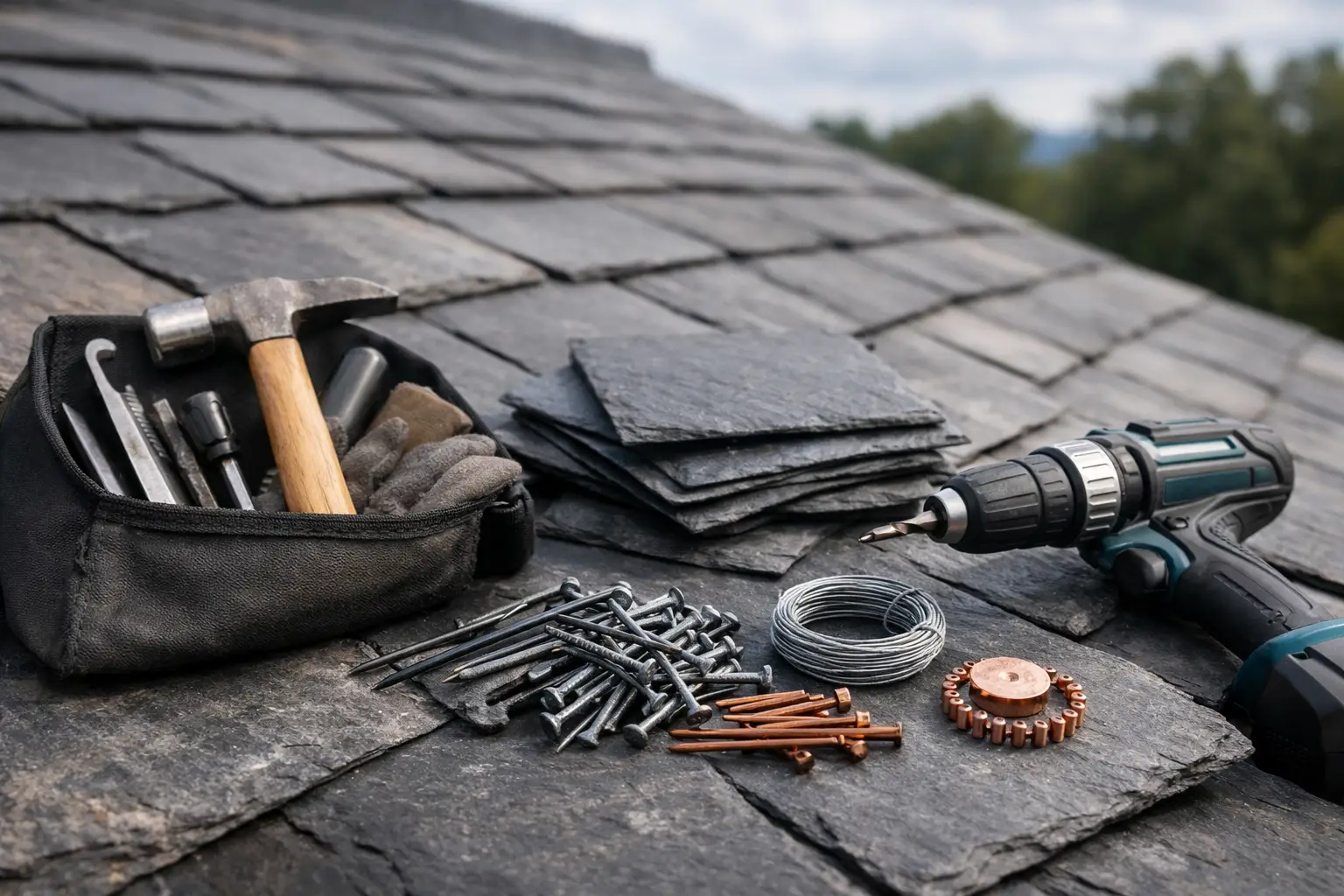
A slipped slate is rarely just a slipped slate. On an older roof, the failure often starts with a corroded nail, an unsuitable replacement fixing, or a repair that does not account for the slate’s thickness, lap and exposure. Choosing the best slate roof fixings means selecting components that will protect both the repair and the character of the roof for decades, not merely hold a slate in place for the next season.
For reclaimed Welsh, Burlington and other natural slates, the fixing must suit the slate, the roof build-up and the local conditions. A sound reclaimed slate fixed with the wrong nail can fail long before the slate itself reaches the end of its serviceable life.
What Makes the Best Slate Roof Fixings?
The best fixing is not always the same product. Nail fixing remains the traditional and most widely used method for natural slate roofs, but hooks can be the sensible choice for certain repairs, steep pitches and exposed locations. The right choice depends on the slate material and thickness, roof pitch, batten type, wind loading, headlap and the condition of the existing roof.
Durability is the first consideration. A slate roof can last well over a century, so the fixing needs to resist corrosion for a comparable period. Cheap steel nails may appear adequate at installation, but corrosion can eventually cause nail sickness. The slate remains intact while its fixing head deteriorates, allowing the slate to slide or become vulnerable in high winds.
Compatibility matters as much as strength. Natural slate, leadwork, timber battens, mortar and fixings all perform differently when exposed to moisture. Using materials that work together avoids staining, premature corrosion and difficult repair work further down the line.
Copper slate nails
Copper nails are a proven choice for fixing natural roof slates. They offer excellent resistance to corrosion, have a long history in traditional roofing and are particularly well suited to heritage work. For reclaimed slate projects, they provide the sort of service life that makes sense alongside a durable natural material.
Copper is also compatible with lead, which is relevant where soakers, flashings, valleys or other lead details are present. This makes copper nails a dependable default for many slate roofing jobs, from full re-roofs to careful repairs on period properties.
The nail length must be specified properly. It needs to pass through the slate and achieve secure penetration into the batten without being selected by guesswork. Slate thickness, batten depth and roof design all affect the correct length. A nail that is too short may not hold securely; one that is unnecessarily long can create avoidable issues beneath the roof covering.
Stainless steel slate nails
Stainless steel nails are another strong option, particularly where the roof is subject to severe weather or where a specification calls for stainless steel. Good-quality stainless steel provides very high corrosion resistance and can be a practical fixing for coastal, exposed or modern roof constructions.
The grade matters. Not all stainless steel performs equally in aggressive environments, so roofers should select a suitable grade for the site rather than relying on the label alone. This is especially relevant in coastal areas, where salt-laden air can shorten the life of less suitable metals.
For a heritage repair, copper is often preferred for its established track record and traditional appearance. For highly exposed properties, stainless steel may be specified as part of the wider roof design. There is no universal winner without considering the building and location.
Slate Hooks for Repairs and Exposed Roofs
Slate hooks provide an alternative to nails and are particularly useful where fixing through an existing slate is impractical. They are commonly used for repair work because a replacement slate can be slid into position and secured without disturbing a large section of the roof.
Hooks can also be useful on steep or exposed roofs where additional security is required. Stainless steel hooks are generally chosen for corrosion resistance, while copper hooks may be used where compatibility with a traditional roof build-up is the priority.
There are trade-offs. Hooks remain visible at the lower edge of each slate, which may not suit every restoration project or roof elevation. They can also alter the finished appearance when used across a broad area. On a discreet repair, however, a correctly selected hook can be a far better solution than forcing a nail-fixed slate into a roof where access and existing courses make conventional fixing difficult.
A hook needs to match the slate thickness and exposure. An incorrect hook size can leave the slate loose, lift it from the course below or place pressure on the slate edge. This is one reason why measuring replacement slates accurately before ordering is as valuable as choosing the fixing itself.
Matching Fixings to Reclaimed Slate
Reclaimed slate is not a generic roofing material. Welsh slates, Burlington slates and other natural slates can vary in thickness, texture, colour and coursing pattern. A repair should retain the roof’s visual rhythm as well as its weatherproofing.
Before choosing a fixing, check the existing slate dimensions, thickness and nail-hole position. Reused slates may have existing holes that are sound and usable, but they should be assessed carefully. Enlarged holes, cracks around the hole, or weakened edges can make a slate unsuitable for conventional nail fixing. In such cases, a hook-fixed repair may be more appropriate.
The roof’s headlap and gauge must also be retained. A slate can be fixed firmly yet still allow water ingress if it is placed at the wrong gauge or does not maintain the required overlap. Fixings are only one part of a correctly functioning slate roof system.
When sourcing reclaimed replacements, aim to match not only the face size but also the thickness and weathered character of the existing covering. A thin modern slate placed among heavier reclaimed slates can sit differently, affect the line of the roof and make the repair stand out for the wrong reasons.
Avoid Fixings That Create Future Failures
The temptation with a small repair is to use whatever fastener is at hand. That is where many roof problems begin. General-purpose galvanised nails, inappropriate screws and low-grade metal fixings may not offer the service life required for natural slate.
Avoid mixing metals without considering their compatibility, particularly near lead details and in damp areas. Also avoid overdriving slate nails. Natural slate is strong in compression but can split when excessive force is applied around a nail hole. A correctly fixed slate should be secure without being clamped tightly to the batten. It needs to lie naturally and accommodate slight movement without stress.
Do not rely on sealant as a substitute for a suitable mechanical fixing. Sealants can support a carefully considered repair in limited circumstances, but they are not a permanent answer for a loose or damaged natural slate. A repair that depends solely on adhesive is difficult to inspect and may fail without warning as the roof moves through changing temperatures and weather.
Wind Loading, Pitch and Roof Detail
Fixing specifications should become more cautious as exposure increases. Roof edges, verges, eaves, ridges and areas around abutments are subject to greater wind forces than the centre of a roof slope. These zones may require a more detailed fixing approach under the roof design and relevant British Standards.
Pitch makes a difference too. On lower pitches, the roof relies heavily on correct lap and careful detailing to shed water. On steeper pitches, the pull of gravity and wind pressure place greater demands on the fixing arrangement. Valleys, dormers, chimneys and rooflights add further complexity because they interrupt the regular slate pattern and introduce additional leadwork or weathering details.
For larger projects, or where a roof is exposed to strong winds, the fixing specification should be based on the building’s location, height, pitch and roof zone rather than habit alone. This is particularly worthwhile on rural properties, elevated sites and coastal buildings.
A Practical Buying Checklist
When ordering slate roof fixings, have the slate type, length, width and thickness to hand, along with the batten size and the roof’s pitch. Confirm whether the slates will be nail-fixed, hook-fixed, or a combination of both for repairs. If the roof includes lead flashings or soakers, select fixing materials with suitable long-term compatibility.
For trade work, it is usually sensible to order enough fixings for the full scope of the repair, with a sensible allowance for breakages and unexpected slate replacements. A roof stripped back for repair can reveal more failed nails than were visible from ground level.
ReclaimedRoofSlates.com supplies reclaimed roof slates alongside the practical accessories needed to complete a heritage-compatible repair. Matching the slate and the fixing at the point of purchase helps avoid delays once work is under way.
A well-chosen copper nail, stainless steel nail or correctly sized slate hook is a modest part of the roof cost, but it carries a great deal of responsibility. Choose it with the same care as the reclaimed slate itself, and the repair will look right, perform properly and respect the building beneath it.

