

Roof Battens Buying Guide for UK Roofs
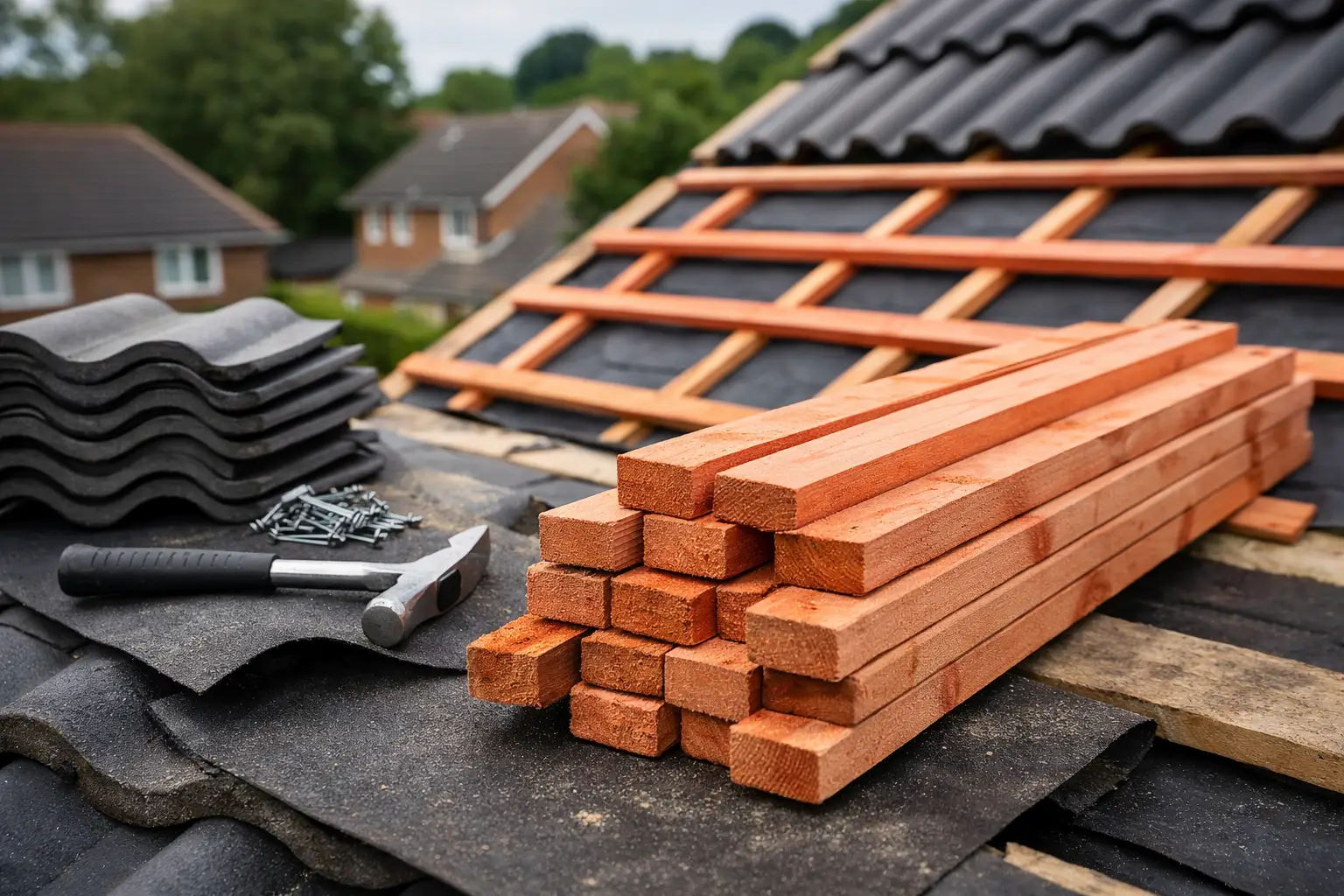
A roof can fail for mundane reasons. Not always broken slates, slipped tiles or poor leadwork – sometimes the issue sits underneath, in battens that were the wrong size, the wrong grade or simply not suited to the job. That is why a proper roof battens buying guide matters, especially if you are working on a repair, a full re-roof or a period property where every layer needs to perform properly.
Battens do more than create fixing points. They help control gauge, support the roof covering and contribute to the overall accuracy of the roof build-up. Buy the wrong battens and you can create problems with line, fixing strength and long-term durability. Buy the right ones and the rest of the job goes more smoothly.
Roof battens buying guide: start with the roof covering
The first decision is not really about the battens themselves. It is about what is going on top of them. Natural slate, reclaimed slate, clay plain tiles and concrete interlocking tiles all place different demands on the batten specification, spacing and loading.
For slate roofs, consistency matters. If you are laying reclaimed Welsh slates, Burlington slates or Yorkshire stone slates, the batten spacing needs to suit the headlap, slate length and fixing pattern. On heritage jobs, there is often less tolerance for getting this wrong because the visual line of the roof is part of the finish. Uneven or undersized battens can make an otherwise good slate selection look poor on the roof.
For tiled roofs, especially heavier coverings, strength and correct sizing become even more important. A heavier tile does not automatically mean a much larger batten in every case, but it does mean you need to check loading and the roof design rather than relying on habit. If the covering changes, the batten requirement may change with it.
What roof battens should you buy?
In the UK, roof battens should be suitable for roofing use and graded accordingly. This is not the place for general sawn timber that happens to be lying in the yard. Proper roofing battens are manufactured and marked for the job, and that distinction matters on both performance and compliance.
A common choice is 25 x 38mm batten, often used on many domestic roofing applications. Another widely used size is 25 x 50mm, which may be preferred where the design, span, loading or fixing detail calls for it. The right size depends on rafter centres, roof covering weight, exposure and project specification. There is no benefit in guessing when the roof design should dictate the answer.
On repair work, buyers sometimes want to match the existing battens exactly. That can make sense visually and practically, but only if the original size is still appropriate and in sound condition. On older roofs, existing battens may be irregular, undersized by modern standards or degraded after years of service. Matching what is there is not always the same as doing the job properly.
Grading and standards matter more than price per length
Cheap battens can look like a saving until they start twisting, splitting or varying in section. On the roof, that costs time. Gauge becomes harder to maintain, fixing lines become less reliable and the finish suffers.
That is why graded battens are the sensible buying choice. You want timber that has been produced for roofing applications, not just cut to a similar dimension. Consistency in thickness and width makes setting out easier. Better timber quality also reduces frustration on site, particularly on larger jobs where cumulative variation soon shows up.
If you are buying for trade work, this is straightforward – use correctly graded roofing battens and check they suit the design requirements. If you are a homeowner buying materials for a contractor, it is worth confirming that the battens supplied are proper roofing battens rather than generic timber sold as an alternative. They are not the same thing.
Treated timber and service life
Roof battens are exposed to a demanding environment. Even though they sit beneath the outer covering, they still face moisture risk through condensation, wind-driven rain ingress, site exposure during installation and the general realities of roof ventilation.
That is why treatment matters. Pressure-treated battens offer better resistance to fungal decay and help support longer service life in the correct roof build-up. On most jobs, treated battens are the default sensible option rather than an upgrade.
That said, timber treatment is not a substitute for good roofing practice. If the roof has persistent water ingress, poor ventilation or defective underlay detailing, battens can still deteriorate. Buyers sometimes expect treatment to solve every durability issue. It will not. The whole roof needs to work as a system.
Choosing battens for reclaimed and heritage roofing
This is where a standard merchant approach can fall short. Reclaimed and heritage roofing often demands closer attention to finish, compatibility and the practical realities of older buildings.
If you are laying reclaimed slates or matching into an existing period roof, batten choice affects more than strength. It influences how cleanly courses run, how neatly repairs blend in and how well the finished roof respects the original character of the building. Slight inconsistency in batten thickness may not sound serious in the yard, but it becomes visible when the roof is laid.
Older roofs can also present awkward details – irregular rafters, varying pitches, localised repairs and mixed materials from previous works. In those cases, battens need to be chosen with the whole job in mind rather than ordered as a standard add-on. A good supplier will understand that the battens are part of a wider roofing package, not a separate commodity.
Length, handling and wastage
Buying the right batten size is only part of it. Length matters too. Longer battens can reduce joints and speed up work, but they may be less convenient to handle on restricted sites or awkward access properties. Shorter lengths may be easier to move and store, yet they can increase labour and waste if they create too many breaks.
For a straightforward new roof, buying lengths that suit the roof geometry usually gives the best result. For repair work, especially on occupied properties or tight urban sites, practical handling may drive the decision. There is little point ordering lengths that are ideal on paper but difficult to get to the scaffold safely and efficiently.
Wastage should be considered honestly. If the roof has lots of hips, valleys, dormers or abutments, timber use will not be as clean as it is on a plain dual-pitched roof. Ordering too tightly can delay the job. Ordering wildly over can tie up money in stock you do not need.
Don’t buy battens in isolation
A roof rarely needs battens alone. If you are planning a repair or full replacement, it makes sense to think about the supporting materials at the same time – fixings, underlay, lead, ventilation products, ridge and hip components, and of course the slates or tiles themselves.
This matters for compatibility, but also for efficiency. On heritage and reclaimed roofing work, one missing element can hold up the whole job if the replacement is not easy to source. Buyers managing period-property repairs often find that the difficult part is not just finding matching slates. It is finding all the supporting materials that allow the repair to be completed properly first time.
That is one reason specialist suppliers are valuable. A business focused on reclaimed roofing and complementary materials will usually understand how battens sit within the wider specification, particularly where reclaimed slate and hard-to-match roofing products are involved.
Common buying mistakes to avoid
The most common mistake is treating battens as an afterthought. They are relatively low-cost compared with the finished roof covering, so buyers sometimes spend weeks choosing slates and only minutes choosing what supports them.
The next mistake is buying on price alone. If battens are inconsistent, poorly treated or unsuitable for roofing use, any saving can quickly disappear in extra labour or remedial work. Roofing timber needs to be fit for purpose.
Another issue is assuming one size suits every roof. It does not. The correct batten depends on the roof design and loading. A small domestic repair, a heavy tiled roof and a heritage slate project may all call for different thinking.
Finally, there is the problem of not checking the condition of the existing roof structure during repairs. Replacing a section of battens without looking at adjacent timber, underlay condition and fixing integrity can turn a repair into a short-term patch rather than a proper solution.
Buying roof battens with confidence
A good buying decision comes down to a few practical questions. What covering is going on the roof? What batten size does the roof design require? Are the battens properly graded for roofing use? Are they treated? Will the lengths work on site? And if this is a heritage or reclaimed project, will they help produce a clean, compatible finish rather than simply ticking a box?
For trade buyers, those checks are part of doing the job properly. For homeowners and renovators, they are the difference between buying confidently and buying blind. If you are already sourcing reclaimed slates, tiles or matching roofing accessories, it makes sense to buy from a supplier that understands the full roof build-up rather than just the visible surface.
The best battens are rarely the most talked-about part of a roof. They simply do their job, hold their line and give the covering above them the support it needs for years to come.

