

Buying Reclaimed Slates Online With Confidence
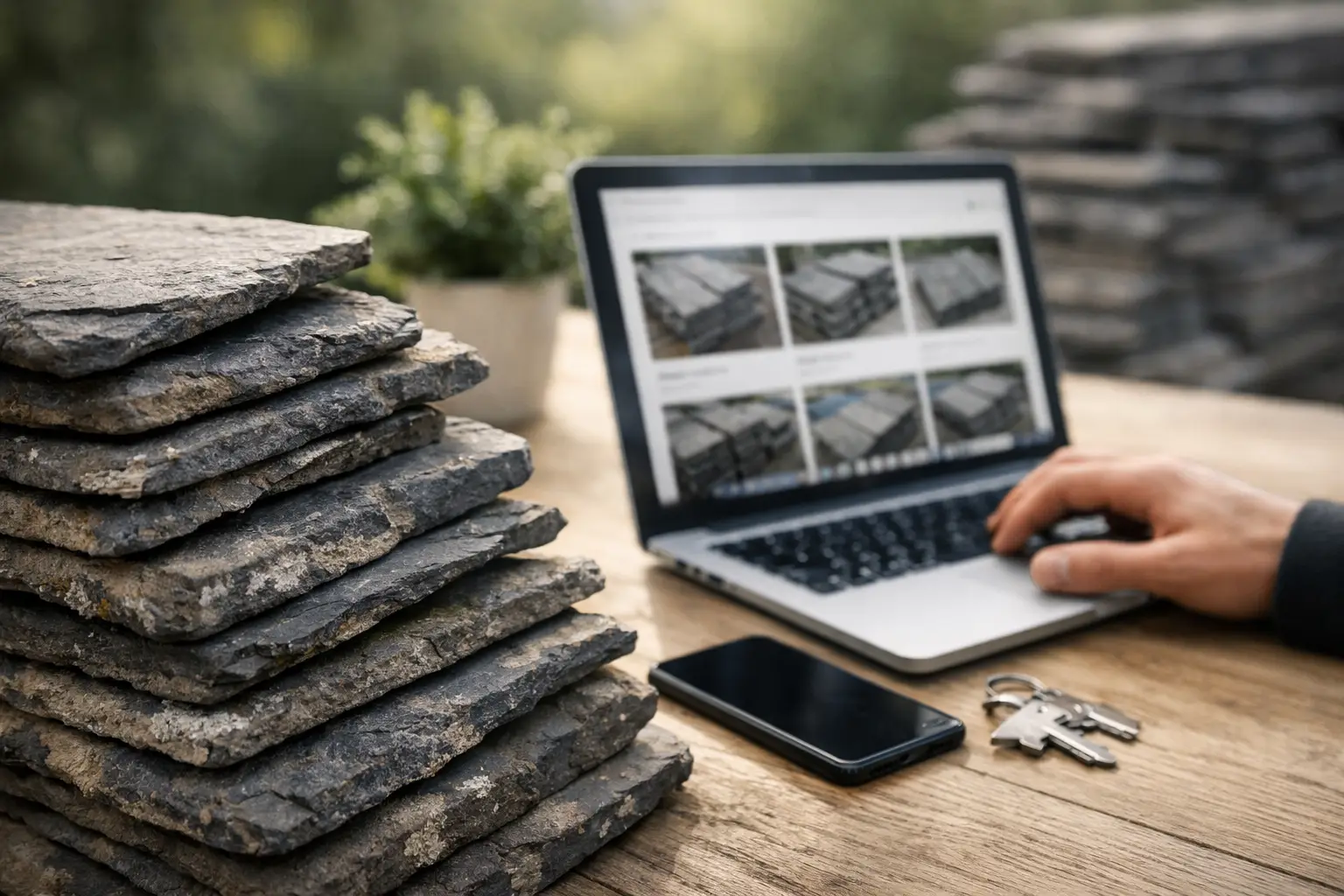
A single mismatched slate can be obvious from the street, while an incorrect tonne order can leave a roofing job short at the worst possible moment. Buying reclaimed slates online gives homeowners and trade buyers access to hard-to-find materials, but it only works well when the slate specification is checked before it is added to the order.
Reclaimed slate is not a generic product. Its origin, dimensions, thickness, colour, hole pattern and weathered finish all affect whether it will sit properly within an existing roof. For a repair, the aim is usually a convincing match. For a full re-roof, it is a sound, consistent material that suits the property, roof design and budget.
Start with the Existing Roof
Before comparing stock, establish exactly what is already on the roof. Measure several slates rather than relying on one piece, particularly on older roofs where sizes can vary. Record the overall length and width, the typical thickness, the exposed gauge, the position and size of fixing holes, and whether the slates are laid in diminishing courses.
Take clear photographs from close range and from further back. A close photograph helps identify the surface character, edges and nail holes. A wider image shows the colour impression across the roof, which may be blue-grey, green-grey, purple-grey or weathered silver depending on the slate and its age.
Do not assume that all Welsh, Burlington or Yorkshire slates are interchangeable. Welsh slate often has a finer, more regular appearance; reclaimed Burlington slate can provide a distinctive grey-green character; Yorkshire stone slate is generally thicker, heavier and laid to a very different format. The existing roof should lead the specification.
Match the size before the shade
Colour matters, especially on a prominent elevation, but size and fixing compatibility come first. A slate that looks close in colour but is too short may not maintain the required lap. One that is too wide can disrupt the coursing and create awkward joints. Where the original slates are irregular, a supplier may be able to advise on a suitable reclaimed range, but accurate measurements remain essential.
If the repair area is small, it can be sensible to order a modest allowance for sorting and selection. This gives the roofer a better chance of placing the closest visual matches in the most visible positions.
What Condition Should Reclaimed Slates Be In?
A reclaimed slate should have already demonstrated its ability to withstand weather, but previous service does not remove the need for inspection. Good reclaimed material is selected for reuse, not simply lifted from a demolition roof and sold unchecked.
Look for clear information on grade, size range and condition. Slates should be free from obvious splits, serious delamination and excessive edge damage. Nail holes need to be usable for the proposed fixing method. Minor signs of age, surface variation and worn edges are normal characteristics of reclaimed slate, and often part of the reason it blends well with a period roof.
Thickness deserves particular attention. A mixed thickness can be appropriate where it reflects the existing covering, but excessively thin pieces may be unsuitable for exposed areas or may not sit evenly beside thicker slates. On a full roof project, consistency within the supplied batch has a direct effect on laying speed and finished appearance.
Ask how the slate is sold
Online descriptions should make it clear whether pricing is per slate, per square metre, per pallet or by tonne. These are not interchangeable measures. Stone slates and larger formats are commonly supplied by weight, while smaller roofing slates may be priced by piece or coverage.
For a repair, buying per slate is often the practical route. For a re-roof, calculate the required roof area and then allow for headlap, side laps, breakages, cutting, sorting and the roof’s shape. Valleys, hips, dormers and abutments all increase waste beyond a simple rectangular area calculation.
A reputable supplier will need details such as slate size, roof pitch, coverage required and delivery location before confirming a larger order. That is not unnecessary administration. It is how the order is matched to the work rather than guessed from a photograph.
Check Coverage, Pitch and Fixing Method
The visible face of a slate is not the same as its coverage. Headlap reduces the exposed length, and the required lap depends on roof pitch, exposure and the roofing design. A slate may measure 500 mm long, for example, but it will not provide 500 mm of coverage down the roof slope.
This is where a roofing contractor’s input is valuable. The gauge, batten spacing, fixing specification and underlay arrangement must work together. Do not select reclaimed slates solely because they are a similar nominal size to the existing roof if the intended gauge will not provide adequate weather protection.
Fixing holes are another common issue. Traditional slates may have been nailed with copper, aluminium or galvanised nails, while some repair work calls for alternative fixing methods in tight locations. Existing holes can sometimes be reused, but only where their position and condition suit the new layout. Avoid drilling through a slate without considering the risk of damage and the required headlap.
For heritage properties, the visual pattern of the roof can be as significant as the weathering detail. Random-width stone slate roofs, diminishing courses and coursed Welsh slate roofs all have their own laying conventions. A practical online purchase begins with a material specification, not a search for the cheapest available slate.
Buying Reclaimed Slates Online: Delivery Matters
Reclaimed slate is dense, fragile at the edges and often delivered in substantial weights. Check the delivery arrangement before ordering, not after the lorry is booked. Confirm whether the site has suitable access, a firm unloading area and space to store pallets safely and dry.
A narrow lane, steep drive or city-centre restriction can affect the vehicle type and delivery plan. For projects in Leeds, London or elsewhere with limited access, it may be necessary to coordinate delivery with the contractor and arrange a safe unloading point. Slate should remain supported on level ground, protected from unnecessary handling and kept clear of areas where it could be struck by plant or site traffic.
Inspect the consignment promptly on arrival. Count packs or pallets where applicable, compare the size and type against the order, and photograph any visible transit damage before materials are moved around site. Sorting should be done carefully, with suitable gloves and a stable working area.
Buy the Supporting Materials at the Same Time
A reclaimed roof repair rarely consists of slates alone. It may require battens, underlay, nails or hooks, leadwork, valleys, ridge components, sealants and appropriate PPE. Ordering the supporting materials alongside the slate helps avoid delays once the roof is opened up.
Compatibility still applies. The choice of fixings must suit the slate thickness, exposure and fixing method, while lead products and valley details must be correctly specified for the roof. If existing ridge or valley tiles are being retained, check their condition before work starts rather than discovering a shortage halfway through the repair.
ReclaimedRoofSlates.com supplies reclaimed and heritage roofing materials alongside everyday roofing essentials, which is particularly useful where the job requires both a hard-to-match slate and the practical components needed to fit it correctly.
When Reclaimed Slate Is Not the Right Choice
Reclaimed slate is often the right answer for a repair to a period property, a listed building or a roof where visual continuity is crucial. It also makes good environmental sense by extending the life of a durable natural material. However, it is not automatically the best option for every project.
A large new-build roof with a tightly controlled appearance may be better served by new slate of a consistent size and grade. Likewise, if the existing roof has widespread failure, mixing a small number of reclaimed slates into a failing covering will not solve underlying issues with battens, fixings, underlay or roof structure.
The best online order is one based on proper measurements, a realistic allowance and a clear understanding of what the roof needs. Secure the right slate first, then give the roofer enough suitable material to make the repair look as though it has always belonged there.

