

Copper Versus Lead Roof Flashing – Which Is Best?
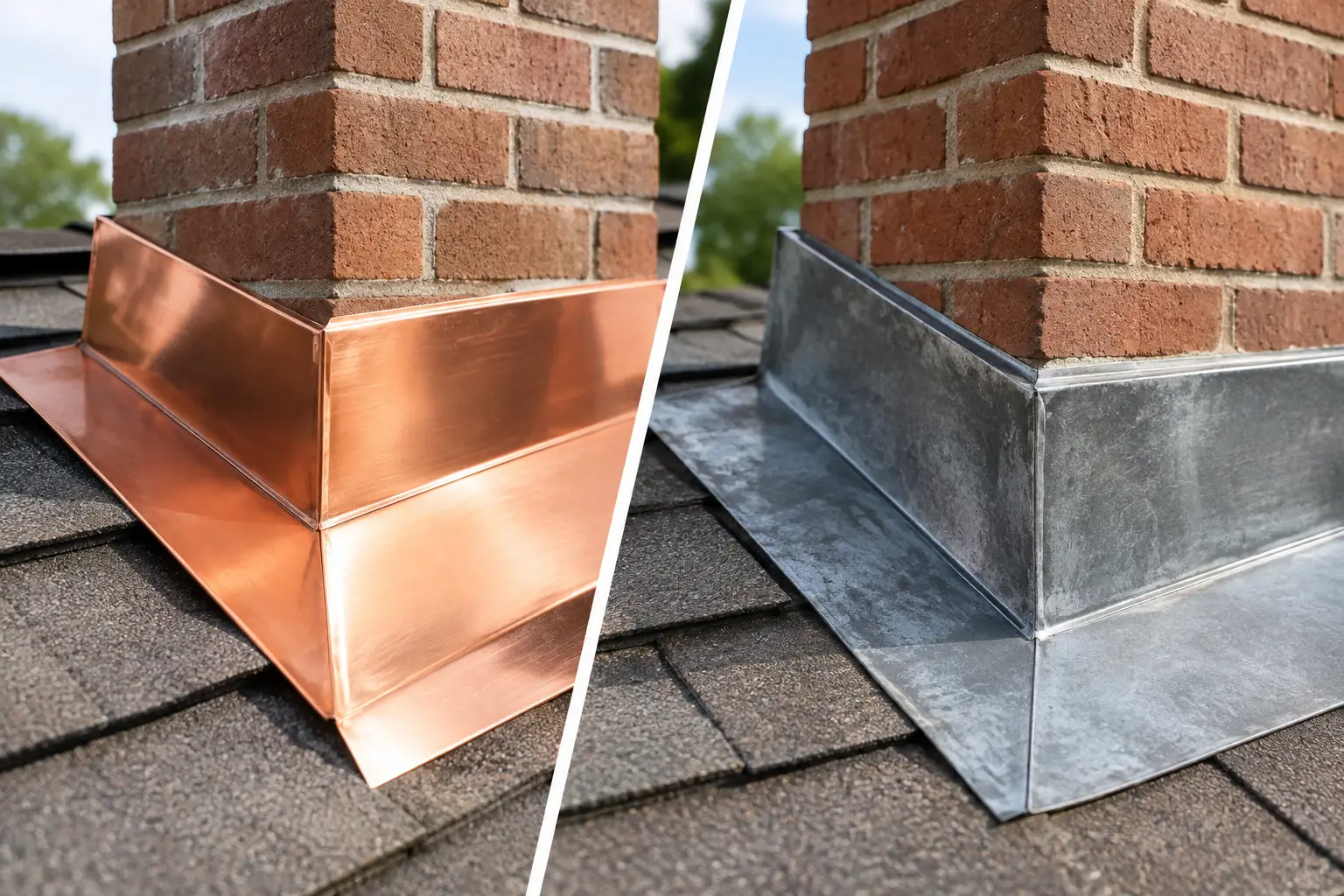
A flashing repair can be the difference between a sound period roof and a persistent leak around a chimney, abutment or valley. When considering copper versus lead roof flashing, the correct choice is rarely based on appearance alone. The roof covering, building age, detailing, exposure and the skill of the installer all matter.
Lead remains the established material for most traditional roofing work in the UK. Copper is a durable alternative with a distinctive finish and a long service life, but it is not automatically the better upgrade. For a repair to a slate roof, especially on a listed or character property, the aim should be a flashing detail that performs properly while sitting comfortably with the original fabric of the building.
Copper versus lead roof flashing: the key differences
Lead is widely used because it is exceptionally workable. A competent roofer can dress it neatly around brickwork, corners, chimney soakers, rooflights and awkward changes in level. It is available in recognised thicknesses and codes, allowing the installer to select material suited to the size and movement of the detail.
Copper is lighter than lead and has excellent corrosion resistance in most roofing environments. It begins bright, then gradually darkens before developing its familiar brown and green patina. This can look right on certain heritage projects, particularly where copper gutters, domes or existing metalwork are already part of the building.
The practical difference is in how each material handles movement and shaping. Lead is soft, forgiving and familiar to most roofing contractors. Copper is tougher and springier. It can be formed into precise flashings, but it requires appropriate tools, careful folding and allowance for thermal expansion. A poorly detailed copper flashing can split, distort or pull at fixings as temperatures change.
When lead is the stronger choice
For repairs to traditional slate and tile roofs, lead is usually the most straightforward and sympathetic option. It suits stepped flashings against masonry, apron flashings at chimneys, secret gutters, valleys and soaker details beneath slates. Its subdued grey finish also works naturally alongside Welsh slate, Burlington slate, Yorkshire stone slate and aged clay tiles.
Lead is particularly useful where a repair must blend with established materials rather than announce itself. On listed buildings or homes in conservation areas, retaining traditional detailing may also be expected by the local authority or conservation officer. That does not mean copper is prohibited, but it does mean visual compatibility should be considered before ordering material.
Where copper earns its place
Copper can be an excellent choice for a roof designed around it, or where the building already has copper rainwater goods and decorative metalwork. Its resistance to general weathering is a genuine advantage, and a well-installed copper detail can remain serviceable for decades.
It may also suit projects where lead theft is a recurring concern. Copper still has scrap value, so it is not theft-proof, but it is often used in different forms and may be less associated with the standard lead sheet details targeted on vulnerable roofs. Security measures and good site practice remain necessary whichever metal is selected.
Copper’s changing colour is either a benefit or a drawback depending on the property. On a contemporary extension, the patina can add character. Against a roof of weathered reclaimed slates, however, a bright new copper flashing may look out of place for some years before it settles down.
Lifespan, weathering and roof performance
Both materials can offer a long working life when specified and fitted correctly. The common cause of flashing failure is not that the metal was inherently unsuitable. It is poor detailing: inadequate laps, incorrect fixings, excessive lengths without movement provision, incompatible materials or failed mortar pointing around the flashing.
Lead develops a protective surface layer as it weathers. It needs to be laid with appropriate laps, clips, expansion joints and support. Large uninterrupted lengths are prone to thermal movement, which can cause fatigue and splitting if the detail has been restricted. Correctly sized leadwork allows the metal to move without compromising the weathering of the roof.
Copper also expands and contracts, and its movement must be planned for. It should not be rigidly fixed along its full length. Cleats, suitable clips and properly formed expansion details are essential, particularly on long runs, wide aprons and exposed locations.
Local conditions matter as well. Coastal exposure, overhanging trees, pollution and persistent damp can all affect a roof’s maintenance needs. Neither lead nor copper should be treated as a fit-and-forget solution. Keep gutters clear, remove debris that holds moisture against flashings and inspect high-risk junctions after severe weather.
Avoiding incompatible metal details
Different metals should not be casually mixed in one roof detail. When dissimilar metals are in contact and regularly wet, galvanic action can accelerate corrosion. Copper runoff can also affect some adjacent metals, including galvanised steel, zinc and aluminium.
A competent roofer will separate incompatible materials where needed and consider the direction of water flow. This is especially relevant on repair work, where a new flashing may meet older gutters, valley liners, fixings or roof accessories. Matching the flashing to the surrounding system is more important than selecting a material in isolation.
Heritage appearance and compatibility
On a period roof, flashing should support the character of the main covering rather than compete with it. Reclaimed Welsh slate, Burlington slate and handmade clay tiles all carry age, texture and variation that a modern replacement material may struggle to match. The same principle applies at the roof junctions.
Lead has a long history in British roofing and generally gives the least visually disruptive result on traditional buildings. It can be dressed to suit irregular masonry and old roof lines, which is valuable where walls are not straight and chimney stacks have weathered over generations.
Copper is more visually assertive. That can be a deliberate design choice, but it should be agreed early, particularly where the roof is visible from the street. If only one short run of flashing is being replaced, copper may create an obvious contrast with surviving leadwork. Replacing all associated details may improve consistency, but it will increase the cost and may not be appropriate on a historic roof.
Cost: look beyond the sheet price
Material cost matters, particularly on large roofing projects, but it should not be the only comparison. Lead is dense and priced by weight, while copper pricing can fluctuate significantly. Copper may cost more upfront for some details, and specialist fabrication or installation can add to the labour bill.
The more useful question is whole-life value. A correctly specified flashing that lasts for many decades, protects the roof structure and avoids repeated local repairs is usually better value than a cheaper detail that fails early. On a slate roof, water entering at a chimney or abutment can damage battens, underlay, fixings and internal finishes long before the leak becomes obvious indoors.
For repair work, also factor in the cost of making good surrounding slates or tiles. Reclaimed materials can be invaluable where original roof coverings need to be lifted and reinstated without introducing a patchwork of mismatched replacements.
Installation points that should not be overlooked
The best material can still fail in poor hands. Flashing work should be planned alongside the roof covering, not added as an afterthought once slates or tiles are already fixed. Soakers, cover flashings, underlay support and drainage routes need to work together.
Before choosing copper or lead, establish four practical points:
- the roof pitch, exposure and location of the detail
- the type, condition and thickness of the existing roof covering
- whether the new work must match historic materials or satisfy conservation requirements
- what metals, gutters, fixings and wall finishes sit nearby
Leadwork should be installed to recognised trade practice, with the correct code selected for the application and adequate provision for movement. Copper needs equally careful fabrication, compatible fixings and detailing that prevents trapped water. In either case, mortar pointing alone should never be relied upon to hold a flashing in place.
For homeowners, the clearest sign of a sound proposal is a roofer who explains the detail rather than simply naming a material. Ask how the flashing will be stepped, lapped, fixed and allowed to move. On a substantial repair, ask which slates or tiles will be lifted and whether suitable replacements are available if any break during the work.
A roof repair lasts best when the flashing, slate or tile, fixings and drainage are chosen as one system. Whether lead remains the right match or copper suits the building better, taking a sample, photographs and measurements to a specialist supplier before work starts will help secure materials that protect both the roof and its character.

