

Dry Verge Versus Mortar Bedding – Which Is Best?
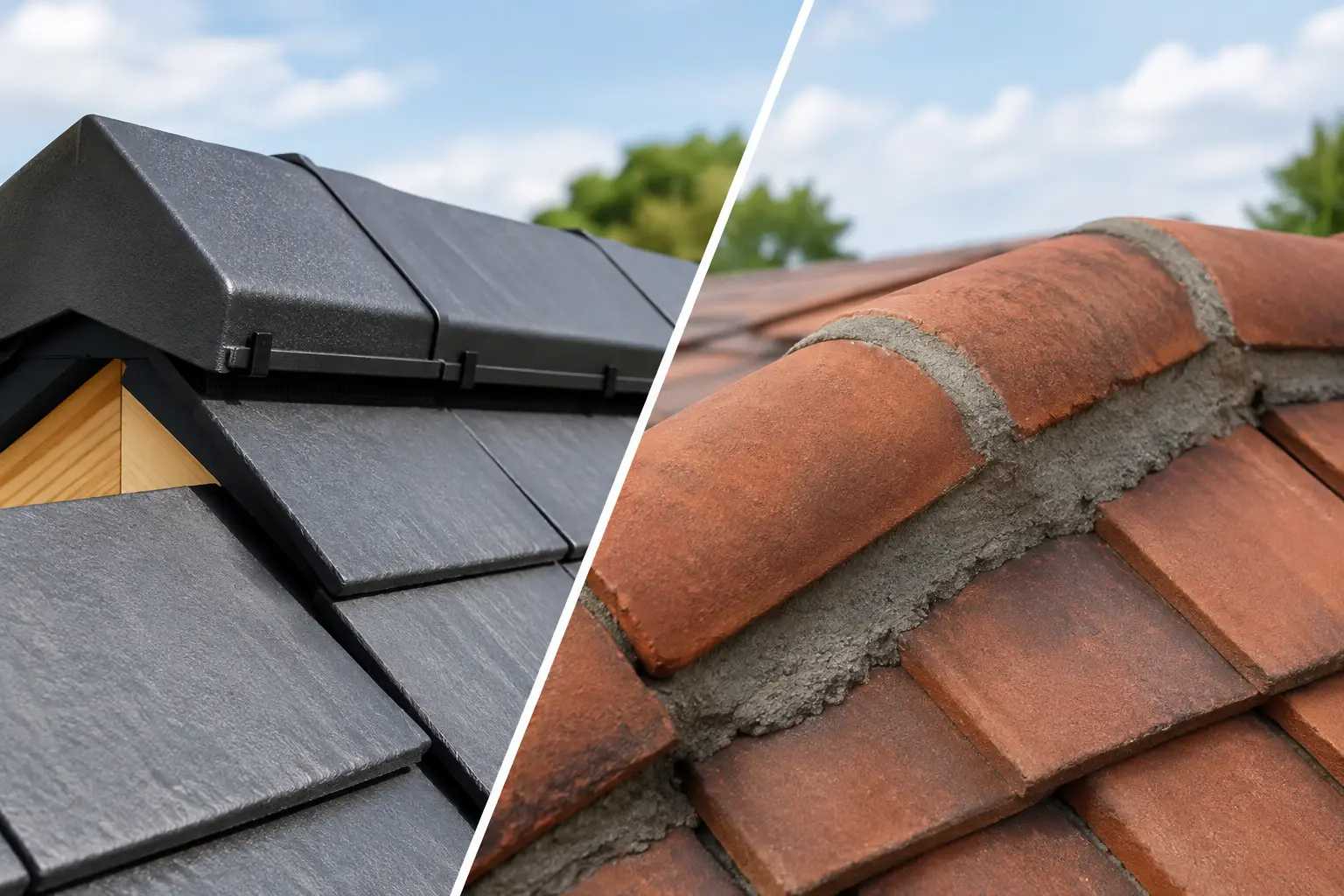
A gable verge is a small part of the roof, but it receives a hard life. It is exposed to wind uplift, driving rain and movement at the roof edge, so the choice between dry verge versus mortar bedding affects far more than appearance. For a new tiled roof, a dry system may offer a tidy, mechanically fixed finish. On a period slate roof, mortar bedding can be the detail that preserves the building’s original character and keeps replacement materials visually consistent.
The right answer depends on the roof covering, pitch, exposure, existing construction and whether the property sits within a conservation area or has listed status. A verge system should never be selected simply because it is quicker to fit or because it looks modern. It needs to suit the roof as a whole.
What a roof verge needs to do
The verge is the exposed edge where the roof covering finishes at the gable wall. Its job is to restrain the outer course of tiles or slates, shed water clear of the wall and resist wind getting beneath the roof covering.
On many modern interlocking tile roofs, proprietary dry verge units cover and secure the outer tile edges. On traditional roofs, particularly those finished in natural slate or plain tiles, the verge may be formed with mortar bedding over an undercloak. The individual slates or tiles are still fixed correctly to battens or decking; mortar is not a substitute for proper mechanical fixing.
The visual difference is immediate. A dry verge has a defined, often thicker edge profile, while a mortar verge follows the lines and texture of traditional roofing materials. That distinction matters on period properties, where a poorly matched verge can make an otherwise careful repair look out of place.
Dry verge versus mortar bedding: the practical difference
Dry verge systems are usually manufactured components, commonly uPVC, designed to interlock and fix mechanically along the gable edge. Mortar bedding uses a suitable roofing mortar to bed tiles, slates or an undercloak at the verge, creating the traditional finished edge.
Neither approach is universally better. Dry verge generally favours speed, repeatability and reduced mortar maintenance. Mortar bedding favours heritage accuracy, flexibility around irregular reclaimed materials and a less intrusive visual finish.
Where dry verge systems work well
A dry verge is often a sensible option for modern interlocking concrete or clay tiles where a compatible system is available from the tile manufacturer. The units are fixed to the structure or verge batten rather than relying on mortar alone, which can be helpful on exposed elevations where wind loading is a concern.
It also avoids the common problems associated with poor mortar work: cracking, friable joints and sections dropping away after repeated freeze-thaw cycles. When fitted to the manufacturer’s instructions, with the correct verge battens, clips and end caps, it can provide a clean and consistent finish with limited routine maintenance.
For reroofing work, dry verge can reduce wet trades and help keep a programme moving in unsettled weather. It is also useful where matching existing mortar colour and texture would be difficult.
There are limitations. The components are designed around particular tile profiles and gauges, so they are not a universal answer for every roof covering. A dry verge can look oversized against small handmade plain tiles, narrow natural slates or weathered reclaimed materials. On an older property, that modern edge profile may undermine the appearance of the elevation.
Dry verge units must also be installed with care. Poor alignment, inadequate fixing into weak timber, missing closure pieces or incorrect detailing at the eaves can leave the system looking untidy and may compromise its weather resistance. A plastic verge is not maintenance-free if the supporting roof edge is deteriorating.
When mortar bedding remains the right detail
Mortar bedding is often the more appropriate choice for traditional roofs, including many Welsh slate, Burlington slate, Yorkshire stone slate and handmade clay tile roofs. It allows the roofer to form a verge that follows the natural variation of reclaimed materials rather than forcing them into a standard manufactured profile.
On a heritage property, retaining or reinstating a mortar verge can be essential to maintaining the building’s established character. The undercloak, bedding line and mortar finish should be proportioned to suit the existing roof rather than applied as a thick, conspicuous strip. Colour and texture matter as much as the joint itself.
A properly formed mortar verge can perform well for many years, but workmanship is critical. The correct mix, adequate support, clean bedding surfaces and proper curing all affect longevity. Mortar that is too hard for the surrounding historic materials can be problematic, while weak or poorly bonded mortar may crack and fail prematurely.
Mortar bedding needs periodic inspection, particularly after severe weather. Small cracks and localised loss should be repaired early, before wind-driven rain reaches the roof edge or outer timberwork. This maintenance requirement is not necessarily a reason to avoid mortar. It is simply part of owning and caring for a traditional roof.
Roof covering should lead the decision
The type of roof covering is usually the strongest starting point. Interlocking tiles commonly lend themselves to a proprietary dry verge system, provided the tile profile, pitch and manufacturer’s fixing specification permit it. A new-build extension with modern concrete tiles is a typical example.
Natural slates require a more considered approach. Their thinner profile, variable sizes and traditional fixing methods do not always sit comfortably with dry verge components. A mortar-bedded slate verge may be more authentic and easier to detail correctly, especially where the existing opposite verge provides a clear reference.
Reclaimed materials add another factor. Reclaimed slates and tiles are valued precisely because they carry natural variation in thickness, weathering and colour. That variation is desirable on a restoration project, but it requires experienced setting out. Mortar can accommodate slight irregularities at the roof edge in a way that a fixed-profile dry verge often cannot.
For repair work, matching what is already present usually produces the most convincing result. Replacing a failed mortar verge with a prominent plastic system may solve one maintenance issue but create a visual mismatch. Conversely, applying new mortar to a roof that already has a sound, compatible dry verge may be unnecessary.
Exposure, ventilation and fixing requirements
A roof in a sheltered setting does not face the same forces as one on an exposed hillside, coastal location or tall gable end. Wind zone, building height, roof pitch and local topography should all inform the fixing design. Current BS 5534 requirements and the roof covering manufacturer’s instructions should guide the specification, particularly for mechanical fixings and wind loading.
Do not assume that a dry system automatically provides better protection in high winds, or that mortar is inherently unsuitable. A well-designed mortar verge with correctly fixed tiles or slates can be durable. Equally, a dry verge installed without sufficient fixing support can fail under load.
Ventilation also needs thought. The verge detail must not interfere with the roof’s intended ventilation path or introduce unnecessary gaps that allow wind-driven rain and insects into the roof space. This is especially relevant when a partial repair joins old construction to new membrane, battens and accessories.
At the eaves, the verge needs a clean termination that directs water into the gutter rather than behind the fascia. At the ridge, the final unit or mortar detail must integrate properly with the ridge system. These junctions are where rushed work tends to show.
Cost, maintenance and appearance over time
Dry verge often has a higher material cost than a simple mortar finish, although it may reduce labour and future repointing work. For standard tiled roofs, that can make it a commercially sensible choice. The full cost should include compatible verge units, fixing components, verge battens and any replacement tiles needed to achieve the correct layout.
Mortar bedding can have lower material costs but is more dependent on skilled labour and suitable weather conditions during installation. Its long-term cost includes occasional repairs, particularly on exposed elevations. On a period property, however, that ongoing care may be preferable to changing the roof’s appearance with an unsuitable modern system.
Appearance changes with age. Mortar weathers and can mellow into the roof, particularly when colour-matched well. Dry verge remains more defined and may fade or weather differently from the tiles beside it. Neither outcome is automatically wrong, but owners of heritage buildings should consider how the roof will look in ten or twenty years, not only on completion day.
Specifying materials for a repair or reroof
Before ordering materials, assess the existing verge from ground level and, where safe, at close range. Identify the roof covering, batten condition, existing undercloak arrangement, signs of movement and any water staining beneath the verge. Photographs of both gable ends, the eaves and ridge junctions give a roofer or supplier far more useful information than a tile count alone.
For heritage repairs, retain a sample of the original slate, tile and mortar where possible. It helps establish size, thickness, colour and finish. ReclaimedRoofSlates.com can help source reclaimed roof materials that sit naturally within an existing roof, while the roofer can determine the appropriate verge detail and fixing method for the site.
The best verge is the one that respects the roof it belongs to. Choose dry verge where it is compatible, properly specified and visually appropriate; choose mortar bedding where traditional construction, reclaimed materials and the character of the building call for it. A carefully detailed edge will protect the roof and avoid turning a sound repair into the feature everyone notices for the wrong reason.

