

Reclaimed Roofing Materials UK Buyers Can Trust
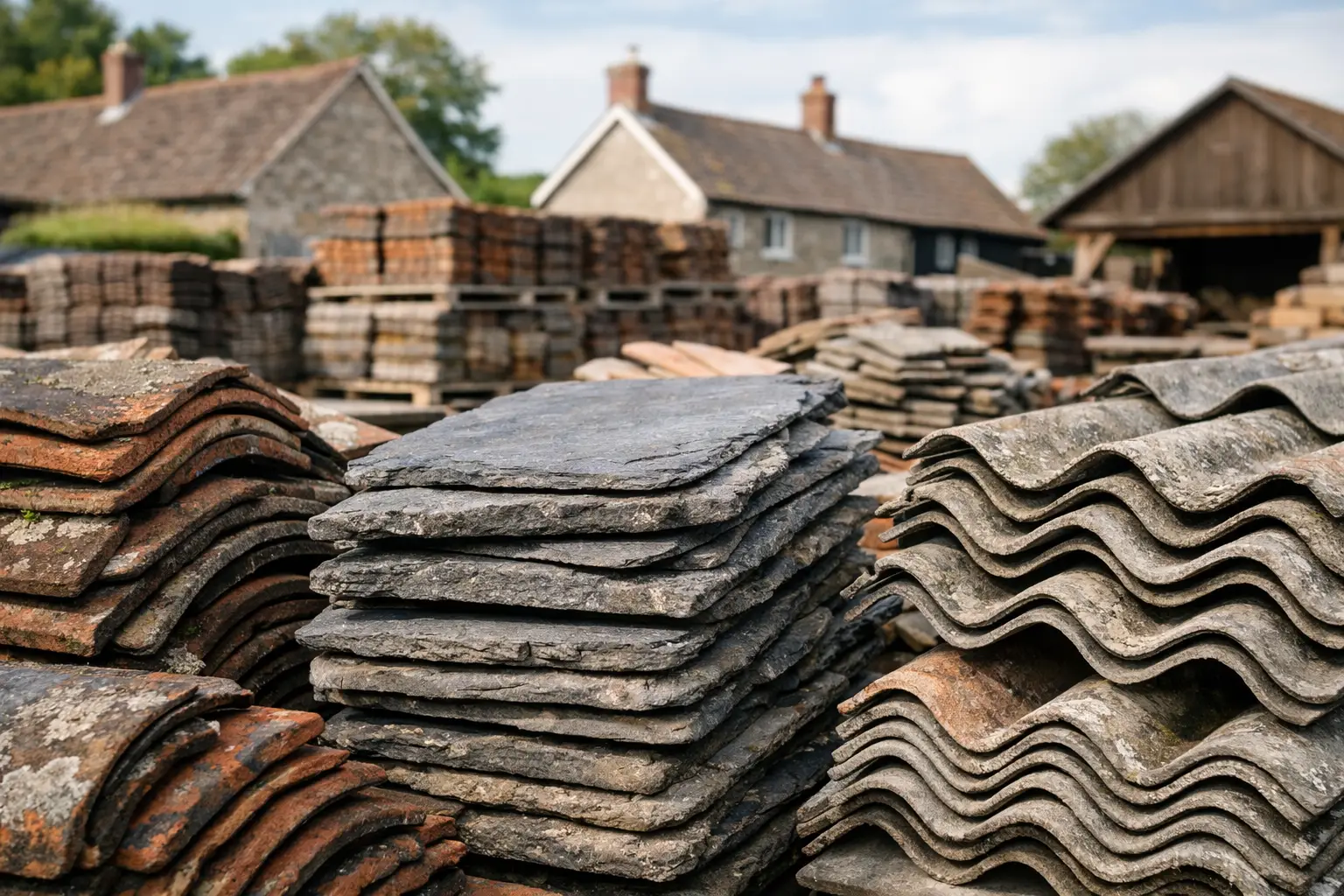
A single slipped slate on a Victorian terrace can become a much larger problem when the replacement is the wrong colour, thickness or size. That is why reclaimed roofing materials UK buyers source need more than age and character: they need to match the roof already in place, perform in British weather and fit the intended roof covering correctly.
For roofers, builders and owners of period properties, reclaimed materials are often the most practical route to a repair that does not look patched. They can also be the right choice for a full reroof where planning requirements, conservation expectations or the character of the building call for authentic materials. The key is buying with enough information to assess compatibility before work begins.
Why reclaimed materials are different
Reclaimed slates and tiles have already proved they can withstand decades of exposure. Good Welsh slate, Burlington slate, Yorkshire stone slate and clay tiles can offer a long remaining service life when properly selected and installed. Their weathered surface, softened colour variation and established patina are difficult to reproduce with new products.
That does not mean every reclaimed item is automatically suitable. Materials removed from a roof may vary in condition, dimensions and thickness, particularly where they have been accumulated from several sources. A sound supply process separates usable stock from damaged, excessively worn or incompatible pieces. This matters most on visible roof slopes, where inconsistent materials can affect both appearance and the way the roof lays.
Reclaimed stock is also finite. A matching slate available today may not be available in the same quantity later in the project. For larger works, it is sensible to establish the required coverage, allowance for cuts and breakages, and any future repair stock before committing to installation.
Matching reclaimed roofing materials to the existing roof
The best match is not always the closest colour. Roof covering materials need to work as a system, and size, thickness, lap and fixing method all influence the finished roof.
Identify the material before ordering
Start by confirming whether the roof is slate, stone slate or clay tile. Welsh and Burlington slates are generally thinner and more regular than traditional Yorkshire stone slates, which are commonly thicker, heavier and laid in diminishing courses. Rosemary tiles have a distinct clay profile and colour character that differs from many modern machine-made interlocking tiles.
Where possible, retain an undamaged sample from the roof. Measure its length, width and thickness, and photograph both faces. Note the colour, texture, fixing holes and whether the slate is dressed or has a more natural edge. For tiles, check the nib arrangement, gauge and overall profile. These details help a specialist supplier identify the closest suitable stock and prevent costly assumptions.
Check course sizes and roof gauge
A roof may use random-width slates, diminishing courses, fixed-size slates or a mix created by previous repairs. Replacing a 20 x 10 inch slate with a similar-looking but differently sized piece can alter the headlap or leave awkward joints. The issue is more pronounced with stone slate roofs, where course layout and weight must be planned carefully.
Measure the exposed section of the existing covering as well as the full slate or tile. This gives the roofer a clearer view of the gauge and lap being used. If the roof is being stripped and renewed, calculate coverage from the intended laying pattern rather than relying only on the number of old units removed.
Consider weight and roof structure
Traditional stone slates can be significantly heavier than conventional slate or clay tile. A replacement roof using stone slates should be assessed for structural suitability, especially if the roof construction has been altered or the building is undergoing wider renovation. Never substitute materials solely because they appear similar from ground level.
What to inspect before reclaimed materials are laid
Condition should be assessed piece by piece during sorting and again as materials are prepared for fixing. A reclaimed slate should be sound, reasonably consistent in thickness for its intended location and free from faults that compromise performance.
Look for laminations, delamination, severe edge damage, cracks around fixing holes and excessive softness. Slate can suffer from hidden weaknesses after removal, handling and transport. A gentle ring test is sometimes used by experienced roofers, but it should support rather than replace a visual inspection. Any doubt is best resolved before the slate reaches the roof.
Clay tiles need similar care. Check for cracks, frost damage, distortion and damaged nibs. The nib is not a minor detail: if it is compromised, the tile may not hang securely on the batten. Ridge and valley tiles should be inspected for sound arrises and compatible profiles, particularly where they will join original materials.
It is normal for reclaimed stock to include some variation. The question is whether that variation suits the roof. Slight changes in tone often improve the natural appearance of a period roof, while major differences in size or thickness can create uneven courses and difficult fixing.
Do not treat accessories as an afterthought
The roof covering receives most of the attention, but its supporting components determine how well the job performs. A period-property repair may require matching ridge tiles, valley tiles, leadwork, battens, fixings, underlay, ventilation components and suitable sealants. Sourcing these alongside the slates or tiles reduces the risk of delays once work is underway.
Fixings must suit the material and exposure. Copper nails, stainless steel nails and hooks are each used in different roofing applications, depending on the slate type, roof design and local conditions. The choice should follow good roofing practice and the requirements of the particular slate or tile, not simply what was used on a previous repair.
Leadwork deserves the same attention. Valleys, soakers, flashings and abutments are common failure points on older roofs. Reusing a good roof covering while leaving tired lead details in place can shorten the value of the work. Where replacement is required, ensure the detailing is appropriate to the roof pitch, covering type and junction.
Buying the right quantity
Ordering exactly the calculated coverage is rarely enough. Reclaimed materials need an allowance for sorting, cuts, breakages and selection of the best faces for prominent areas. The appropriate allowance depends on the roof shape, the consistency of the stock and whether the roof uses valleys, hips, dormers or complex abutments.
For a small repair, buying a few extra matching units is sensible. Keep them safely stored for future maintenance, ideally labelled with the material type and dimensions. For a complete reroof, discuss the quantity in square metres, tonnes or number of pieces with the supplier, depending on the product. Stone slate is often supplied and planned by weight as well as coverage.
Ask whether the stock is a consistent batch and whether the stated dimensions are nominal or exact. This is especially useful when matching a roof with narrow tolerances. A reliable supplier should be able to explain the nature of the material, the likely coverage and any expected variation.
Heritage work and planning considerations
Listed buildings and properties in conservation areas may have restrictions on changes to roofing materials. Even where formal consent is not required, replacing natural slate with a modern alternative can alter the character of the building and affect its long-term value. The existing roof is often the best starting point for deciding what should go back.
Heritage-compatible repairs are not about making a roof look artificially old. They are about retaining the correct material, scale and detailing for the building. A reclaimed Welsh slate may be appropriate for one property, while Yorkshire stone slate or handmade clay tiles may be essential for another. Local roof traditions matter.
Before ordering, check whether the work needs consent and speak with the relevant conservation officer or project professional where necessary. This is particularly worthwhile on prominent elevations, historic buildings and larger reroofing projects.
Choosing a specialist source
The most useful reclaimed roofing supplier is one that understands the difference between a slate that looks close and a slate that will genuinely work on the roof. Stock depth matters, but so do practical product knowledge, careful inspection and access to complementary materials.
ReclaimedRoofSlates.com supplies reclaimed slates, heritage tiles and the roofing essentials needed to complete repair and restoration work, from individual replacements to volume orders. For trade buyers, clear dimensions, realistic quantity advice and consistent communication can make the difference between a smooth programme and a roof left exposed while more materials are sought.
When requesting a quote, provide photographs, measurements, estimated quantity, delivery requirements and the timescale for the work. If you are unsure of the existing material, say so. A good identification process at the start is far cheaper than fitting an unsuitable substitute.
The strongest reclaimed roof repairs are usually the least obvious: sound materials, correctly gauged courses, suitable fixings and details that belong to the building. Begin with a clear sample and accurate measurements, then secure enough compatible stock to finish the work properly and retain a few pieces for the years ahead.

