

When Should Roof Lead Be Replaced on Your Roof?
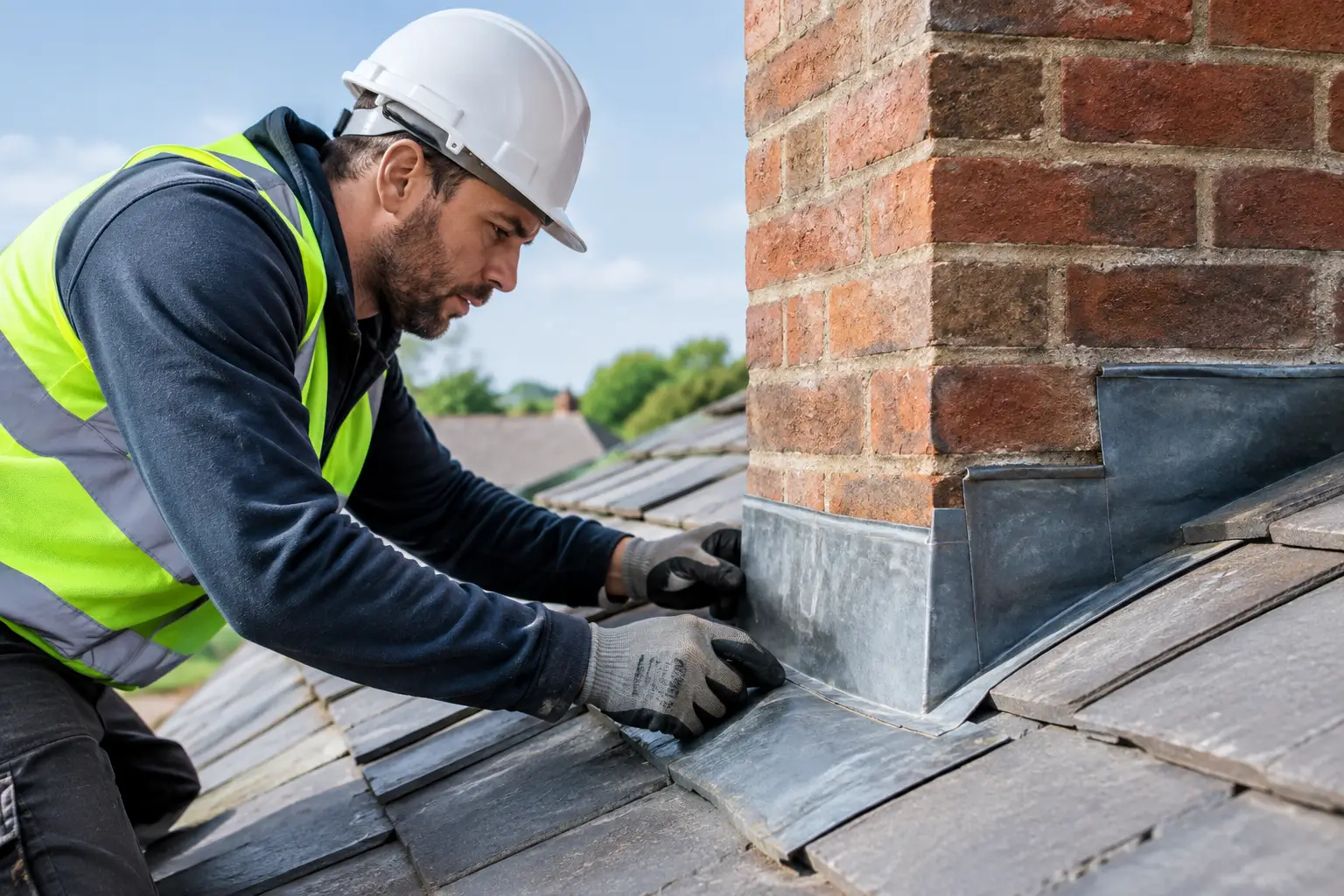
A small split in roof lead can let in far more water than its size suggests. On a slate or tile roof, the leadwork is often the detail keeping water out at abutments, chimneys, valleys and penetrations. So, when should roof lead be replaced? Replace it when it has split, thinned, slipped, deteriorated beyond a local repair, or no longer accommodates normal roof movement without leaking.
For period properties in particular, leadwork should not be treated as an afterthought. The right repair needs to preserve the roof’s weathering, work with existing reclaimed slates or tiles, and avoid creating a patch that fails a few winters later.
What roof lead does and why it fails
Roofing lead is used where slates, tiles, brickwork and roof junctions meet. Common examples include chimney flashings, step flashings along a wall, back gutters behind chimneys, valleys, soakers, dormer details and pipe flashings. Lead is valued because it is durable, malleable and suited to irregular heritage roof details.
It does, however, move. It expands in warm weather and contracts in cold weather. Correctly installed lead is detailed in manageable lengths, with allowance for movement and suitable fixings. When it is laid in oversized pieces, fixed too tightly, unsupported, or installed with poor laps, stress can build up and eventually cause cracking.
Age is only one part of the picture. A well-fitted lead flashing can last for decades, while poorly detailed lead may fail much sooner. The roof covering around it matters too. Loose slates, broken tiles, failed mortar or decayed battens can all direct water behind leadwork that otherwise appears sound.
Signs roof lead needs replacing
A professional inspection is the best way to decide whether the issue is repairable or whether a section should be renewed. From ground level or a safe access point, there are several clear warning signs.
Splits, cracks and holes
Visible splits are the most straightforward reason to replace lead. Cracks often appear at corners, folds, outlet points and areas where the lead has been forced to move. Small holes can also develop through wear, corrosion around incompatible metals, or repeated foot traffic.
A temporary patch may stop an immediate leak, but it is rarely a long-term answer where the surrounding lead is brittle, stretched or heavily worn. If one crack has formed because the lead is constrained, the underlying detailing must be corrected when the replacement is fitted.
Lifting, slipping or open laps
Lead flashings and soakers should lie securely in place with adequate cover to shed water. If a flashing has lifted away from brickwork, slipped down a roof slope, or has open laps, wind-driven rain can find its way underneath.
At chimneys, failed pointing in a lead chase can allow the flashing to loosen. Repointing may be sufficient if the lead remains sound and properly shaped. If it has torn at the chase, creased repeatedly or become too short to provide a proper upstand, replacement is the more dependable option.
Staining and water ingress inside
Damp marks on ceilings, wet insulation, mould around a chimney breast or staining in a loft can point to failed leadwork, though the leak may not be directly above the stain. Water can travel along rafters, felt or battens before becoming visible indoors.
Check after heavy rain and strong winds, particularly around chimneys, valleys, rooflights and abutments. Do not assume that fresh mortar, sealant or a coat of paint has solved the issue. Finding the water path is what matters.
Surface deterioration and excessive deformation
Lead develops a natural surface patina, which is normal and protective. A dull finish alone is not a reason to replace it. Concern begins where the sheet is visibly thinning, deeply pitted, badly distorted, sagging into a valley, or covered in severe ripples and creases.
White staining can also occur where runoff interacts with certain materials. It should be assessed in context rather than treated as automatic failure. The key question is whether the lead remains of sufficient condition and shape to direct water safely away.
When repair is enough – and when replacement is better
Not every defect calls for new lead. A local repair can be sensible where damage is limited, the surrounding lead is sound and the original installation has room to continue performing. Re-securing a loose edge, renewing failed mortar in a chase, correcting a slipped slate, or making a carefully detailed local repair may extend service life without disturbing sound heritage fabric.
Replacement becomes the better value option when deterioration is widespread or the original detail is fundamentally wrong. For example, a back gutter that is too shallow, a valley with exhausted lead, or a long flashing installed without expansion provision is likely to keep causing problems. Repeated call-outs and sealant patches can cost more than renewing the affected section properly.
There is also a visual consideration on older roofs. A bright new lead repair next to weathered slates is usually less intrusive than poorly matched modern flashing materials, but the work should still be proportionate. Retain sound original leadwork where possible, particularly on historically significant buildings, and replace only what has genuinely reached the end of its useful life.
Roof areas that deserve closer inspection
Some lead details take more punishment than others. Valleys collect high volumes of water and debris, so they should be checked for splits, blockages, sagging and exposed edges. Chimney back gutters are vulnerable because water can pool behind the stack if falls are inadequate or leaves build up.
Step flashings and soakers must work together on side abutments. If a slate or tile is loose, water may bypass the lead rather than run over it. On dormers and rooflights, complex junctions mean that a minor gap can become a persistent leak.
If the roof is being stripped for a slate repair, re-roof or insulation upgrade, inspect all concealed leadwork at the same time. This is often the most economical opportunity to renew tired valleys, soakers or back gutters before the roof covering is reinstated.
Choosing the right leadwork for a replacement
Replacement lead should be selected and formed for the job, not simply cut from whatever is available. Roofing lead comes in different thicknesses, commonly referred to by code. The correct choice depends on the detail, its width, expected water flow, support and length. A competent roofer will allow for thermal movement, use suitable laps, avoid over-long bays and form proper drips, upstands and welted edges where needed.
Compatibility matters as much as thickness. Some fixings, treatments and adjacent metals can cause staining or corrosion. Where lead meets slate, tile or masonry, the detail must direct water onto the roof covering rather than behind it. On heritage projects, this is especially relevant when matching reclaimed Welsh slate, Burlington slate, Yorkshire stone slate or traditional clay tiles.
Avoid relying on sealant as the main waterproofing method. Sealant has a place for specific detailing and repairs, but leadwork should shed water by its shape, laps and falls. A roof detail that only works while a bead of sealant remains perfect is not a durable repair.
Practical checks before arranging work
Before ordering materials or booking a roofer, establish what is actually failing. Photographs from a safe position, loft observations after rain and details of when the leak occurs are useful. Leaks that appear only during wind-driven rain can indicate an exposed flashing or inadequate lap, while steady dripping after prolonged rain may point to a valley or back gutter issue.
Ask for the affected lead detail to be identified clearly, along with the cause of failure and the proposed method of repair. For a replacement, the scope should state whether nearby slates or tiles will be lifted and reused, whether soakers need renewing, and how the new lead will be secured. This prevents a quote for a visible patch when the real fault sits beneath the roof covering.
Work at height and lead handling both require appropriate precautions. Do not walk on brittle slates, old clay tiles or unsupported lead valleys to investigate a leak. A qualified roofer can assess the roof safely and protect the surrounding covering while work is carried out.
A sound lead detail is rarely noticed, which is exactly how it should be. If your flashing, valley or chimney gutter is showing repeated leaks, movement damage or widespread wear, deal with it before water reaches timbers and insulation. Choosing compatible materials and a properly formed replacement will protect both the roof’s appearance and the structure beneath it for the long term.

