

Hard to Match Roof Tiles Explained
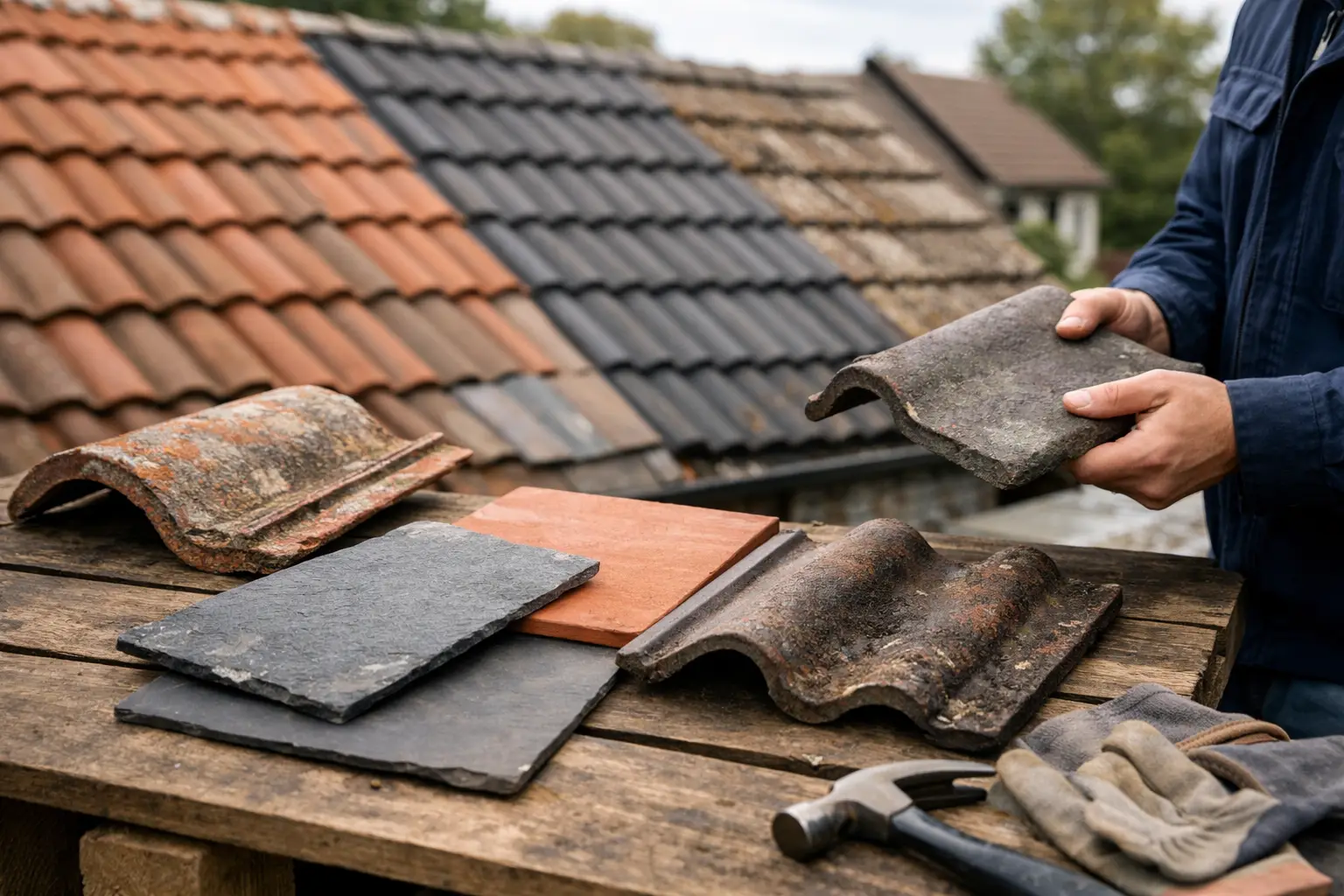
A single slipped or broken tile can turn a straightforward repair into a sourcing job, especially when the roof was laid decades ago. Hard to match roof tiles are usually not difficult because they are rare in absolute terms, but because the existing roof has changed over time through weathering, manufacturing variation and earlier patch repairs.
On period properties and older extensions, getting the right replacement is about more than plugging a gap. The profile, size, nib position, thickness, colour and surface texture all need to sit comfortably with the surrounding roof. If one of those details is off, the repair can stand out immediately, and in some cases the tile may not bed, lap or fix correctly.
Why hard to match roof tiles are so common
Most tile matching problems come from age and variation, not just availability. A roof that looks uniform from ground level often contains subtle differences that only become obvious once a replacement is attempted. Clay tiles fire differently from batch to batch, concrete tiles weather unevenly, and reclaimed roofs may include materials from several production runs or even several manufacturers.
That matters because names alone rarely tell the full story. Two tiles described as plain clay or interlocking concrete may still differ in gauge, roll, camber or overall face size. On heritage roofs, discontinued lines and regional products make the job more exacting again. What was once a standard local tile can become a hard-to-find match twenty or thirty years later.
Repairs after storm damage also expose another issue. The broken tile you remove may have faded, accumulated lichen or lost some of its original surface finish. A brand new replacement, even if technically similar, can look noticeably cleaner, flatter or brighter than the surrounding area.
What makes a roof tile hard to match?
Profile comes first
If the profile is wrong, the repair is wrong. Interlocking tiles are especially sensitive because the side and head locks must align properly with the surrounding courses. Even small profile differences can create gaps, rocking or poor weathering.
With plain tiles, the challenge is usually less about interlock and more about size consistency, thickness and appearance. A replacement that is a few millimetres out may still fix in place, but it can disrupt coursing lines or create an obvious patch.
Age and weathering affect the final look
Freshly made tiles and old weathered tiles rarely sit together without some visual difference. Clay can mellow and concrete can lighten or darken depending on exposure, pollution and biological growth. South-facing slopes often age differently from sheltered elevations.
This is why reclaimed material is often the better route for visible repairs. It gives you a replacement that already carries age, surface character and tonal variation closer to the existing roof.
Manufacturers change designs
Even when a tile range still exists, the mould, dimensions or finish may have changed. Production methods evolve, tolerances shift and some older profiles are simplified or withdrawn. A current equivalent may be serviceable, but it is not always a true match.
For listed buildings and careful restoration work, that distinction matters. A near match may be acceptable on a rear pitch. On a principal elevation, it may not be good enough.
How to identify hard to match roof tiles properly
The quickest way to lose time is to rely on a rough description. Brown concrete tile, old plain clay tile and rosemary style tile are starting points, not identifications. Good matching depends on details.
Start with a sound sample if possible. One full tile is better than a fragment because it allows proper checking of the face, underside, nibs, hanging method and profile. Measure the overall length and width, then the exposed gauge if relevant. Note the thickness, the colour through the body and the surface finish. Check whether there are any maker’s marks, stamps or numbers on the reverse.
Photographs help, but they work best alongside dimensions. A clear image of the front, back, side profile and the tile in position on the roof gives a much better basis for matching than a distant shot from ground level.
For slate roofs, the process becomes even more specific. Length, width, thickness, edge condition and coursing all matter, particularly where reclaimed Welsh slates, Burlington slates or Yorkshire stone slates are being blended into an existing pitch. A slate that is geologically different can look out of place even if the nominal size is correct.
When reclaimed tiles are the better option
If the roof is older, visible and still in otherwise serviceable condition, reclaimed stock is often the most practical answer. It is not simply about appearance, although that is a major factor. Reclaimed tiles can also provide a closer fit to older gauges, traditional profiles and discontinued products.
This is particularly relevant for heritage repairs, period property upgrades and selective patching after localised damage. Instead of forcing a modern substitute into an older roof, reclaimed materials let you work with the character and geometry already there.
There are trade-offs. Reclaimed stock needs proper inspection for soundness, frost resistance and consistency. Quantities can vary, and exact matches are not always available in unlimited numbers. But where authenticity and visual continuity matter, reclaimed materials usually offer a better result than mixing in conspicuously new products.
Hard to match roof tiles on period properties
Older roofs often combine handmade variation with years of settlement and repair history. That means matching by catalogue image alone is risky. Handmade and machine-made clay tiles can look similar at first glance but behave differently once laid. Slight variation in shape may be normal and desirable on a period roof, while a too-perfect replacement can look wrong for the building.
Conservation settings add another layer. The goal is usually to preserve the roof’s established appearance rather than introduce a cleaner, sharper patch that announces the repair. On listed or heritage-sensitive properties, material choice may also need to align with planning or conservation expectations.
In these cases, experience with reclaimed and heritage roofing materials makes a tangible difference. The right supplier should understand the distinction between an acceptable substitute and a genuinely compatible match.
Common mistakes when trying to source a match
One common mistake is ordering on colour alone. Colour matters, but it is usually the last confirmation rather than the first. If the tile does not fit the roof correctly, a close colour match will not rescue the job.
Another is assuming all tiles with a familiar trade name are interchangeable. They are not. Similar names can cover different sizes, generations and profiles. The same applies to slates sold by a broad origin rather than a specific type.
There is also the temptation to replace a small area with whatever is currently available. Sometimes that is the only realistic route, especially on older concrete roofs where exact lines are discontinued. But if the repair is prominent, the better approach may be to source reclaimed replacements or to redistribute tiles so the closest match sits in the most visible area and less exact material is used elsewhere.
How to improve your chances of finding the right tile
Good matching starts before the enquiry is made. Keep any fallen or spare tiles from previous works. Take measurements carefully and provide roof pitch photos in natural light. If the building has been altered over time, mention that as well. A supplier can only work from the information available.
It also helps to be clear about the objective. If you need one or two replacements on a rear slope, a close match may be enough. If you are repairing a principal elevation on a period property, the brief is stricter. Trade buyers usually know this already, but homeowners often benefit from stating whether they want technical compatibility, visual blending or both.
A specialist stockholder with a broad reclaimed range can often save time here. Rather than trying to force a modern retail product into an older roof, you can compare against established reclaimed lines, heritage clay tiles, matching ridges and associated fittings in one place. That is often the difference between a repair that disappears into the roof and one that keeps drawing the eye.
At Reclaimed Roof Slates, that practical approach is what matters most. Hard to match roof tiles are rarely solved by guesswork. They are solved by accurate identification, realistic expectations and access to stock that reflects how older British roofs were actually built. If the repair matters, it is worth taking the extra step to match the roof you have, not the one a modern brochure assumes.

