

Why Do Slate Roofs Leak? Causes and Repairs
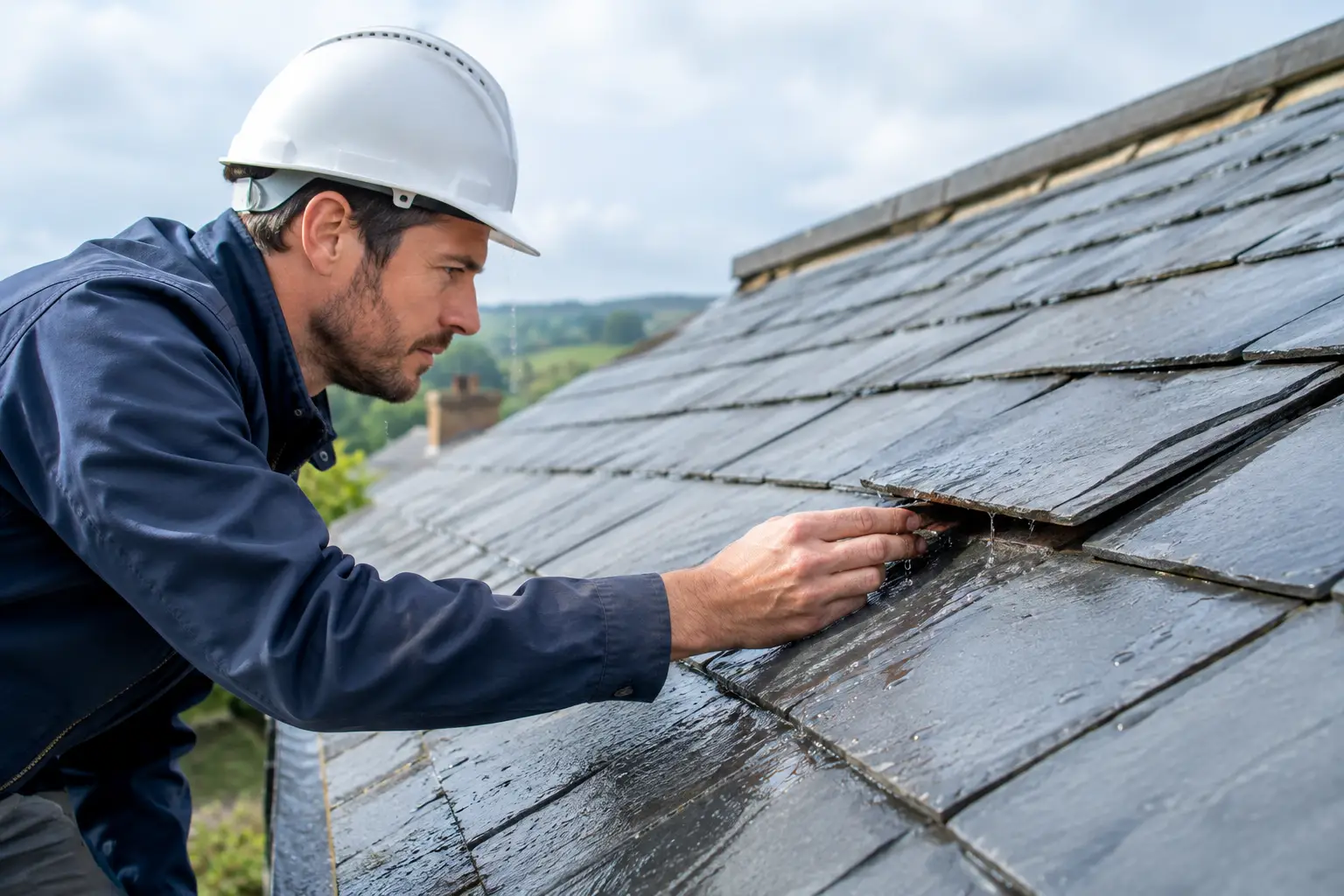
A slate roof can look sound from the ground while allowing water into the roof space at every spell of wind-driven rain. So, why do slate roofs leak when slate itself is one of the most durable roofing materials available? In most cases, the problem is not the slate. It is a failure in the way water is being shed – through broken or slipped slates, worn fixings, failed leadwork, poor detailing, or an earlier repair that has disturbed the roof’s natural lap.
For period properties in particular, a leak deserves a measured inspection rather than a quick patch. A well-laid natural slate roof can last for generations, but its performance depends on each course, fixing and junction working together.
Why Do Slate Roofs Leak When Slates Last So Long?
Natural slate is dense, hard and highly resistant to weather. Welsh slate, Burlington slate and other quality roofing slates do not normally become porous in the way some concrete tiles can. When water enters, it usually passes around a slate rather than through it.
A pitched slate roof works by overlapping individual slates so that rain runs down and out onto the course below. The headlap and sidelap must be sufficient for the roof pitch and exposure. If a slate cracks, slips, lifts at the bottom edge, or is replaced with an incorrectly sized piece, the route water should take can change.
This is why the location of damp inside a building is not always the location of the defect. Water can track along battens, rafters, underlay or the underside of a slate before it becomes visible on a ceiling. An internal stain is a useful clue, not a reliable map of the fault.
The Most Common Causes of Leaks in Slate Roofs
Broken, Cracked or Missing Slates
A cracked slate may be obvious after a storm, but hairline damage can be difficult to spot from ground level. Impact from fallen branches, foot traffic during chimney work, and repeated frost action can all cause a slate to fail. A missing slate leaves the underlay exposed and can admit significant water in heavy rain.
Replacement needs care. The new slate should match the existing roof as closely as possible in material, thickness, size, colour and texture. A thin imported slate placed among thicker reclaimed Welsh or Burlington slates may sit poorly, alter the lap, and look out of place. On a heritage roof, visual continuity matters as much as weathering performance.
Nail Sickness and Failed Fixings
Many older slate roofs were fixed with iron nails. Over decades, those nails can corrode until they no longer hold the slates securely. This is commonly known as nail sickness. Slates may begin to slip one at a time, often without breaking, because the fixing has failed rather than the slate itself.
A few slipped slates can be repaired individually. Widespread slipping across several elevations is different: it may indicate that the roof is approaching the end of its fixing life. Simply hooking back every loose slate can buy time, but it will not resolve widespread corrosion beneath the covering.
Copper or stainless-steel nails are generally used for durable slate repairs, selected to suit the roof build-up and local exposure. The correct fixing length and position are essential. Overdriven nails can crack slates, while loose fixings allow movement in wind.
Failed Lead Flashings and Soakers
Junctions are where many otherwise sound slate roofs leak. Chimneys, abutments, dormers, roof windows and valleys all rely on properly formed leadwork to direct water clear of vulnerable edges.
Lead flashings can split, lift, crack at folds or fail where they have been poorly chased into brickwork. Cement fillets often crack as a building moves and are not a like-for-like substitute for correctly detailed lead. At side abutments and around chimneys, individual lead soakers should be fitted between slate courses, with cover flashings protecting the upstand.
Valleys require particular attention. They carry concentrated flows of water, leaves and debris. A blocked valley, damaged lead lining or inadequate lap can cause water to back up beneath the slates. On older roofs, open lead valleys may have been covered over during an unsuitable previous repair, making future drainage worse rather than better.
Defective Ridge, Hip and Verge Details
Ridge and hip tiles are exposed to wind and weather, while verges can be vulnerable where mortar has deteriorated. Cracked bedding mortar may allow water in, but heavy mortar repairs can also create problems by restricting movement or concealing defects.
The right repair depends on the roof’s construction. Traditional roofs may require rebedding or repointing with an appropriate mortar, while some modern systems use dry-fix components. The aim is the same: secure the edge detail without forcing water back beneath the slate covering.
Poor Previous Repairs
A leaking slate roof often tells the story of several generations of maintenance. Common warning signs include silicone smeared over flashing joints, roofing felt pushed under slates without correcting the cause, mismatched slate sizes, exposed nails, excessive mastic and patches of cement.
Sealants have a limited role in roofing. They can be useful for specific compatible details, but they should not be relied on to compensate for missing lap, defective leadwork or failed fixings. A repair that changes the way water drains may look tidy for a season and create a larger problem later.
Underlay and Ventilation Problems
Older slate roofs were often laid without a modern membrane. They relied on good lap, ventilation and a roof space that could tolerate small amounts of wind-blown moisture. Adding underlay during refurbishment can improve secondary protection, but it must be installed correctly.
A torn or degraded membrane can allow water through, while a non-breathable underlay combined with inadequate ventilation can contribute to condensation. Condensation is frequently mistaken for a roof leak, especially where dampness appears after cold nights rather than rain. Check the pattern: rain-related ingress tends to worsen during or shortly after wet weather, while condensation often affects broader areas and may coincide with poor loft ventilation.
Diagnosing a Slate Roof Leak Properly
Inspection should start safely from ground level with binoculars, followed by a close inspection by a competent roofer where needed. Walking directly on slate is risky for both the person and the roof. Slates can crack under point loads, and fragile roof work requires suitable access equipment.
Look for slipped or uneven courses, broken corners, open joints, displaced ridge pieces, damaged flashings, vegetation in valleys and signs of staining around chimneys or roof windows. Inside the loft, inspect during daylight for visible gaps and after rainfall for fresh moisture. Check timbers, battens and insulation, but avoid assuming that the nearest wet timber identifies the entry point.
For a period property or listed building, document the existing slate sizes, gauge, coursing and details before work begins. This helps prevent a repair that solves a short-term leak but disrupts the roof’s historic appearance.
Repair or Renew: Knowing the Difference
A local repair is usually appropriate where defects are isolated: a handful of broken slates, a slipped course after wind damage, a damaged soaker, or a discrete split in leadwork. Using carefully selected reclaimed slates can preserve the established character of the roof and avoid the patchwork appearance created by unsuitable new materials.
More extensive work should be considered where nail sickness is widespread, battens have deteriorated, underlay has failed throughout, or repeated repairs are appearing across the roof. Stripping and relaying does not necessarily mean replacing all the slates. Sound original slates can often be salvaged, sorted and reused, with compatible reclaimed replacements making up unavoidable shortfalls.
The decision comes down to the condition of the roof structure, the proportion of failed fixings, the slate’s remaining life and the cost of repeated access. A roof with excellent Welsh slate but exhausted nails may justify careful relaying. A roof with isolated storm damage may only need a precise repair.
Choosing Materials That Keep the Repair Sound
A successful slate repair is not just about finding something that fills a gap. Match the slate’s length, width, thickness and appearance, then check that the replacement will maintain the correct headlap. Use compatible nails, leadwork and accessories, and ensure the repair is formed to shed water rather than depend on sealant.
ReclaimedRoofSlates.com supplies inspected reclaimed roofing materials for repairs where matching matters, from individual replacement slates to larger quantities for re-roofing work. For old roofs with hard-to-match materials, taking a sample or accurate measurements before ordering can prevent costly delays on site.
A slate roof leak should be treated as an early warning, not merely a stain to paint over. Find the route water is taking, correct the detail that has failed, and use materials suited to the roof already in place. That is how a repair protects both the building and the character that made the slate roof worth keeping.

