

Reclaimed Materials for Heritage Roof Repairs
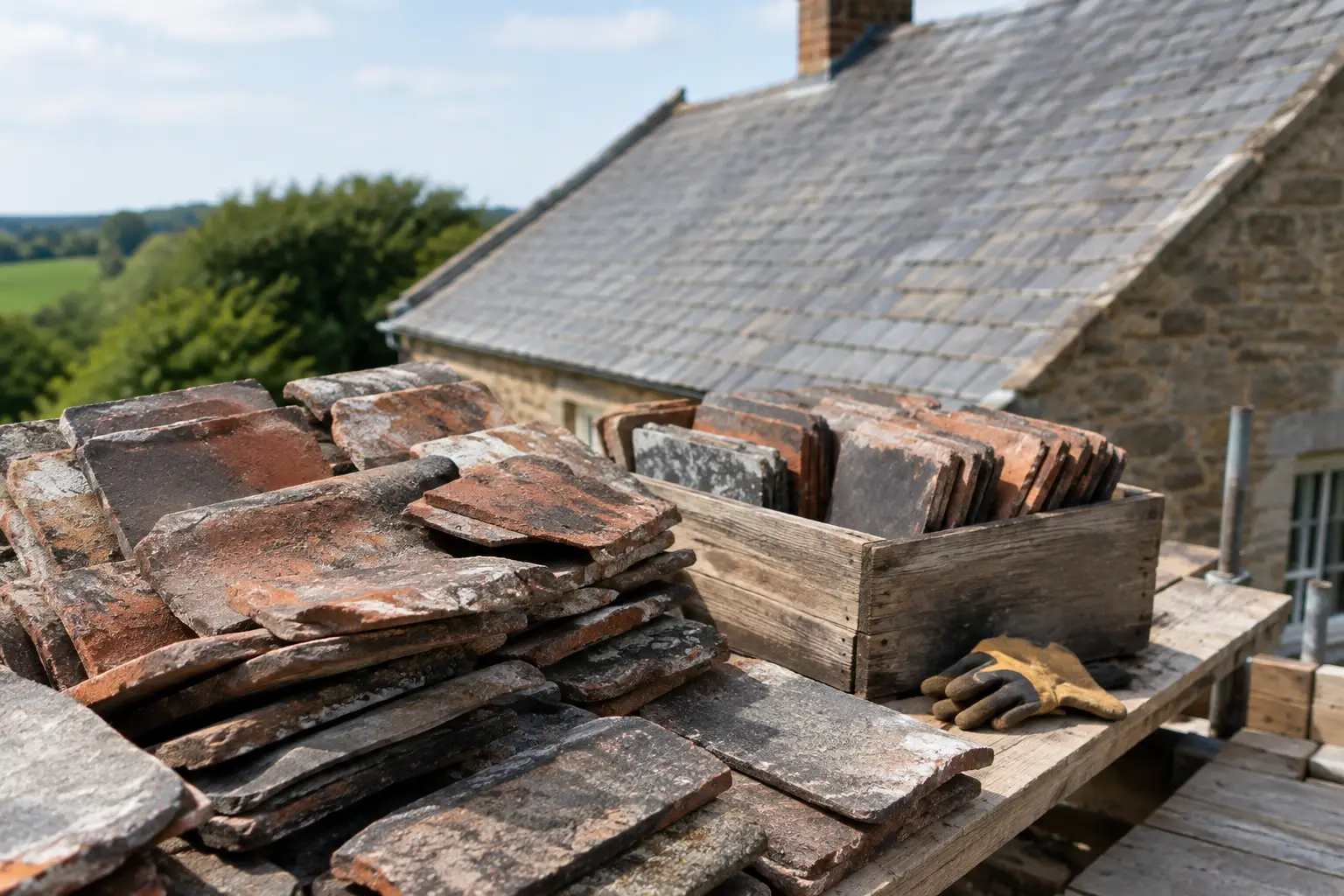
A roof repair can fail visually long before it fails physically. A handful of bright, uniform new slates on an aged Welsh slate roof, or machine-made tiles beside hand-finished Rosemary tiles, can make a carefully maintained period property look patched. Reclaimed materials give roofers, builders and homeowners a practical route to restoring weather protection while preserving the character that makes an older building worth keeping.
The right reclaimed slate or tile is not simply an old product that happens to fit. It must be compatible in material, size, thickness, colour, weathering and fixing method. Sourcing well is therefore as much about accurate identification and inspection as it is about finding stock.
Why reclaimed materials matter on older roofs
Older roofs were built around materials with their own regional character and performance. Welsh slate is commonly fine-grained, durable and comparatively regular in appearance, while Yorkshire stone slates are thicker, more variable in size and traditionally laid in diminishing courses. Clay tiles can vary between batches in profile, nib position, camber and fired colour. Those details affect both the finished appearance and the way water is shed.
Using a close reclaimed match protects visual continuity. This matters on listed buildings and in conservation areas, but it is equally valuable on an unlisted Victorian terrace or rural cottage. A roof is one of the largest visible surfaces of a property. A compatible repair looks settled from the street rather than newly inserted.
There is also a sound environmental case. Reusing durable roofing products keeps usable slate, clay and stone in service, reducing demand for newly manufactured alternatives and avoiding unnecessary waste. That benefit is strongest when the material is genuinely fit for a further service life. Reuse should never mean accepting weak, delaminating or damaged units simply because they are old.
Matching the roof, not just the material name
Descriptions such as Welsh slate, Burlington slate or Rosemary tile are a useful starting point, but they are not a complete specification. A property may have been repaired repeatedly over decades, leaving more than one slate type or tile batch on the roof. Before ordering, assess the existing covering closely.
For slates, measure the length, width and thickness of several sound examples from different areas. Note the headlap and exposed gauge, as these determine the required quantity and how courses align. Check the edge finish too: dressed edges, punched holes and irregular hand-split faces can be significant on traditional work.
For roof tiles, identify the profile, overall dimensions, nib arrangement and colour range. A tile that looks similar when held at ground level may not sit correctly on the batten or may create a noticeable change in course lines once laid. Ridge, hip and valley details need the same care. Often, finding matching fittings is what separates a convincing repair from a compromise.
Colour deserves a practical approach. Natural materials weather unevenly, and roofs often carry variation caused by exposure, repairs and local soot or lichen growth. The aim is rarely a perfect single shade. It is to source a compatible range that sits naturally among the existing roof once it has been laid and weathered.
Inspection is where reclaimed value is decided
Quality reclaimed roofing stock should be sorted and checked before it reaches site. Slate may be one of the most long-lived roof coverings available, but it is not immune to faults. Delamination, excessive softness around the nail hole, cracks and previous repair holes can reduce its suitability. Clay tiles should be checked for frost damage, fractures, distortion and worn nibs.
A reliable supplier will be able to discuss the condition and likely application of the stock, rather than treating all reclaimed materials as interchangeable. This is especially important when ordering by the tonne. A tonne provides a useful buying unit for larger works, but the number of slates needed depends on their size, thickness, gauge and wastage allowance.
Site handling matters after purchase as well. Slates should be stacked securely and protected from careless breakage. Avoid mixing unchecked materials straight into the roof stack. Sorting before laying allows the roofer to set aside any questionable pieces and distribute thickness or colour variation across the roof, rather than concentrating it in one section.
Specifying reclaimed materials before work starts
The most efficient time to solve a matching problem is before scaffolding is up and labour is waiting. For a repair, take clear photographs of the roof overall, then closer images of slates, tiles, ridges, verges and valleys. Record measurements from multiple units, not just one. Where possible, retain a sound spare slate or tile as a physical sample.
For larger re-roofing projects, establish whether the intention is to retain and reuse existing material, supplement it with reclaimed stock, or replace the covering entirely with a matching reclaimed product. Each route has different implications for budget, programme and consistency.
Retaining existing slates can preserve the strongest visual match, but it takes time to strip, sort and redress material. Supplementing with reclaimed stock is often sensible where only a proportion has failed or where extra coverage is needed after sorting. A complete reclaimed roof can give a coherent period finish, provided sufficient quantities of the same type and size are secured before work begins.
Allow for breakages, cuts, sorting losses and future repairs. Ordering only the calculated roof area can leave a project short at the final courses, particularly with random-width or heavily graded materials. Keeping a modest quantity of suitable spare slates or tiles on site gives the property owner a better position when storm damage or isolated failures occur later.
Do not overlook the supporting roof materials
A heritage-compatible covering still relies on the right roof build-up. Battens must be appropriately specified and sound, underlay should suit the roof design and ventilation strategy, and fixings must match the slate or tile type and local exposure. Nail choice, length and corrosion resistance are not small details on a roof expected to last for decades.
Leadwork also deserves early consideration. Valleys, soakers, flashings and abutments are common sources of water ingress when their detailing is poor, even where the slates themselves are in excellent condition. Reclaimed valley tiles, ridge tiles and other fittings can help retain authenticity, while new lead, sealants and fixings provide dependable performance where modern components are appropriate.
This is why buying from a specialist merchant can simplify the job. The ability to source reclaimed slates or heritage tiles alongside battens, lead products, fixings, PPE and day-to-day roofing essentials reduces the risk of a compatible covering being held up by missing supporting items.
When reclaimed is the right choice, and when it is not
Reclaimed stock is particularly well suited to localised repairs, listed or character properties, and projects where a new product would look out of place. It can also be the best route where a discontinued profile or hard-to-match size is required. For many roofs, no new alternative will provide the same surface texture and settled appearance.
It is not automatically the correct choice in every case. A large, highly exposed new-build roof may call for a modern product with a specific tested system, uniform dimensions and manufacturer-backed installation requirements. Equally, if reclaimed stock cannot be sourced in sufficient quantity or consistent condition, forcing the issue can create delays and unnecessary compromise.
The practical answer depends on the roof, the planning context, the available budget and the standard of finish expected. A careful survey and honest discussion of material availability will usually identify the right approach early.
For any repair, begin with accurate samples and measurements, then secure enough inspected material to finish the job properly. A roof that respects its original covering will not only look right on completion – it will be easier to maintain sympathetically for years to come.

