

Welsh Slate vs Burlington Slate: Which Fits?
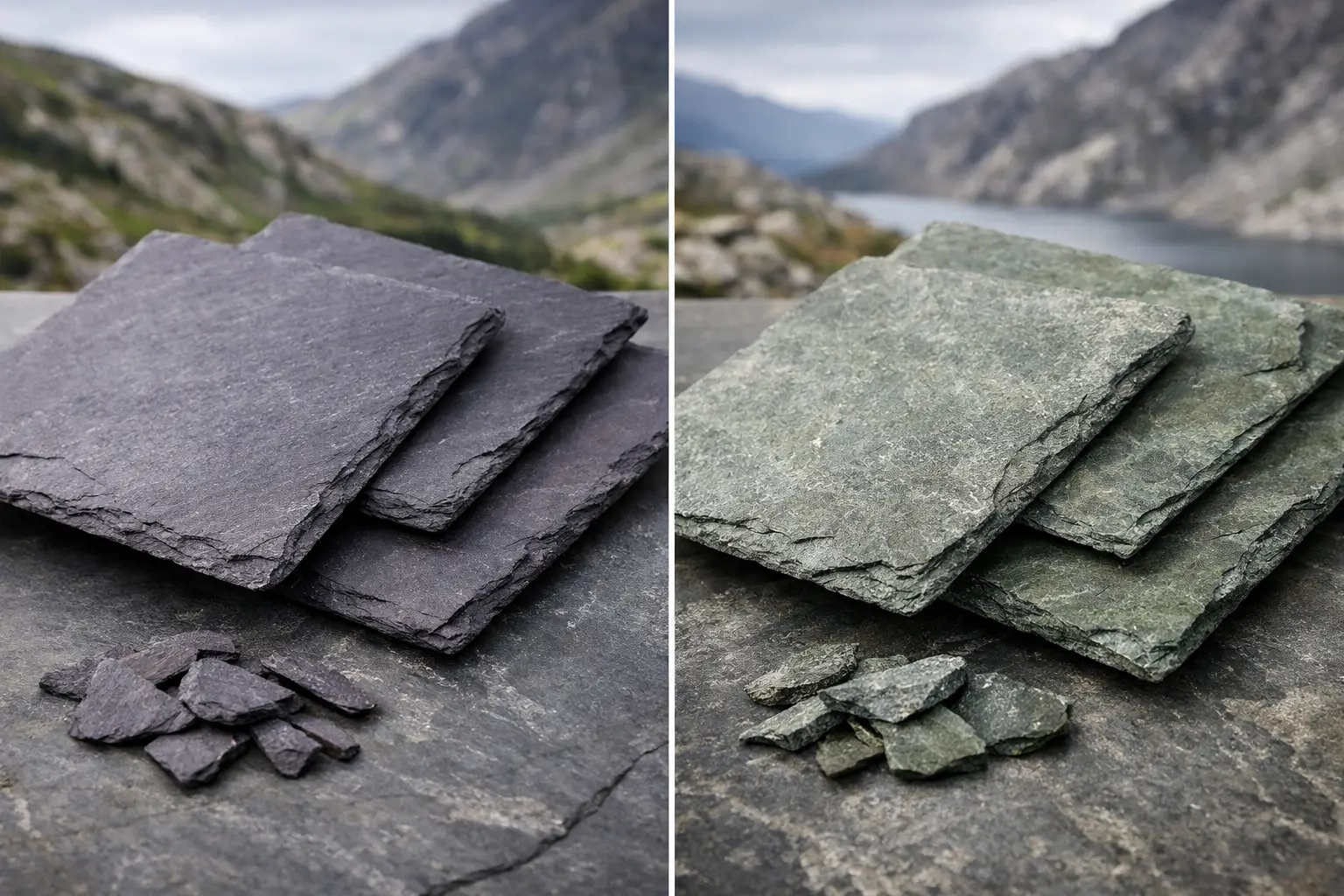
A slate roof can look broadly uniform from the ground, yet choosing the wrong replacement material is often obvious once work begins. In the question of Welsh slate vs Burlington slate, the right answer depends less on which is considered “best” and more on the existing roof, the property’s character, the required slate size and the condition of the available material. For repair work in particular, a close match in colour, texture, thickness and weathering matters as much as durability.
Both are respected British roofing slates with a long record on traditional buildings. Both can offer exceptional service life when properly selected and fixed. Their differences are real, however, and they should be understood before ordering a few replacement slates, a pallet for a repair, or a larger tonne-based quantity for a full roof renewal.
Welsh slate vs Burlington slate at a glance
Welsh slate is widely associated with the historic quarries of North Wales and is prized for its fine grain, natural cleft and enduring performance. It has been used on everything from modest Victorian terraces to major civic and country buildings. Its appearance varies by quarry and age, but many Welsh slates are known for blue-grey tones that can weather attractively over decades.
Burlington slate comes from the Lake District, particularly the Borrowdale volcanic slate deposits in Cumbria. It is a dense, hard-wearing material with a distinctive geological character. Burlington slate is often seen in blue-grey, green-grey and darker tones, depending on the particular source and how the roof has aged.
Neither should be treated as a generic interchangeable slate. A Welsh slate on a roof originally laid in Burlington may look out of place, even where the nominal size is correct. Equally, reclaimed Burlington can be the wrong visual match for a Welsh roof with a finer, more uniform appearance.
Appearance: matching the existing roof comes first
For heritage repairs, visual continuity should lead the decision. Check the roof from close range and from the pavement. Look at the main colour, but also the variation between slates. A roof may read as grey overall while carrying blue, green, purple or weathered silver notes within individual courses.
Welsh slates often have a refined, relatively even cleft face. Depending on quarry origin, they may present a clean blue-grey finish that suits many traditional properties across the UK. Older reclaimed examples may show softened edges, surface patina and slight colour change that new material cannot easily reproduce.
Burlington slates can have a stronger textured character and are frequently associated with the visual language of Lakeland and northern heritage buildings. Their darker or greener undertones can be particularly important when matching roofs in Cumbria, Yorkshire and other areas where local stone and slate traditions shape the look of a property.
Do not rely on a photograph alone. Screen settings, wet weather and age can all alter perceived colour. A physical sample placed against the roof is the soundest way to assess a match. It should be viewed dry and wet, since slate deepens significantly when rain is on it.
Size, thickness and edge detail
The slate’s dimensions are just as important as its colour. Traditional roofs commonly use diminishing courses, where the largest slates are laid at the eaves and smaller slates towards the ridge. A replacement needs to suit the course it is entering, including its headlap, sidelap and gauge.
Measure the exposed slate, then establish the full length if possible. Check thickness as well. Some old roofs use noticeably thicker slates at lower courses, and a thin replacement can sit poorly beside them. The edge profile also matters: hand-dressed edges, rounded weathering and irregularly sized reclaimed slates produce a different result from sharply cut modern material.
Durability and roof performance
Good-quality Welsh and Burlington slates are both exceptionally durable. The practical concern is not which material has the longer reputation, but whether the individual reclaimed slate is sound enough for continued use.
A suitable reclaimed slate should be free from significant delamination, excessive laminations, cracks and weak corners. Nail holes need close inspection. A slate with holes enlarged by corrosion, or with holes too near a damaged head edge, may not offer enough secure fixing area. Re-punching can sometimes be appropriate, but only where it leaves a sound margin and does not compromise the slate.
The slate should also be checked for flatness. A slight natural variation is normal, especially on older hand-cleft material, but pronounced twist can make laying difficult and affect the finished weathering surface. Experienced roofers will also assess the roof structure, battens, underlay and fixing method rather than treating a replacement slate as an isolated item.
Where a full reroof is planned, mixing Welsh and Burlington slate can work only if it is a deliberate aesthetic choice and the materials are sorted carefully. Random mixing tends to create an inconsistent roof, particularly when slates differ in thickness, surface texture or colour. For a listed building or a property in a conservation area, local planning or conservation requirements may also influence the acceptable material.
Reclaimed slate offers the best chance of a natural repair
New slate has its place, particularly where a consistent full-roof specification is needed. However, reclaimed slate is often the strongest option for repairs to older roofs because it already carries the surface character, weathering and proportions expected on a period property.
Reclaimed Welsh slates can be particularly useful where original Welsh material remains in place but a number of slates have failed, slipped or been damaged by storm impact. Reclaimed Burlington slates are equally valuable for keeping Lake District and northern roofs visually coherent, especially where original sizes are no longer straightforward to obtain.
The advantage is not simply appearance. Reusing a sound roofing slate avoids discarding a material that may have decades, or more, of useful life remaining. It also reduces demand for newly quarried product and helps retain authentic building fabric.
That said, reclaimed supply is naturally variable. Quantities, sizes and shades depend on what has been recovered from roofs and sorted through stock. If a project needs a substantial amount of one particular size, source early and allow for sensible overage. A small number of spare slates kept after completion can make future repairs quicker and more accurate.
Cost: compare the complete job, not the price per slate
A straightforward price comparison can be misleading. Welsh slate and Burlington slate values vary according to size, grade, thickness, condition, rarity and quantity. Reclaimed material may also command a premium where it is a close match for a hard-to-source existing roof.
For a repair, the cheapest slate is rarely the most economical choice if it does not match, needs excessive cutting or introduces a weak point into the roof. A correctly sized, inspected reclaimed slate can reduce labour time and produce a far less noticeable repair.
For larger works, calculate the full requirement: usable coverage after laps, waste allowance, sorting time, delivery, fixings and associated components such as ridge tiles, valleys, leadwork and battens. A roof is a system. Quality slates will not compensate for poor detailing around abutments, valleys or penetrations.
How to choose the right slate for your job
Start by identifying what is already on the roof. If there are spare slates in a loft, garage or outbuilding, take one to compare. If not, record accurate dimensions, thickness, approximate colour, edge finish and whether the roof is laid in random widths or diminishing courses. Clear photographs of the roof and a close image of a removed slate are useful supporting information.
For a one-for-one repair, aim for the closest existing material rather than selecting by name alone. There are variations within both Welsh and Burlington stock, particularly with reclaimed slate. For a larger repair, ask for material that can be sorted to a usable range of sizes and thicknesses, with enough quantity to avoid noticeable patches.
A specialist supplier can help identify whether reclaimed Welsh or reclaimed Burlington slate is likely to be the stronger match, and can advise on stock consistency before you commit to an order. At ReclaimedRoofSlates.com, the focus is on inspected heritage-compatible materials, including individual replacements and larger reclaimed slate quantities for trade and restoration work.
The practical decision
Choose Welsh slate when it matches the roof’s original material, its finer blue-grey character and the local architectural tradition. Choose Burlington slate when the existing roof carries its denser Lakeland look, darker tones or distinctive texture. If neither can be confirmed with certainty, prioritise the physical sample, size and finish over assumptions based on property age or postcode.
The best repair should not draw attention to itself. Take time to match the slate properly, buy enough sound material for the work and retain a small reserve for the years ahead. That is how a traditional roof keeps its character while continuing to do its job.

