

Best Sealants for Lead Flashing That Work
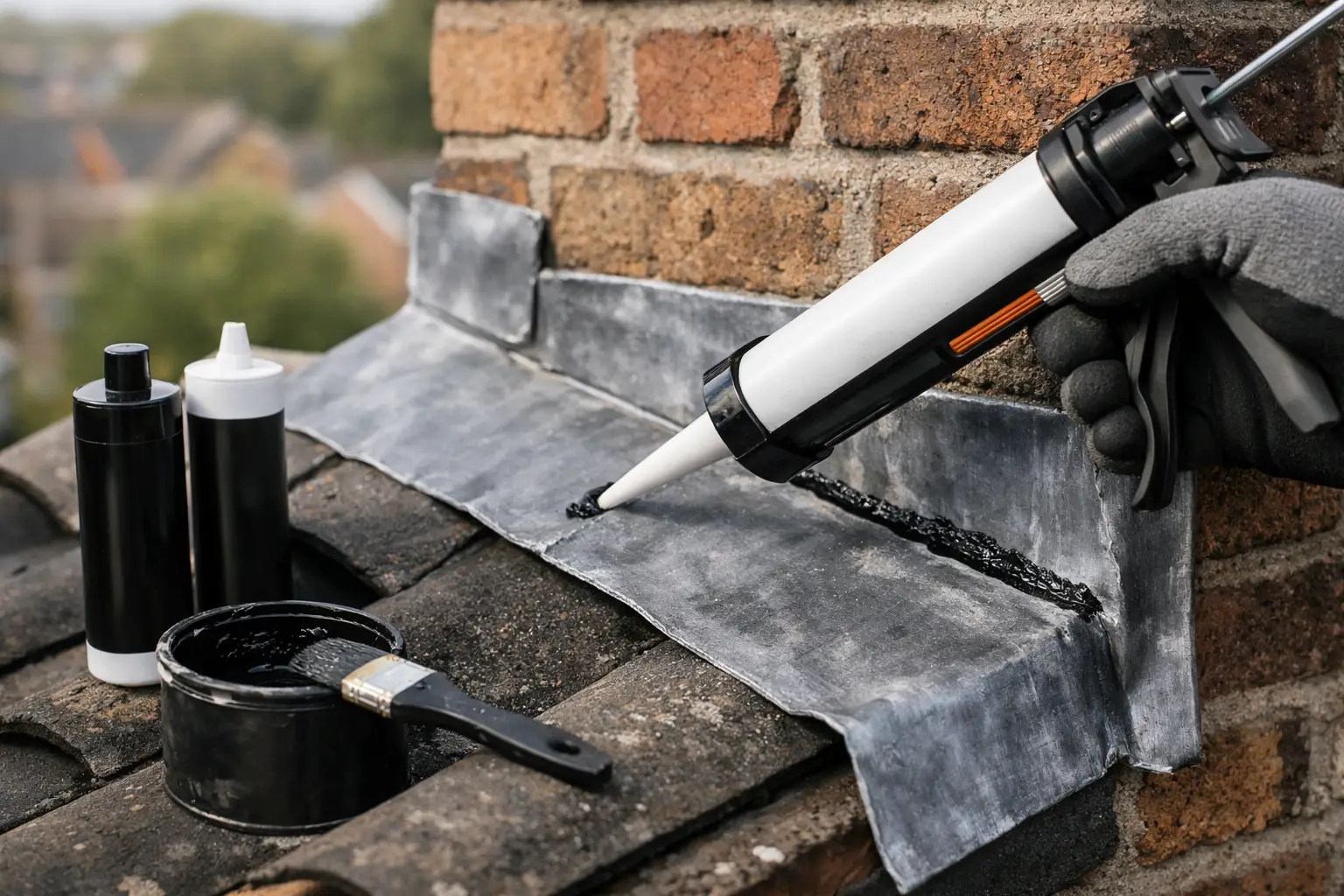
A failed flashing repair rarely starts with a dramatic split in the lead. More often, it begins where the lead meets brickwork, a roof covering or a previous patch, allowing water to track behind the detail. Choosing the best sealants for lead flashing is therefore less about finding the strongest tube on the shelf and more about matching a compatible product to the joint, substrate and amount of movement involved.
Lead is a durable, traditional roofing material, but it expands and contracts noticeably as temperatures change. A sealant that becomes hard and brittle can pull away from the edges of the joint, particularly on a south-facing roof or around a chimney breast. On period properties, poor sealant choice can also leave an untidy repair that conflicts with otherwise sound reclaimed slates, tiles and leadwork.
What the best sealants for lead flashing need to do
A suitable flashing sealant must adhere to clean lead and to the adjoining surface, whether that is brick, stone, slate, tile or a roofing membrane. It also needs lasting flexibility. The sealant should accommodate normal thermal movement without cracking, shrinking or losing its bond.
Weather resistance matters just as much. Flashing is exposed to standing water, frost, UV light and airborne dirt. A product intended for internal building work may initially look acceptable but is unlikely to give a dependable roof-level repair.
Finally, check the manufacturer’s stated compatibility. Lead is not interchangeable with every roofing material or sealant chemistry. The product data should specifically permit use on lead and external roofing applications. This is particularly important where old bituminous coatings, porous stone or modern membranes are present.
The main sealant types for leadwork
Lead-specific flashing sealant
For most routine repairs to laps, upstands, cover flashings and small gaps at abutments, a purpose-made lead flashing sealant is the most reliable option. These products are designed to remain flexible and bond to lead in outdoor conditions. They are commonly used to seal the top edge of a stepped or cover flashing where it enters a masonry chase, as well as joints between separate pieces of lead.
A good lead-specific product is usually the first choice for heritage roofs because it addresses the movement characteristics of lead rather than merely filling a gap. It is not a substitute for correct fixing, welts, laps or soakers, however. If a flashing has slipped, is too short, or has split from fatigue, refixing or renewing the lead detail is the proper repair.
Neutral-cure, low-modulus silicone
A neutral-cure silicone with low modulus can be suitable for certain lead-to-masonry or lead-to-glazed surface joints, provided the label confirms compatibility with lead and exterior use. Low-modulus refers to a more elastic product that can cope with movement better than a firm, high-modulus sealant.
This type can work well on clean, dry surfaces where a neat, narrow bead is required. It is less suitable where the joint is damp, dusty, very wide or contaminated with old mortar, bitumen or oil. Silicone can also be difficult to overpaint and may not be the preferred finish on a visible historic elevation.
Avoid using general-purpose acetoxy silicone on leadwork. Its curing system can release acetic acid, which is not a sensible choice around sensitive metals and masonry. Neutral-cure products are the safer category, but compatibility should still be checked rather than assumed.
Hybrid polymer sealant and adhesive
Hybrid polymer products are widely used across roofing and building work because they bond strongly to many materials and retain flexibility. They can be useful for small repairs where lead meets slate, tile, masonry, timber or some roofing plastics. Many will tolerate slightly damp surfaces better than silicone, although this does not mean they should be applied to wet, dirty lead during rainfall.
The trade-off is that not every hybrid product is formulated for permanent immersion, high-movement expansion joints or direct compatibility with all roof membranes. Use it where the manufacturer supports the application, not as a universal answer to every flashing defect. For a traditional chased flashing, a dedicated lead sealant remains the more targeted choice.
Butyl-based sealant or tape
Butyl products are valuable where an immediate waterproof seal is needed between overlapping materials. Butyl tape is commonly used beneath laps and beneath certain trims because it stays tacky and tolerates movement. Butyl sealant can also suit concealed joints where the lead is mechanically secured and the sealant is not expected to bridge a large exposed gap.
Its limitation is appearance and strength in exposed applications. It can attract dirt, creep in hot weather and look untidy if used as an external surface repair. It is best treated as a bedding and lap-sealing material, not a visible substitute for properly formed leadwork.
Bituminous roof sealant
Bitumen-based sealants have a place in temporary repairs and on compatible felt or bituminous roofing systems. They can be useful around certain roof junctions, but they are not generally the first choice for visible lead flashing on slate, tile or heritage work.
Bitumen can stain surrounding materials, soften in heat and make later repairs more difficult. It may also be unsuitable where the lead needs to move freely or where a clean finish is expected. On a period roof, it often creates more remedial work than it saves.
Match the sealant to the repair
The location of the defect should guide the product choice. At the top edge of a cover flashing set into a masonry chase, use a lead-compatible flashing sealant designed for pointing and external movement. Rake out loose or failed material first, taking care not to disturb sound surrounding mortar or force the lead out of position.
For a small opening in an overlap between two lead pieces, a lead-specific sealant may be appropriate if the lap is otherwise correctly formed and supported. If the overlap is inadequate, the lead is cracked, or water is being driven beneath it, sealant alone will not provide a long-term repair.
Where lead meets a roof slate or tile, inspect the detail before applying anything. A displaced slate, broken soaker, missing clip or poorly dressed flashing can be the true cause of the leak. Sealing the surface may hide the route of water temporarily while it continues to travel beneath the roof covering.
At chimneys, look beyond the visible bead. Mortar joints, brick faces and the chase itself may be failing. On older properties, soft or eroded brickwork may need local masonry repair before a new flashing seal can perform as intended.
Preparation decides the lifespan
Even the right sealant will fail early on poorly prepared lead. Remove loose debris, moss, friable mortar and old failed sealant. The bonding surfaces should be clean and dry wherever the product instructions require it. Wipe lead carefully with a suitable cleaner and allow it to dry fully. Do not abrade lead unnecessarily, as it is a soft metal and can be damaged by aggressive preparation.
Use a backing material for a deep or wide joint where appropriate, so the sealant is not simply packed into a void. This helps control bead depth and allows the sealant to stretch rather than tear. Apply a continuous bead, press it firmly into both sides of the joint, and tool it to a neat finish before a skin forms.
Do not apply sealant in heavy rain, on frost-covered surfaces or when water is actively running from the joint. Check the product’s temperature limits and cure time. A repair that looks finished at noon may still be vulnerable if rain arrives before the sealant has formed a weather-resistant skin.
When sealant is not the answer
Sealant should not be used to disguise a fundamentally defective flashing. Replace or properly repair lead that is split, heavily corroded, poorly dressed, undersized, or incorrectly fixed. Long lengths of lead need adequate expansion provision, and a sealant bead cannot compensate for restraint caused by bad detailing.
This is especially relevant on heritage roofs. Reclaimed slates and traditional clay tiles can last for generations, but only if water is directed correctly through sound laps, soakers, valleys and flashings. A compatible repair preserves both the roof’s weathering performance and its original character.
Common questions about lead flashing sealants
Can I use roofing silicone on lead flashing?
Only if it is a neutral-cure external roofing silicone that the manufacturer confirms is compatible with lead. A lead-specific flashing sealant is often the safer choice for conventional leadwork, particularly around chases and exposed laps.
Will sealant repair a crack in lead?
It may temporarily reduce water ingress on a very small defect, but a crack usually indicates movement, fatigue or damage. The durable solution is normally a correctly detailed lead repair or replacement section.
Should lead flashing be sealed with mortar?
Traditional mortar pointing is still used in some masonry chases, but it can crack where lead moves. Modern lead-compatible flashing sealants offer a flexible alternative in many situations. The correct approach depends on the existing detail, the building fabric and any conservation requirements.
Treat sealant as one part of a proper roofing detail, not the detail itself. When lead, fixings, slates or tiles are matched correctly and the joint is prepared with care, the repair is far more likely to stay watertight through the next run of hard weather.

