

Buying Guide for Roof Slates: Get the Fit Right
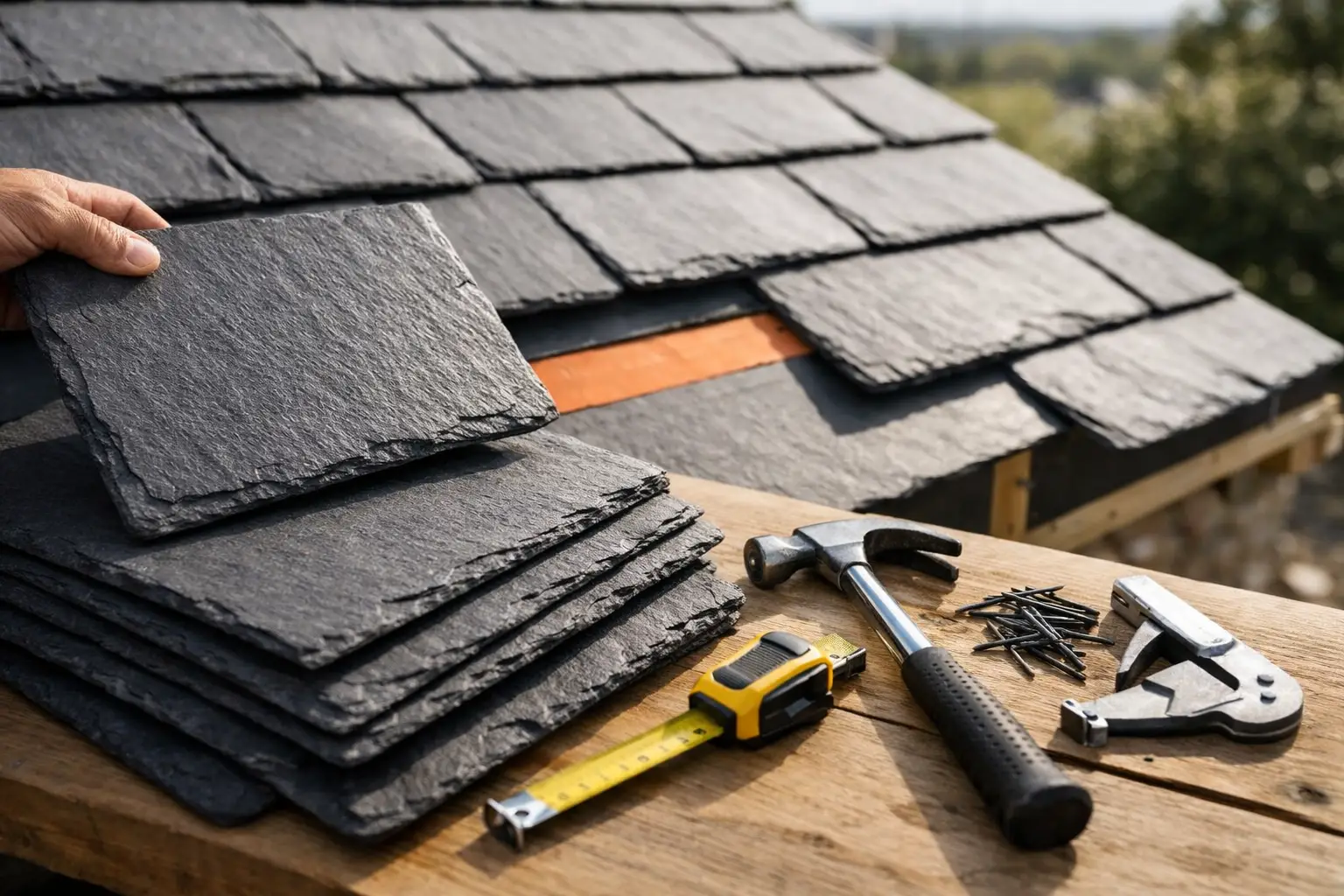
A roof repair can turn difficult the moment the original slate is no longer made, the quarry source is unclear, or a new slate looks too clean beside a weathered roof. This buying guide for roof slates is designed to help you specify materials properly before ordering, whether you need a handful of replacements or enough reclaimed slate for a full heritage re-roof.
The right choice is not simply about finding a slate that looks similar from ground level. Size, thickness, geology, headlap, fixing method and overall condition all affect how the roof performs. On listed buildings and period properties, the visual match matters just as much as the technical one.
Start with the existing roof, not the available stock
Before choosing a slate, establish exactly what is already on the roof. Remove and inspect a sound sample where possible. Measure its length, width and thickness in millimetres, noting whether sizes are regular or mixed. Reclaimed roofs often contain diminishing courses, where larger slates sit at the eaves and reduce in size towards the ridge. Ordering one uniform size for this type of roof can alter its appearance and create avoidable fitting problems.
Look closely at colour, surface texture and edge finish. A blue-grey Welsh slate has a different character from a greenish or purple-toned slate, while a rougher Yorkshire stone slate is not interchangeable with a thinner, flatter quarry slate. Weathering can disguise the original colour, so assess a freshly exposed edge as well as the face.
If the work concerns isolated repairs, take clear photographs of the roof and the sample slate from several angles. Record the roof pitch, the approximate age of the property and the location of the repair. These details make it far easier for a specialist supplier to identify a credible match.
Identify the slate type
Natural roof slates vary considerably in strength, thickness and appearance. Welsh slate is widely valued for its density, longevity and distinctive blue-grey finish. Reclaimed Burlington slates often provide deeper green-grey colouring and a refined appearance suited to many traditional properties. Yorkshire stone slates are generally thicker, heavier and more textured, requiring a roof structure and fixing arrangement appropriate to their weight.
Do not assume that all natural slate can be mixed freely. A close colour match may still differ in thickness or water absorption. Equally, a reclaimed slate from the same broad region may have been cut to a different gauge. When matching an existing roof, authenticity is usually achieved by getting the material family, dimensions and laying pattern right together.
Check size, thickness and coverage
Slate size determines coverage, but the exposed area is smaller than the full slate because each course overlaps the one below. This overlap is the headlap, and it must suit the roof pitch and exposure. Shallow pitches, exposed sites and complex roof details generally require greater headlap, which means more slates per square metre.
For a full roof, quantities should be calculated from the roof area, slate dimensions, headlap and wastage allowance. For repairs, count the damaged slates and add contingency. It is sensible to allow extra material for breakages during fitting and for future maintenance, particularly when the roof uses uncommon sizes or a distinctive reclaimed batch.
Thickness matters too. Slates with uneven natural thickness can be perfectly suitable, but they must be laid with care to avoid rocking, open joints and an uneven finish. A roofer may need to sort the slates by thickness before laying. This is normal practice with reclaimed materials and is one reason why a good reclaimed roof has a more considered, traditional appearance than a uniformly machined one.
Understand nominal size versus usable size
Measurements should be taken from the slate itself, not assumed from a trade description. Reclaimed stock can have minor variations due to hand cutting, previous nail holes or dressed edges. A slate advertised as 20 x 10 inches may not offer precisely the same usable cover as a modern equivalent.
Where replacement slates need to slot into existing courses, even a small difference in width can disrupt bond lines. Check the gauge of the existing roof, the side lap and the position of nail holes before committing to a quantity. A competent roofer will usually confirm these measurements on site.
What to inspect when buying reclaimed roof slates
Reclaimed slate offers genuine age, compatible weathering and a lower environmental impact than newly quarried material. It also needs proper inspection. A trustworthy batch should be assessed for soundness, usable dimensions and practical suitability rather than sold simply because it is old.
Look for clean, solid edges and a consistent ring when two sound slates are lightly tapped together. Avoid slates showing obvious delamination, excessive softness, deep fractures or widespread nail-hole damage that compromises fixing. Existing holes are not automatically a problem – many reclaimed slates can be re-holed correctly – but the remaining material around the new fixing point must be sound.
Ask whether the slates have been sorted, whether dimensions are consistent across the batch and how the quantity is supplied. Larger orders may be sold by the tonne, which can be cost-effective, but weight does not directly tell you how much roof area the load will cover. The slate size, thickness and intended headlap still need to be considered.
At ReclaimedRoofSlates.com, reclaimed materials are selected with practical roofing use in mind, helping customers source both hard-to-match replacement pieces and volume quantities for restoration work.
Do not overlook roof pitch, exposure and structure
The same slate can perform differently depending on the building. A sheltered steep-pitched cottage roof and an exposed roof in a high-wind location do not have the same requirements. Pitch affects headlap and drainage; exposure influences fixing specifications and the need for secure detailing at verges, valleys, ridges and abutments.
Weight is particularly relevant with stone slates. Their character is hard to replicate, but they may place substantially greater loads on battens and rafters than thinner roofing slate. For extensive work, confirm that the roof structure is suitable before ordering. This is not a detail to resolve after a lorry has delivered several tonnes of material.
Heritage properties can also be subject to planning conditions or listed building consent. If the roof is protected, verify what materials and laying methods are acceptable before purchasing. The correct reclaimed slate can support a sympathetic repair, but approval requirements should guide the specification from the outset.
Specify fixings and accessories at the same time
A durable slate roof relies on more than the slates. Select nails or hooks suitable for the slate type, exposure and fixing method. Copper and stainless steel are commonly specified for long service life, while the nail length must account for slate thickness, battens and secure penetration without damaging the material.
Check the battens, underlay, leadwork, ridge details and valley materials as part of the same order. A repair can fail prematurely if a sound reclaimed slate is fitted alongside tired battens or poor valley detailing. For period work, the profile and finish of ridge and valley tiles should also sit comfortably with the age and character of the roof.
Avoid treating sealants as a substitute for correct laps and fixings. They have a place in suitable details, but a slate roof should shed water through proper layout, headlap and flashing work rather than depend on mastic to compensate for a poor fit.
Order enough to maintain the roof properly
The cheapest batch is not always the best value. A very mixed load may suit a rustic outbuilding, while a prominent front elevation or listed property may justify a tighter match in size, colour and finish. The decision depends on the roof, the client’s expectations and how visible the repaired area will be.
When ordering reclaimed slate, keep a small reserve from the same batch once the work is complete. Future storm damage, chimney repairs or alterations are far easier to manage when matching material is already stored safely on site. Stack it flat, supported and protected from accidental breakage.
A well-chosen reclaimed slate should look as though it has always belonged on the building, while giving the roof the dependable protection it needs. Measure carefully, assess the whole roofing system and buy with the next repair in mind – that is how a practical repair becomes a lasting one.

