

How to Choose the Best Reclaimed Slate Suppliers
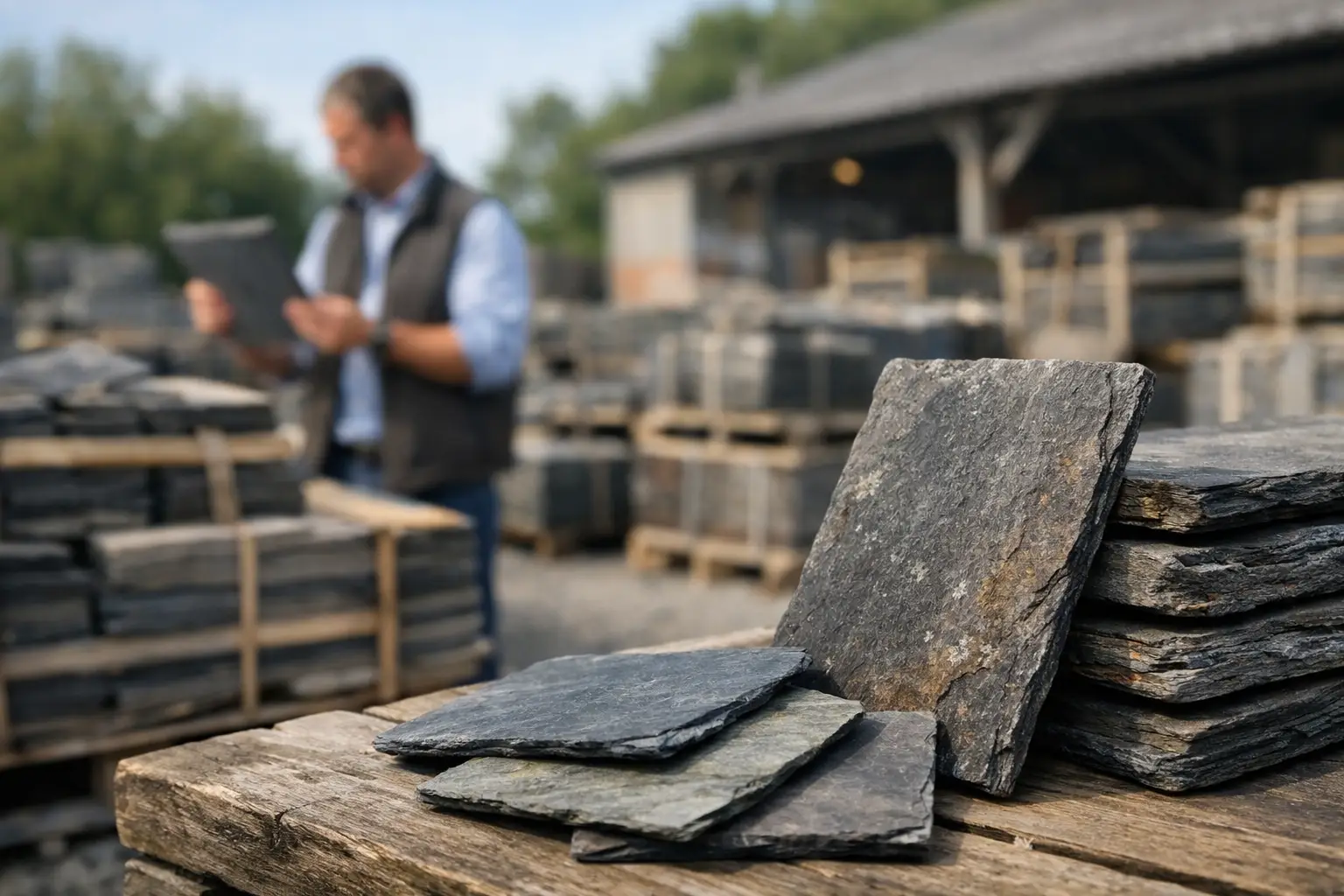
A roof repair can be held up by one missing slate. On a period property, replacing it with a new, near-match alternative can leave a patch that is obvious from the pavement and may weather differently from the surrounding roof. The best reclaimed slate suppliers do more than hold old stock: they help customers identify compatible material, assess its condition and secure enough quantity for a repair or complete reroof.
For roofers, builders and property owners, the right supplier reduces uncertainty before work starts. That means clear slate types, practical advice on sizes and coverage, honest grading, sensible delivery arrangements and access to the fixings and accessories needed to complete the job.
What makes a reclaimed slate supplier worth using?
Reclaimed slate is not a uniform product. Even within the same broad category, slates can differ in quarry source, age, thickness, colour, edge finish and dimensions. A dependable supplier recognises those differences rather than treating every second-hand slate as interchangeable.
Start with product identification. A supplier should be able to distinguish between reclaimed Welsh slate, Burlington slate, Yorkshire stone slate and other common roofing materials, then explain where a particular product is most likely to suit. This matters particularly on listed buildings, conservation-area properties and traditional roofs where material choice affects both appearance and the way the roof is detailed.
Condition is equally important. Reclaimed slates need to be inspected for obvious faults, excessive delamination, damage around nail holes and signs that their useful life is limited. They will naturally show age and variation, which is often exactly what a heritage roof requires. The key distinction is between genuine weathered character and material that is no longer suitable for roofing.
A supplier with a substantial, organised stockholding can also make a real difference. A handful of matching slates may solve a minor repair. A full reroof requires continuity of size, grade and appearance across a much larger area, with enough allowance for cutting, sorting and site wastage.
Matching the slate is more than choosing a colour
Colour is usually the first detail a customer notices, but it should not be the only basis for selection. A blue-grey Welsh slate, for example, can vary considerably in tone once it has weathered. Thickness, surface texture and edge profile may be more noticeable when the slate is laid beside existing courses.
Measure the existing slate carefully before requesting a quotation. Record its length and width, approximate thickness, headlap, exposed gauge and whether the edges are dressed, sawn or irregular. Photographs from ground level and close-up images of loose samples are useful, but dimensions remain essential. A 20 x 10 inch slate and an 18 x 10 inch slate may look similar in isolation, yet they create different course spacing and coverage.
For diminishing-course roofs, the task is more involved. The largest slates are normally laid at the eaves, with smaller sizes progressing towards the ridge. A supplier should understand that a single nominal slate size will not recreate this layout. The order may need to include a range of lengths, with quantities calculated around the roof design rather than simply the total square metreage.
Ask about usable coverage, not just slate size
Nominal dimensions do not tell the whole story. Headlap and sidelap reduce the exposed area of every slate, while roof pitch, location and detailing may influence the specification. A quotation based only on the roof’s plan area can leave a customer short.
A practical supplier will ask for the roof pitch, slate dimensions and intended lap before confirming quantities. For more complex work, such as valleys, hips, abutments and rooflights, allow separately for cuts and breakages. This is especially important where stock is rare or a close match has been located in limited volume.
Questions to ask the best reclaimed slate suppliers
Before ordering, establish exactly what is being supplied. Clear answers at this stage avoid disputes after a lorry arrives and the roof is already stripped.
Ask whether the slates are sold as mixed, graded or hand-sorted stock. Mixed reclaimed slate may be appropriate for some agricultural buildings, outbuildings or informal repairs, but it is less suitable where visual consistency is critical. Graded stock normally offers a more predictable range of quality, while hand-sorted material can be the better choice for highly visible elevations and heritage work.
Check how quantities are described. Reclaimed slates may be offered by piece, pallet, tonne or coverage. Tonne-based buying is common for larger orders, but the number of usable slates per tonne varies with size and thickness. Confirm the expected coverage and whether the stated quantity includes an allowance for normal site selection.
Delivery should be discussed early, not after the order is paid for. Slate is heavy and fragile, so site access, unloading space and the need for a mechanical offload must be considered. A narrow street, sloping drive or restricted city-centre site may require a different delivery plan from an open new-build plot. Check pallet sizes, kerbside arrangements and whether someone will be present to inspect the delivery.
Finally, ask whether complementary materials are available at the same time. Ridge tiles, valley tiles, lead, fixings, battens, underlay, sealants and PPE are not secondary details when a roof is open to the weather. Sourcing them together can reduce delays and help ensure the chosen slate works with the rest of the roof build-up.
Availability, lead times and realistic alternatives
The best match is not always available in the quantity required. This is the nature of reclaimed material: stock is finite, and one batch may not be repeated once sold. A specialist supplier should be straightforward about availability rather than promising an exact match that cannot be delivered.
Where there is insufficient stock, there are usually several sensible options. For a localised repair, it may be possible to use the closest available slate in a less visible section and reserve the strongest match for the main elevation. For a larger roof, combining compatible batches can work if they are sorted and laid thoughtfully. On some projects, new slate from an appropriate source may be considered for less prominent slopes, while reclaimed slate is retained for the principal roof face.
These decisions depend on the building, the planning or conservation requirements, the budget and the client’s expectations. There is no benefit in forcing a poor material match simply because it is labelled reclaimed. The goal is a roof that looks right, performs properly and can be maintained in future.
Why inspection and stock knowledge matter
Buying reclaimed slate from a general salvage yard can appear cheaper, particularly for a small repair. The trade-off is that stock may not be categorised, inspected or available in repeat quantities. Time spent sorting unusable material on site can quickly erase the initial saving.
A specialist roofing supplier works from a different starting point. The material needs to function as a roofing product, not simply look convincing in a stack. That means understanding common sizes, likely coverage, grading standards and the practical requirements of roofers fitting the slate.
ReclaimedRoofSlates.com supplies reclaimed and heritage roofing materials alongside the day-to-day essentials needed to fit them. This is useful when a job involves more than replacing a few slates, particularly where matching ridge or valley components and suitable fixings are also needed.
Choosing for repair work versus a full reroof
For a repair, accuracy usually matters more than volume. Take a sample where possible, measure it precisely and focus on a close visual and physical match. Ordering a few extra slates is sensible, as it provides contingency for handling damage and future maintenance.
For a full reroof, consistency, coverage and supply volume take priority. Review a sample batch before committing where the project is significant, and make sure the roof design accounts for the slate’s thickness and intended lap. Do not overlook the weight of the finished covering either, especially where a roof structure is being altered or the replacement material differs from what was previously installed.
A good reclaimed slate supplier will not make every project identical. A small Victorian terrace repair in Leeds, a rural stone property and a London conservation project can all require different sourcing and delivery considerations. The common requirement is sound material, clear information and a supplier who understands why the details matter.
When the existing roof has lasted for generations, the replacement slate deserves more than a quick visual match. Choose stock that is properly identified, fit for purpose and available in the quantity your roof actually needs, then give the roofer the information and materials to make the repair look as though it has always belonged there.

