

Reclaimed Roof Slates Leeds for Lasting Repairs
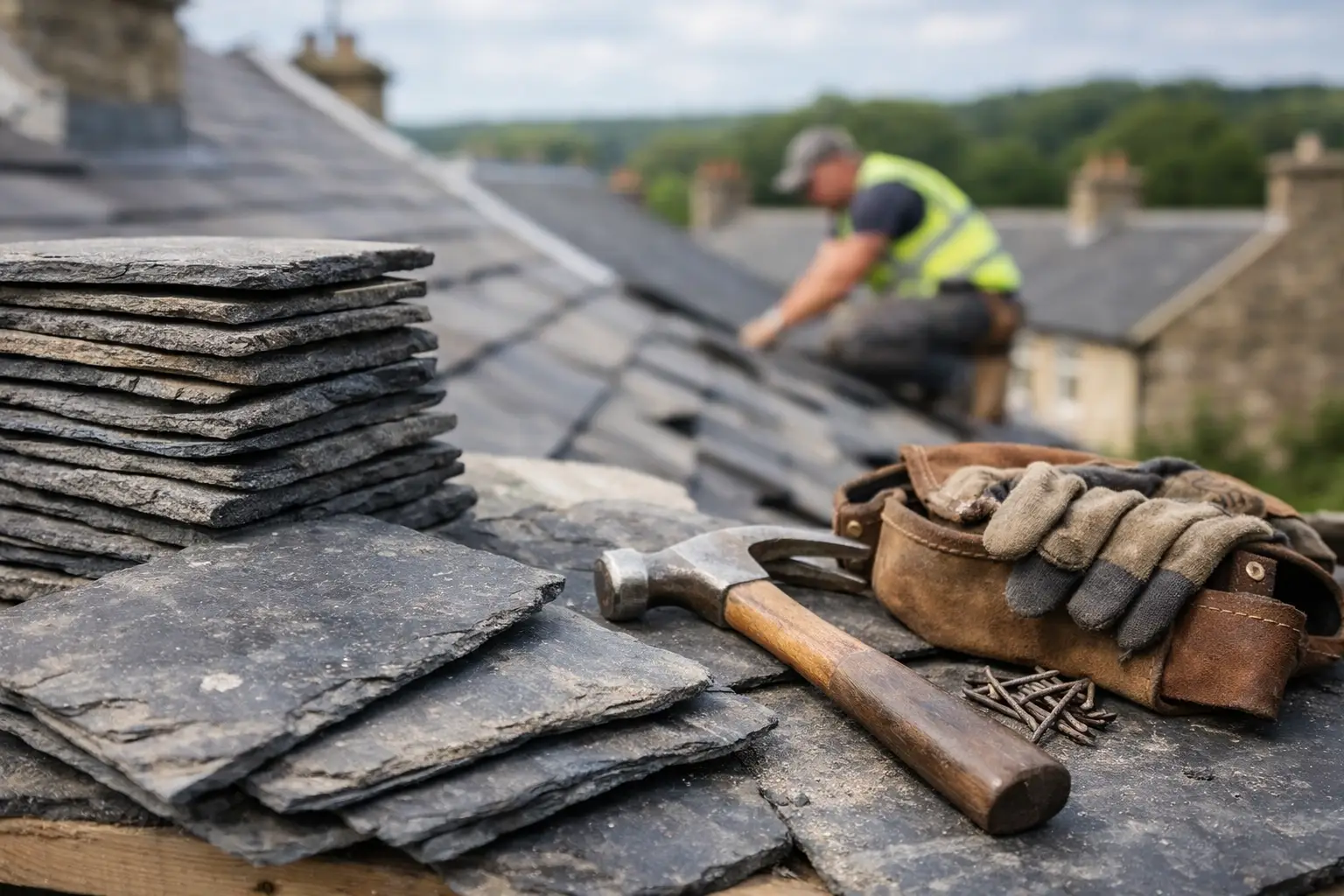
A repair can look completely out of place when the replacement slate is too blue, too regular, too thin or simply too new. On period homes across West Yorkshire, the roof is often one of the property’s most defining features. Sourcing reclaimed roof slates Leeds roofers and homeowners can match properly is therefore not just about filling a gap. It is about retaining weather performance, character and the value of the building.
Reclaimed slate is particularly useful where a roof has suffered storm damage, localised failure around a chimney, or wear in vulnerable areas such as valleys and eaves. It can also be the sensible choice for a larger renovation where modern alternatives would interrupt the appearance of an established roof. The right material needs to match more than colour. Thickness, size, texture, hole position and headlap all affect the finished result.
Why reclaimed roof slates suit Leeds properties
Leeds has a broad mix of Victorian terraces, stone-built cottages, converted mills and later suburban homes. Many retain roofs laid with Welsh slate, Burlington slate or locally familiar stone slate. These materials were selected for long service and, when sound, can often be reused or matched with reclaimed stock rather than replaced wholesale.
A reclaimed slate carries the softened edges, natural variation and weathered surface that a new slate cannot immediately reproduce. On a visible front elevation, that difference matters. Even where planning controls do not apply, a sympathetic repair protects the appearance of the property and avoids the patchwork effect common with poorly matched replacements.
There is a practical benefit too. Quality natural slate has an exceptionally long working life. A slate that has already served on one roof is not automatically near the end of its life. Provided it has been properly recovered, inspected and sorted, it may have many decades of service remaining. Reusing existing material also reduces the demand for newly quarried slate and prevents sound roofing material from becoming waste.
That said, reclaimed is not a shortcut for buying unknown material cheaply. Slates should be selected by a specialist supplier, checked for condition and supplied with enough allowance for sorting, cuts and future repairs. The lowest price per slate is rarely the best value if the batch is inconsistent or unsuitable for the roof.
Matching reclaimed roof slates in Leeds
The best match begins with a close inspection of the existing roof. A photograph from the ground is useful, but it is not enough to identify slate accurately. Samples, measurements and clear close-up photographs give a supplier and roofer a much firmer basis for specifying the replacement material.
Identify the slate, not just the colour
Natural slates vary widely. Welsh slate is often fine-grained and blue-grey, although shades can alter with age and weathering. Burlington slate has its own recognisable texture and colour range. Yorkshire stone slates are thicker, heavier and usually laid in diminishing courses, giving a roof a very different profile from a regular-sized slate roof.
Colour is only one part of the assessment. A smooth blue-grey slate will not convincingly blend into a roof made up of textured, riven slates, even if both look similar at first glance. Likewise, mixing thin imported slate into a roof of heavier traditional material can create problems with line, lap and fixing.
Measure length, width and thickness
Measure several existing slates rather than relying on one. Traditional roofs can contain a range of sizes, particularly where repairs have taken place over decades. Note the nominal length and width, the actual thickness, whether the corners are square or dressed, and the distance between fixing holes.
The slate size determines the lap and gauge, which in turn affects how many slates are needed per square metre. Thickness matters at the verge, ridge and abutments, where a poor match can leave uneven courses or awkward flashing details. For a small repair, taking an undamaged sample to site or providing exact measurements is usually the most reliable route.
Check the roof pattern
Regular slates are laid in consistent courses. Stone slate roofs commonly use diminishing courses, with larger slates at the eaves and progressively smaller sizes towards the ridge. These roofs require careful calculation, not a simple count of replacement pieces.
Before ordering, establish whether the roof is laid in a fixed gauge, whether it has random widths, and how the existing courses are arranged. A competent roofer will work this out during the survey. It is especially important where repairs extend beyond a few slipped or broken slates.
What quality checks matter before buying
A reclaimed slate should be clean enough to inspect and sorted so that cracked, excessively delaminated or badly damaged pieces do not enter the usable batch. Minor surface variation is normal. Structural weakness is not.
Look for clean edges, a sound body and fixing holes that have not been enlarged or broken out. Previous nail holes may be acceptable if they sit in the correct position and remain secure, but damaged holes can make refixing unreliable. Slates should also be checked for excessive lamination. A slate that splits into thin layers under handling is not suitable for a lasting repair.
The traditional ring test can give an indication of soundness, but it should not be treated as the only assessment. The slate must also be examined visually and handled by someone who understands the material. Thickness consistency within the selected batch matters, particularly on neat regular courses.
It is sensible to order slightly more than the calculated requirement. On reclaimed materials, an allowance gives the roofer flexibility to select the best visual matches for prominent areas, make cuts where needed and retain a few spares for later. The exact allowance depends on the roof design and condition, but tight ordering can leave a repair short of the right pieces at the final stage.
Do not overlook the supporting materials
A successful slate repair depends on more than the slates. If work exposes failed battens, perished underlay, damaged leadwork or weak mortar bedding, dealing with those issues while access is in place is usually more economical than returning later.
For historic roofs, material choice at details is particularly important. Lead flashings around chimneys and abutments need to allow for movement and be correctly supported. Valleys require compatible valley tiles or lead detailing, depending on the existing roof construction. Ridge and hip tiles should match the roof’s period and profile as closely as possible.
Fixings also need attention. Slate nails must be suitable for the exposure, slate thickness and batten type. Copper or stainless-steel nails are commonly selected for durability, while hook fixing may be appropriate for certain repairs where stripping back a large area is impractical. The best method depends on the roof build-up and the condition of the surrounding slates. It should not be decided solely by convenience.
Where a roof is being re-roofed rather than patched, ventilation, underlay specification, batten grading and eaves detailing should be considered as a complete system. Traditional appearance does not mean ignoring current good practice. The aim is a roof that looks right and sheds water reliably for the long term.
When reclaimed slate is the right choice
Reclaimed material is usually the strongest option when a visible repair must blend into an established roof, when heritage requirements call for authentic materials, or when a period property needs to retain its original character. It is also valuable when only a small number of matching slates are required and replacing an entire slope would be unnecessary.
There are occasions when new slate is more appropriate. A full new-build roof, a contemporary extension or a roof where the existing slate is beyond salvage may benefit from a consistent new product. Availability can also affect the decision. Rare slate types, unusual sizes and substantial quantities may need additional sourcing time, so early planning is worthwhile for larger projects.
For repairs in Leeds, start with the roof that is there rather than a generic slate description. Record the dimensions, take clear samples where safe to do so, and assess the surrounding details before ordering. A specialist stockholding supplier such as ReclaimedRoofSlates.com can help identify compatible reclaimed material and provide the associated roofing essentials needed to complete the job properly.
The most convincing repairs are rarely the ones that announce themselves. With the right reclaimed slate, careful sorting and sound fixing work, the repaired area should settle back into the roof as though it has always belonged there.

