

Lead Flashing vs Flashband: Which Fits Best?
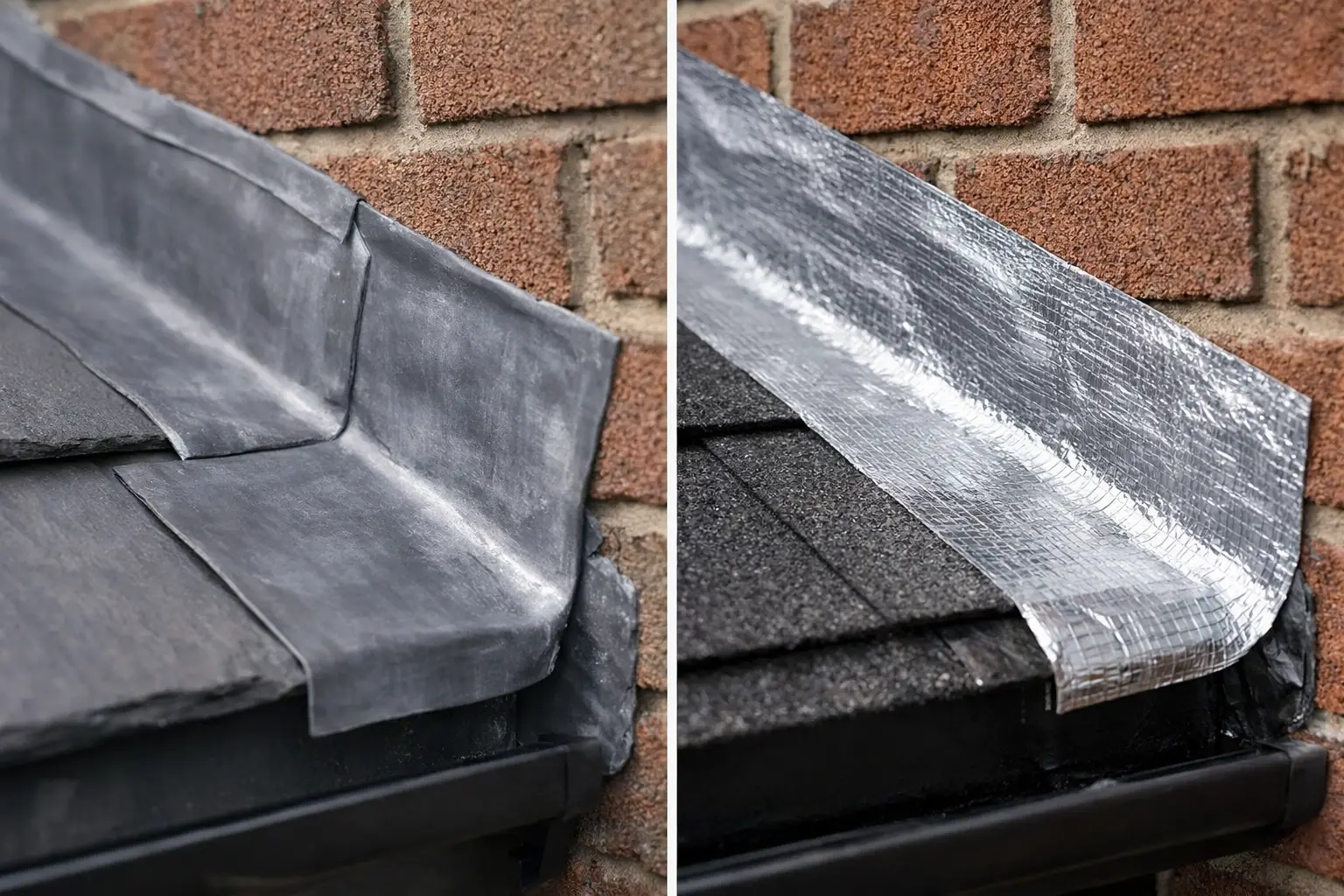
When a repair fails around a chimney, abutment or roof junction, the issue is often not the slate or tile – it is the flashing. That is why lead flashing vs flashband is not a minor product choice. It affects durability, appearance, weathering performance and, in many cases, whether the repair needs doing again far sooner than expected.
For trade roofers, the distinction is usually clear. For homeowners and renovators, flashband can look like a quicker, cheaper substitute for lead. Sometimes it is useful. Just as often, it is the wrong material for the job. If you are working on a heritage roof, a long-term repair, or a visible section of roofing, that difference matters.
Lead flashing vs flashband: the basic difference
Lead flashing is a traditional roofing material formed from milled lead sheet. It is cut, dressed and fixed into place to create a long-lasting weatherproof seal at roof junctions, chimneys, parapets, valleys and abutments. It has been used for generations because it is workable, durable and reliable in exposed British weather.
Flashband is a self-adhesive repair tape, typically made from a bitumen-based adhesive with a foil facing, often aluminium. It is designed for quick sealing work and temporary or light-duty repairs. It can be useful where speed matters or where a short-term patch is acceptable, but it is not a like-for-like replacement for properly installed lead in most permanent roofing situations.
That is the first point to keep in mind. These two materials are not simply different versions of the same thing. They serve different standards of repair.
Where lead flashing is usually the better choice
If the roof detail is structural, exposed or expected to last for years, lead is usually the correct specification. This includes chimney stacks, stepped abutments, apron flashings, soakers, back gutters and other areas where movement, water run-off and wind exposure all come into play.
Lead handles thermal movement well when correctly detailed. It can be dressed into the shape of the roof, tucked into mortar joints or fixings, and formed around complex junctions. On slate roofs and period properties, it also looks right. That is not just a cosmetic point. On heritage projects, the visual character of the roof covering and its associated details often needs to remain consistent with the age and style of the building.
There is also the matter of lifespan. Properly installed lead flashing can last for decades. It is a recognised, proven material with predictable performance. For contractors responsible for call-backs, that matters. For property owners paying for scaffold access, it matters even more.
Where flashband has a place
Flashband is not useless, and it should not be dismissed outright. It has practical uses on site. For a quick repair to a small split, a temporary seal before a wider programme of works, or low-risk patching in less prominent areas, it can do a job.
It is also easier for non-specialists to apply. There is no lead dressing involved, no welding, and no specialist forming skills. The material is cut to length, positioned and pressed into place. For somebody trying to stop minor water ingress quickly, that simplicity is attractive.
The problem comes when flashband is expected to perform like lead over the long term. Adhesive products are more vulnerable to failure through age, poor surface preparation, temperature changes and trapped moisture. On uneven, dusty or weathered surfaces, the bond may not last as intended. On high-value roofs, that is a risk rather than a saving.
Performance in British weather
Roofing materials in the UK need to cope with a difficult mix of conditions – driving rain, freeze-thaw cycles, wind uplift, UV exposure and seasonal movement. This is where lead keeps its advantage.
Lead flashing, when installed to current good practice, is built for that environment. It is not relying on adhesive alone. It is mechanically integrated into the roof detail. It can expand and contract without immediately breaking its seal, provided lengths and fixings are handled properly.
Flashband is more dependent on installation conditions. If it is fitted in poor temperatures, onto damp surfaces, or across contaminated substrates, performance drops. Even where it bonds well at first, prolonged exposure to sunlight and weathering can reduce effectiveness over time. That does not mean every flashband repair fails quickly. It means the margin for error is smaller, and the expected service life is generally shorter.
Appearance and suitability for heritage roofs
On a modern outbuilding or a low-visibility utility area, appearance may not be a priority. On a period property, it usually is. Lead remains the standard because it suits the character of traditional roofs, particularly when paired with reclaimed slate, clay plain tiles or stone slate.
Flashband often looks like what it is – a repair material. The surface finish, edge lines and way it sits against aged roof coverings can make a patch stand out immediately. That can undermine the look of an otherwise careful restoration.
For listed buildings or conservation-led work, material choice may also be more tightly controlled. In these cases, lead is often the safer route both technically and visually. If you are matching existing historic details, there is little argument for replacing proper leadwork with adhesive tape unless the repair is strictly temporary.
Cost: cheaper now or cheaper over time?
Flashband usually wins on upfront price. The material costs less, fitting is faster, and labour demands are lower. If the only comparison is the invoice for today, flashband looks attractive.
That is not the full picture. Roofing cost needs to be considered over the life of the repair. If a flashband patch lasts only a short period before edges lift, water gets behind the seal, or the repair needs revisiting, the original saving starts to disappear. Add scaffold, labour and possible internal water damage, and the cheaper option can become the expensive one.
Lead costs more because it is a premium roofing material and because proper installation takes skill. But for permanent work, especially on main roof slopes, chimneys and abutments, it often delivers better value over time. This is particularly true on older properties where repeated disturbance can do more harm than good.
Installation matters as much as material
A poor lead job can fail, just as a carefully applied flashband patch can hold for a useful period. Material selection is only part of the decision. The detail, the substrate, exposure level and the quality of the installation all matter.
Lead needs correct code selection, appropriate lengths, proper clips or fixings, and allowance for thermal movement. It also needs to be dressed without overworking. Flashband needs a sound, clean, dry surface and realistic expectations about what the product is there to achieve.
In practical terms, if the area is a key weathering detail on the roof, it makes sense to choose the material that is designed for that level of duty. If the job is a temporary measure to keep a roof secure until full repairs can be completed, flashband may be entirely reasonable.
Lead flashing vs flashband for common roofing jobs
Around chimneys, stepped walls and abutments, lead is normally the preferred option. These are critical junctions and often highly exposed. On slate roofs, lead also integrates more naturally with soakers and traditional detailing.
For emergency patching over a small crack or split in an existing surface, flashband can be useful as a stop-gap. The same applies to minor repairs on sheds, garages or less sensitive structures where longevity and appearance are lower priorities.
For valleys, parapets and complex junctions, lead is generally the stronger specification. These details handle significant water flow, and shortcuts tend to show up quickly. If the roof is part of a heritage restoration, the balance shifts even more firmly towards lead.
That is why experienced merchants and roofers rarely treat the two products as direct equivalents. The question is less which one is better in the abstract, and more which one is suitable for the specific detail in front of you.
Making the right call
If you need a lasting repair on a house roof, period property, chimney or abutment, lead flashing is usually the right answer. If you need a quick temporary seal or a low-cost patch in a non-critical area, flashband has its place.
The safest approach is to be honest about the job. Is this a permanent repair, a heritage-sensitive roof, or a detail that will be expensive to revisit? If so, lead is hard to beat. Is it a short-term measure to keep water out until full works are carried out? Then flashband may do exactly what is needed.
On roofing, shortcuts are not always false economy – but many are. Choosing the right flashing at the start is often the difference between a repair that settles in for years and one that starts lifting with the next spell of bad weather.

