

Welsh Slate Roof Replacements Explained
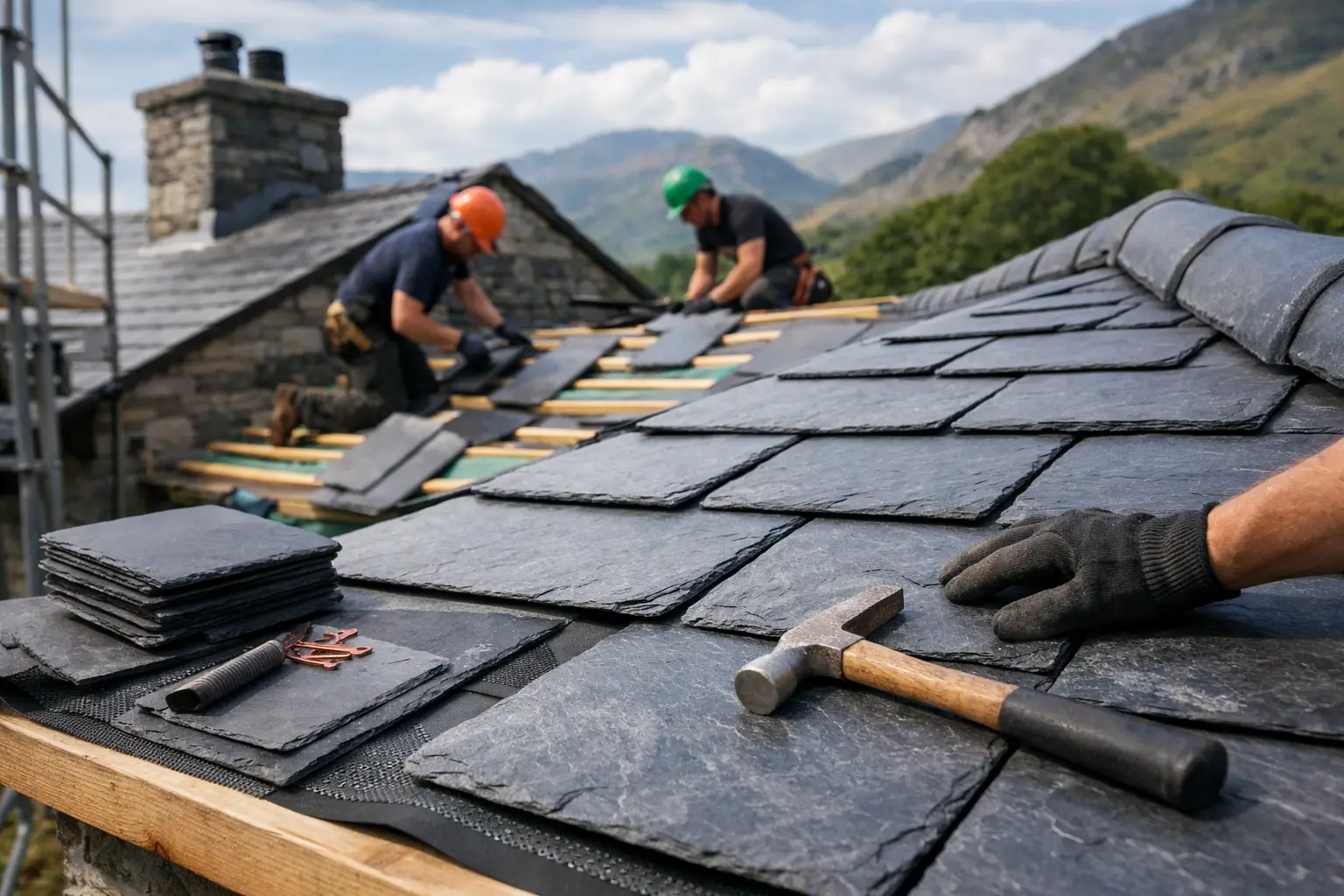
A roof rarely asks for attention at a convenient moment. One slipped slate after a storm, repeated nail sickness, or a persistent leak around an ageing slope can turn a tidy repair into a wider decision about Welsh slate roof replacements. For period properties, churches, farmhouses and older terraces, that decision is not just about weatherproofing. It is about keeping the roof true to the building, avoiding an obvious patchwork finish, and sourcing materials that will still look right years from now.
When Welsh slate roof replacements are the right option
Not every failing roof needs full replacement. In many cases, a competent roofer can strip out isolated failures, sort battens and underlay in localised areas, and relay sound slates with matching reclaimed pieces. That is often the right route when the majority of the roof remains in good order and the existing slate still has a strong service life left.
Replacement becomes more realistic when failure is widespread. If the roof is showing heavy delamination, repeated breakage, fixings have reached the end of their life, or previous repairs have introduced mixed materials and poor detailing, piecemeal work can become false economy. The labour involved in repeated access, sorting and patching soon adds up. At that point, replacing the roof covering while retaining the correct character usually makes better long-term sense.
There is also a middle ground. Some projects involve stripping the whole roof, salvaging reusable original slates, and making up the shortfall with carefully graded reclaimed Welsh slate. This approach can preserve as much original fabric as possible while giving the roof a proper reset with new battens, breathable membrane where appropriate, and sound fixing practice.
Why Welsh slate is different
Welsh slate has a reputation for good reason. It is dense, durable and visually distinctive, with the kind of clean, consistent appearance that suits both high-status heritage work and straightforward domestic reroofing. On many older roofs, especially in conservation-sensitive settings, replacing Welsh slate with a cheaper modern alternative can leave the building looking noticeably wrong.
The issue is not only colour. Texture, thickness, edge finish and weathering pattern all affect the final result. A roof that started life with Welsh slate tends to have a particular visual discipline. Courses sit cleanly, the face has a tighter look, and the slate often weathers in a way that gives the whole slope a calm, even character. Substitute materials may be serviceable, but they can stand out sharply once laid.
That is why reclaimed stock matters. For many Welsh slate roof replacements, reclaimed slate gives the best chance of matching the original roof in both appearance and performance. It also supports a more sustainable approach, particularly where customers want to avoid discarding serviceable traditional material in favour of newly manufactured products that alter the look of the building.
Matching matters more than most people expect
A replacement roof can fail visually even when it is technically sound. The usual cause is poor matching. Roof pitch, slate size, thickness and headlap all interact, so the slate cannot be chosen on colour alone.
A proper match starts with the existing roof. The roofer or supplier should look at slate dimensions, nominal thickness, hole position, fixing method and the way the roof has been laid. If the property has been repaired over time, there may already be more than one slate type on the slope. In that case, the job is to decide whether to match the dominant material or restore the roof to a more coherent finish.
Reclaimed slate is especially useful here because it offers variation within the right limits. On heritage work, a little natural difference is often preferable to a roof that looks too uniform and newly imposed. The key is control. Slates should be sorted, graded and checked so that variation reads as authentic rather than careless.
Reclaimed or new for Welsh slate roof replacements?
This depends on the building, the budget and the planning context. Reclaimed Welsh slate is usually the strongest choice where heritage character is a priority, where existing roofs need close matching, or where conservation officers expect a like-for-like result. It also suits partial reroofing where new slate would be visually obvious.
New slate can be appropriate on some projects, particularly where the roof has already lost its original character or where the budget does not allow for premium reclaimed material. Even then, buyers should be realistic. Lower-cost alternatives may reduce initial spend, but they can affect kerb appeal, future repairs and the overall quality of the finished roof.
For many contractors and renovators, the best route is not to frame it as reclaimed versus new in absolute terms. It is a question of what the building needs. A listed farmhouse in West Yorkshire has different demands from a mixed-age outbuilding or a rear slope hidden from view. Good specification starts with the property, not with a one-size-fits-all product decision.
What to check before ordering slate
The most expensive mistakes usually happen before the first bundle arrives on site. Quantities need to be calculated properly, but so do wastage, sorting allowance and the condition of associated components. A reroof using quality slate can still disappoint if ridge tiles, valleys, leadwork or fixings are treated as afterthoughts.
It is worth confirming whether the project needs a square-and-diminishing layout or fixed sizes throughout. The answer affects both material selection and labour. It also helps to establish whether enough matching reclaimed stock is available to complete the roof in one run. Starting with one batch and trying to patch in more later can create avoidable inconsistency.
Trade buyers will usually already be checking these points. Homeowners and less experienced renovators often benefit from supplier guidance, especially where the roof is part repair, part replacement, or where only one elevation is visible from the street. This is where dealing with a specialist stockholder adds value. A broad reclaimed inventory makes it easier to source slates that are genuinely compatible rather than merely similar.
Costs and trade-offs
Welsh slate roof replacements are not the cheapest roofing option, and there is no point pretending otherwise. Material cost can be higher, especially for strong reclaimed stock in consistent sizes. Labour can also rise because slate work demands care in sorting, setting out and fixing.
What matters is value over time. A well-specified slate roof can offer long service life, strong visual appeal and better alignment with period architecture than many cheaper substitutes. On the right property, that can protect resale value as well as the fabric of the building.
There are still trade-offs. If the roof structure needs significant timber repairs, if access is difficult, or if detailing around abutments and valleys is poor, the total project cost may move well beyond the slate itself. That is why sensible budgeting should look at the full roof build-up, not just the price per slate.
Common problems on replacement projects
One recurring issue is overconfidence about salvage rates. A roof may look recoverable until stripping begins, at which point breakages and hidden defects reduce the number of reusable slates. If the replacement strategy depends on salvaging a high percentage of the original covering, it is wise to build in a realistic contingency.
Another problem is mixing slates without proper grading. Even quality reclaimed material can produce a poor finish if lengths, widths and thicknesses are not sorted correctly. The result is uneven coursing, awkward dressing and a roof that never quite settles visually.
Then there is the supporting specification. Using unsuitable fixings, neglecting lead details, or pairing good slate with weak ancillary materials undermines the whole job. A proper roof replacement should be treated as a system, not a stack of individual products.
Choosing a supplier for Welsh slate roof replacements
For this kind of work, stock depth matters. So does inspection. Buyers need to know that reclaimed slates have been checked, sorted and described accurately, not pulled together as a rough approximation. If a project calls for matching an existing roof, access to a large range of reclaimed slate sizes and associated roofing materials can save time and reduce compromise.
It also helps to deal with a supplier that understands heritage roofing rather than simply shifting generic stock. The difference shows in the questions asked. A specialist will want to know about slate size, pitch, exposure, property type and the look you are trying to preserve. That is far more useful than being handed a price list without context.
For contractors, reliable supply helps keep programmes moving. For homeowners, it reduces the risk of paying for work twice because the first material choice was not right. Reclaimed Roof Slates serves this market because the job is rarely only about buying slates. It is about getting the right slates, in the right quantity, with the right supporting materials, for a roof that needs to last.
A practical way to approach the job
Start with a proper roof inspection and be honest about the condition of the existing covering. Decide whether the aim is repair, full replacement, or salvage and relay with matching reclaimed additions. Measure carefully, confirm slate type and size, and think about all associated materials at the same time.
If the building has period character, treat matching as a priority rather than a finishing touch. The best Welsh slate roof replacements respect the original roofline, use materials with the right visual weight, and avoid shortcuts that save a little now but look wrong for decades.
A good slate roof should not draw attention for the wrong reasons. If the replacement is planned properly, sourced from the right stock, and laid with care, the finished roof will simply look as though it belongs there – which is exactly the point.

