

Yorkshire Stone Roof Slates Explained
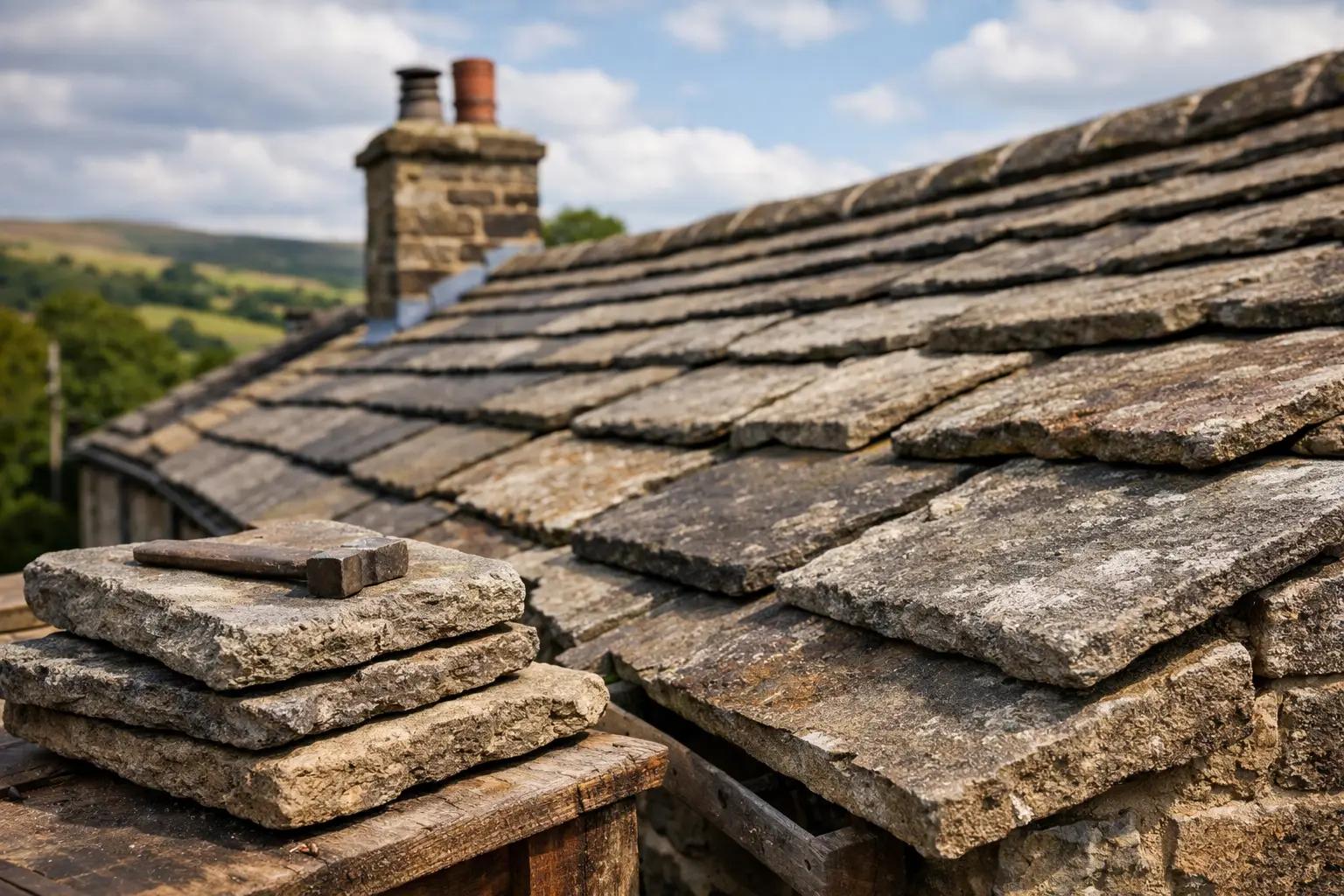
A roof with genuine Yorkshire stone roof slates does not need much introduction. The thickness, the natural variation, and the unmistakable laid finish give a building the sort of weight and character that machine-made alternatives struggle to copy. For period properties, listed buildings, and traditional roofs in need of repair, getting the right slate is not just about weathering – it is about preserving the look, line, and integrity of the whole roof.
These slates are a specialist material, and they need to be treated as such. Whether you are replacing a few damaged pieces after storm movement or planning a full reroof on a heritage property, the key questions are usually the same. Are the slates a genuine match, are they suitable for the roof pitch and structure, and can you source enough of them in a consistent batch?
What makes Yorkshire stone roof slates different
Yorkshire stone slates are not slates in the same way as Welsh or Burlington slates. They are stone flags split from sandstone rather than metamorphic slate, and that changes how they behave on a roof. They are generally heavier, often thicker, and usually laid in diminishing courses, with the largest slates at the eaves and smaller sizes towards the ridge.
That method of laying is part of their character, but it is also practical. Because these are random-sized stone slates, the roof is sorted and laid to suit available lengths, widths, and thicknesses. A proper stone slate roof is built with grading in mind, not treated like a uniform, boxed product.
The visual result is one of the main reasons these roofs are still in demand. Yorkshire stone gives a roof depth and movement. Colour tones vary from buff and grey to brown and weathered earth shades depending on source and age. On cottages, farmhouses, churches, outbuildings, and larger vernacular buildings, that variation often looks right in a way that newer substitutes do not.
Why reclaimed Yorkshire stone slates are often the right choice
For repair and restoration work, reclaimed material is usually the practical answer rather than a compromise. On an existing roof, new stone slates can stand out too sharply in colour, texture, and edge finish. Reclaimed pieces are more likely to sit comfortably with the surrounding roof covering, especially where the goal is to make a repair disappear rather than advertise itself.
There is also the question of availability. Heritage roofs rarely fail in neat, standardised sections. A customer may need a small quantity for a localised repair, or several tonnes for a full project, and in both cases the challenge is finding compatible material. A specialist reclaimed stock gives far more flexibility than trying to adapt a modern product to a traditional roof.
This matters particularly on conservation-led work. Planning expectations, listed building requirements, and simple visual common sense often point in the same direction – use materials that match the original roof as closely as possible. That does not mean every slate has to be identical. It does mean the batch should be right in geology, appearance, thickness range, and laying style.
Sourcing the right Yorkshire stone roof slates
The biggest mistake buyers make is treating Yorkshire stone slates as a generic category. They are not. Size range, thickness, coursing pattern, fixing detail, and weathered appearance all need checking before purchase. If you are matching into an existing roof, measurements from site are essential.
At minimum, you need to know the slate lengths and widths present on the roof, the approximate thickness range, and whether the roof is laid in random diminishing courses or to a more regular pattern. Good photographs help, but they do not replace actual dimensions. If there is doubt, a sample from site is usually the safest route.
Quantity is another area where experience matters. With stone slates, tonnage, coverage, and grading are closely linked. Coverage cannot be judged properly from square metre figures alone without understanding the slate mix and roof detail. Headlap, pitch, rafter lengths, and wastage all affect the final requirement. On complex roofs with valleys, dormers, and abutments, those allowances become even more important.
A reliable supplier should be able to advise on realistic coverage expectations from the batch being offered, not just provide a broad estimate. That is especially valuable where a customer is trying to balance budget, authenticity, and available stock.
Matching for repairs versus full reroofing
Repair work and full reroofing are different jobs, and the material choice should reflect that.
For repairs, the priority is visual and technical compatibility with the existing roof. The best reclaimed Yorkshire stone roof slates for this kind of work are usually those that blend into the roof once laid and weathered in, even if the batch is not large enough for a whole elevation. A slightly mixed batch can work well for patch repairs if the surrounding roof is already varied.
For a full reroof, consistency becomes more important. You still want the natural variation that gives stone roofs their character, but you also want confidence that the batch has enough continuity in size range and thickness to be laid efficiently and look balanced once complete. Trade buyers will usually be looking for a batch that can be graded sensibly on site without excessive sorting losses.
There is also the structural side to consider. Yorkshire stone slates are heavy, and a full reroof may require checks on the existing roof structure. That is not a reason to avoid them, but it is a reason to be realistic. On older buildings this may already be accounted for in the original design. On altered roofs or major refurbishments, it needs proper attention before materials are ordered and loaded out.
Practical considerations on site
Stone slate roofing is not a casual fit-and-forget exercise. The roof needs to be set out properly, the slates graded carefully, and fixings selected to suit both the material and exposure conditions. A good batch of reclaimed stone is only part of the job. How it is handled and laid matters just as much.
Sorting is one of the first critical steps. Slates are usually graded by length, width, and thickness so the roofer can build diminishing courses correctly. If this is rushed, the roof can look forced and uneven. If it is done properly, the finished slope reads naturally and performs as it should.
Fixings and supporting materials should not be an afterthought either. Battens, underlay, leadwork, ridge details, and associated roofline products all need to suit the build-up. On heritage work in particular, it makes sense to source the main roofing material and the day-to-day essentials from a supplier that understands how the whole roof goes together.
There is always a trade-off between perfect aesthetic matching and programme speed. Reclaimed stone gives the right result, but it can involve more selection and planning than standardised modern coverings. Most customers taking on traditional roof work already understand that. The value is in getting a finish that lasts and looks right for the building.
When Yorkshire stone slates are the best fit
They make most sense where the roof already carries stone slates, where the property sits within a traditional local vernacular, or where heritage requirements favour authentic materials. In parts of Yorkshire and beyond, that can be the difference between a roof that belongs to the building and one that always looks replaced.
They are also a strong option for buyers who place value on reuse and material longevity. Reclaimed stone slates keep serviceable roofing material in circulation and reduce the need for newly manufactured alternatives. For many projects, sustainability is not separate from authenticity – the same decision achieves both.
That said, they are not the right answer for every roof. Weight, pitch, budget, and stock availability all need to be considered. If a customer is trying to match an existing stone roof, the case is usually clear. If they are choosing a covering for a completely different type of building, it becomes more site-specific.
Choosing a supplier that understands heritage roofing
With specialist materials, the quality of supply matters as much as the product itself. Buyers need accurate descriptions, honest assessment of batch character, and realistic guidance on quantities. That is particularly true for reclaimed stone, where no two pallets are exactly alike.
A specialist stockholder should be able to help with matching, advise on practical coverage, and supply complementary roofing products alongside the main slates. For contractors and renovators, that saves time. For homeowners navigating a repair on a period property, it reduces the risk of buying the wrong material first time.
ReclaimedRoofSlates.com works in that space because the demand is rarely simple. One customer needs a handful of matching replacements. Another needs tonnes of graded material for a heritage reroof. In both cases, the job starts with the same principle – get the roof covering right, and the rest of the project has a much stronger foundation.
If you are sourcing Yorkshire stone for a repair or restoration, the best starting point is not the cheapest batch or the nearest visual approximation. It is a clear match, a realistic quantity assessment, and material that respects the building it is going back onto.

