

Reclaimed Slates Manchester for Heritage Roofs
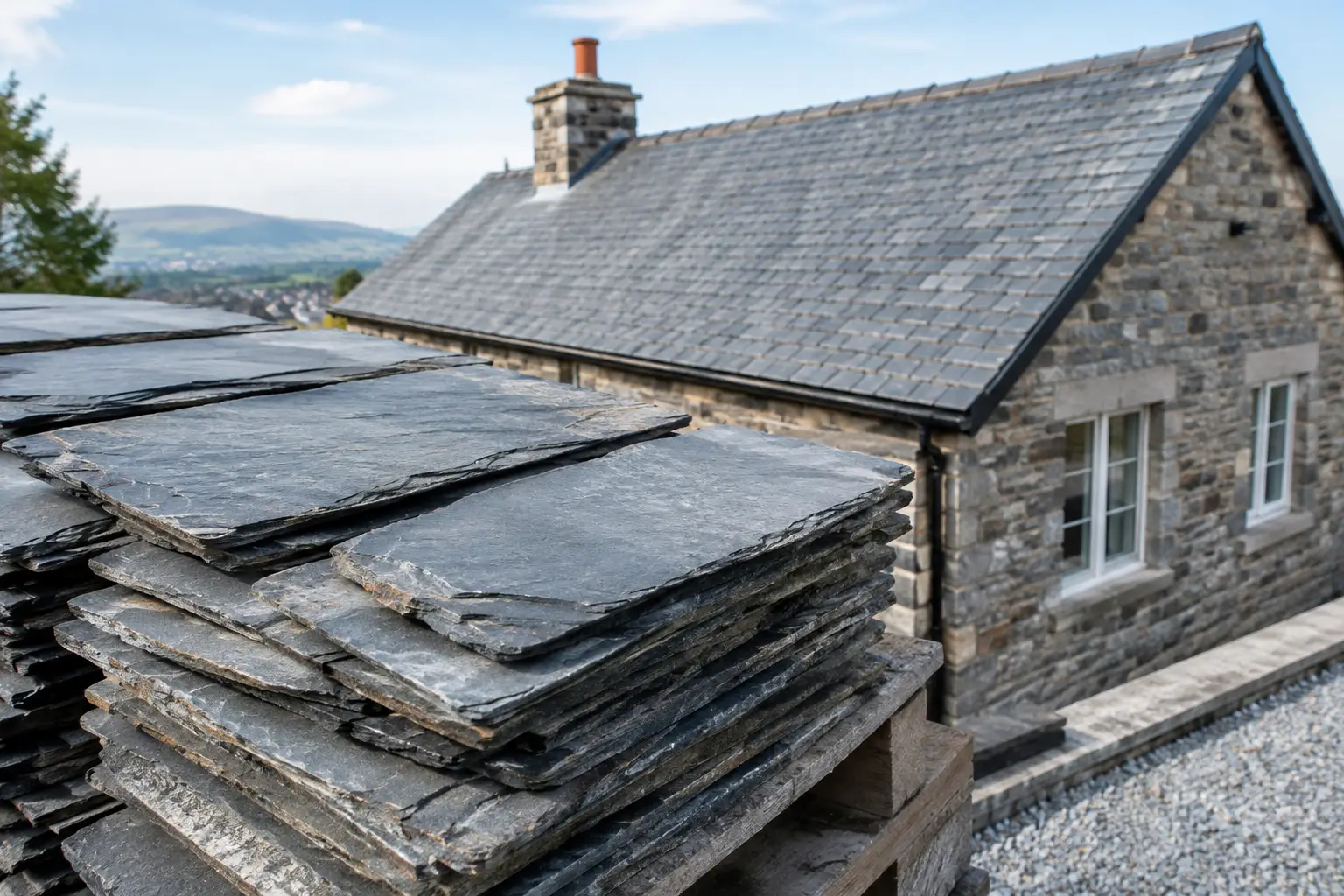
A single mismatched slate can stand out across a traditional Manchester roofline. On a Victorian terrace, converted mill building or older suburban property, the roof is a major part of the building’s character. Reclaimed slates Manchester homeowners, builders and roofing contractors source for repairs must therefore do more than fill a gap – they need to match the existing roof in size, texture, thickness and weathered appearance.
New slate has its place, particularly on complete reroofs where a consistent finish is required. For localised repairs and heritage-led work, however, reclaimed material is often the more convincing and practical choice. Properly selected reclaimed slate can settle naturally into an established roof and provide many more years of service.
Why reclaimed slate suits Manchester properties
Manchester has a varied stock of older housing, from stone cottages at the edge of the Pennines to dense rows of Victorian and Edwardian homes. Many roofs were originally laid with Welsh slate, Burlington slate or regional stone slate. Their appearance is not easily replicated by a modern alternative.
Natural slate develops character over decades. The surface softens, edges weather slightly and colours become less uniform. Reclaimed slate carries that established finish from the outset. This matters where only part of a roof is being repaired, as an obviously new patch can undermine the appearance of an otherwise sound roof.
Reclaimed material also makes good environmental sense. Reusing durable slate avoids sending a viable roofing product to landfill and reduces demand for newly quarried material. Slate is a long-life product by nature, so reclaiming sound pieces from carefully stripped roofs is a sensible use of a resource that may have decades of performance left.
That does not mean every old slate is suitable. Age alone is not a quality mark. Reclaimed slates should be inspected for delamination, excessive thinning, cracks, damaged nail holes and signs of poor previous fixing. A reliable supplier grades stock so roofers can specify usable materials rather than spending valuable time sorting through unsuitable pieces on site.
Matching reclaimed slates in Manchester
The best replacement is not necessarily the closest slate in colour. Accurate matching begins with the physical details of the roof. Before ordering, measure several existing slates from different areas, not just the broken one. Older roofs can contain more than one size because of past repairs, different courses or changes made around valleys and abutments.
Size, thickness and headlap
Slate length and width affect the gauge and headlap of the roof. Installing a slate of the wrong size can interrupt the coursing, reduce weathering performance or create an awkward visual break. Thickness matters too. A very thin replacement beside heavier traditional slates can sit differently beneath the overlap and look out of place from ground level.
Roof pitch, rafter length and exposure also influence the correct lap. A contractor replacing a small number of slates can usually follow the existing roof pattern. For a larger repair or a stripped section, it is worth confirming the intended gauge before materials are ordered and battens are fixed.
Colour, surface and edge finish
Natural slate colours range from blue-grey and purple-grey to green, heather and mottled tones. Weathering can alter those tones further, especially on roofs exposed to prevailing rain and pollution. Assess the roof as a whole rather than trying to match one unusually dark or light slate.
Look closely at the surface. Some slates are smoother and more uniform, while others have visible grain, mineral variation or a riven texture. Edge shape also varies. Hand-dressed and irregular edges may be essential on a traditional roof, whereas a cleaner dressed edge may suit a more formal Victorian finish.
Nail holes and fixing method
Reclaimed slates may have existing nail holes from their previous roof. These must be in sound material and positioned so the slate can be fixed correctly without weakening it. In some cases, a slate can be re-holed by an experienced roofer, but this depends on its size, condition and intended position.
Fixings should suit the roof specification and local exposure. Copper and stainless steel nails are common choices for quality slate work, while hook fixing can be appropriate in particular repair situations. The correct approach depends on the roof, not simply the slate available.
When a mixed batch is the right answer
For isolated repairs, a close visual match is usually the priority. For a larger reroof on an older building, a carefully graded mixed batch can sometimes be the better option. It creates a naturally varied finish that suits period properties and avoids the flat, uniform look of a heavily processed material.
The trade-off is that mixed reclaimed slate requires more planning. Slates need to be sorted by size and thickness, with the heavier or larger pieces allocated appropriately. This is skilled roofing work, not a case of laying whatever comes to hand. Allow for a sensible percentage of extra material too, particularly where cutting, sorting and natural variation are involved.
A uniform batch may be more suitable where the existing roof has a regular appearance, the repair sits on a highly visible elevation, or planning requirements call for a close match. The right choice depends on the roof’s age, condition and the scope of the work.
Order enough for the job, not just the visible breakage
A roof repair rarely ends with the first few slates removed. Once work begins, adjacent slates can reveal hidden fractures, perished fixings or damage around chimneys, valleys and rooflights. Ordering only the exact number visible from a ladder can lead to delays and a poorer match if further materials are needed later.
For larger work, calculate coverage from the slate dimensions and proposed gauge, then include an allowance for cuts, breakages and selection. Tonne-based orders can be practical for substantial reroofing projects, but they still need a clear specification: slate type, size range, thickness, finish and expected coverage.
It is equally useful to source the supporting materials at the same time. A repair may require battens, breathable membrane, lead for flashings, ridge or valley tiles, fixings, sealants and suitable personal protective equipment. Having compatible materials ready avoids stopping work halfway through because a small but essential component has been overlooked.
Heritage considerations and practical repairs
If a property is listed or sits within a conservation area, check the relevant requirements before stripping a roof or changing materials. Local planning guidance may expect natural slate, a specific finish or the retention of original details. Reclaimed Welsh or Burlington slates can help preserve the character expected of an older building, but the exact specification should be agreed before ordering.
Even where formal consent is not required, good practice is to retain sound original material wherever possible. Salvage reusable slates during strip-out, separate them by size and condition, then supplement the shortfall with compatible reclaimed stock. This approach protects the roof’s authenticity and can be more economical than replacing every slate unnecessarily.
Care is especially important around details. Valleys, hips, abutments and chimney flashings receive more water than open roof slopes and often fail before the field slates do. Replacing slate without addressing defective leadwork, rotten battens or poor ventilation may only postpone the next repair.
Choosing a dependable reclaimed slate supplier
The value of reclaimed slate lies in its condition and suitability, not merely in its age. Ask for clear information on the slate type, dimensions, thickness range and grading. For repair work, photographs and samples can help establish whether the colour and texture will work alongside the existing roof.
A specialist supplier should understand that a customer asking for twenty replacement slates has a different requirement from a contractor ordering several tonnes for a reroof. Both need usable, accurately described material, but the advice, packing and selection process may differ. ReclaimedRoofSlates.com supplies reclaimed and heritage roofing materials for both small matching jobs and larger trade requirements, alongside the practical accessories needed to complete the work properly.
Manchester roofs have endured hard weather, industrial history and generations of repair. The right reclaimed slate respects that history while giving the roof a sound future. Measure carefully, specify honestly and choose material on condition as well as appearance – the result will look as though it has always belonged there.

