

Best Breathable Membranes for Pitched Roofs
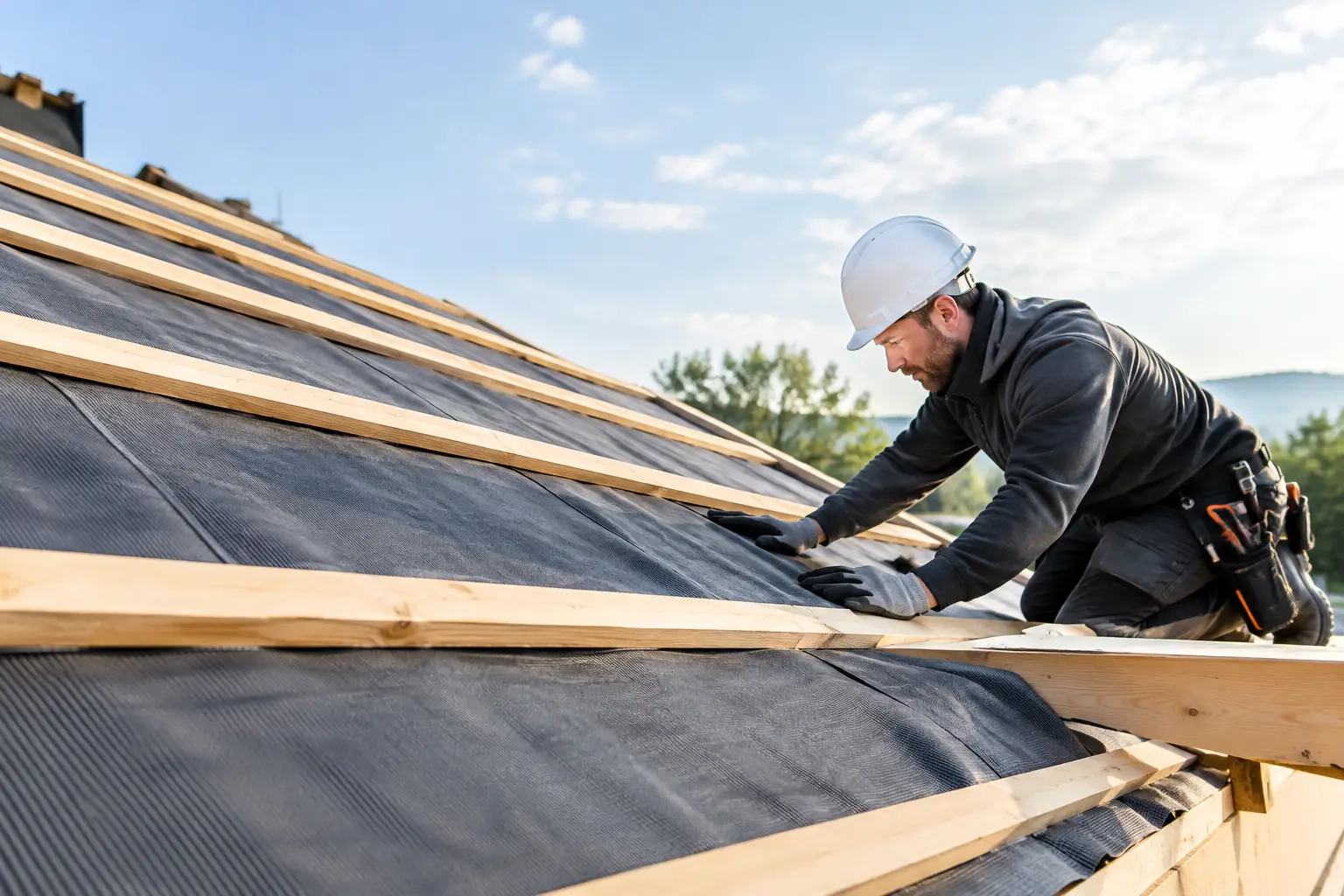
A breathable membrane is hidden once the slates or tiles are fixed, but it has a direct bearing on how a pitched roof manages wind-driven rain, condensation and day-to-day site conditions. The best breathable membranes for pitched roofs are not simply the ones with the highest advertised vapour performance. They must suit the roof build-up, covering, exposure and ventilation strategy, particularly on a repair or restoration where reclaimed materials need to perform alongside modern components.
For contractors and property owners working on period roofs, the correct membrane should support the original character of the roof without treating it as a modern new-build detail. A reclaimed Welsh slate, Burlington slate or clay Rosemary tile roof may have different fixing gauges, batten layouts and airflow characteristics from a standard tiled roof. The underlay needs to be selected accordingly.
What makes a breathable membrane suitable?
A breathable roofing membrane is a secondary weather barrier fitted beneath battens and roof covering. It is designed to resist water entering from outside while allowing water vapour from within the roof structure to pass through. This helps reduce the risk of condensation forming on the underside of the covering or within the insulation zone.
The key term is vapour resistance. A low-resistance, or LR, underlay allows moisture vapour to pass through more readily than a high-resistance underlay. This can be useful in many pitched roof constructions, but it does not mean that ventilation can automatically be ignored. The roof still needs a moisture-risk assessment that considers insulation, ceiling air leakage, internal humidity, roof pitch and the manufacturer’s installation guidance.
A dependable membrane should also provide good water resistance, tear strength and nail-seal performance. On a slate roof, where fixing work is precise and the roof may remain exposed during changeable weather, those practical qualities matter just as much as a laboratory vapour figure.
Choosing the best breathable membranes for pitched roofs
The right choice depends first on whether the roof is a cold roof, a warm roof or a refurbishment with existing insulation and limited access. It also depends on the roof covering and local exposure. A membrane specified for a low-pitch concrete tile roof is not automatically the best fit for a steep reclaimed slate roof in an exposed location.
Start with the roof construction
In a typical cold pitched roof, insulation sits at ceiling level and the loft above is ventilated. A vapour-permeable membrane can form part of a well-designed system, but ventilation at the eaves, ridge or both may still be required. Do not assume that fitting an LR membrane alone resolves moisture movement, especially where loft insulation has been upgraded and ceiling penetrations have not been sealed.
In a warm roof, insulation follows the roof slope. Here, the position and continuity of the vapour control layer on the warm side of the insulation is often critical. The breathable membrane above the insulation manages external weather protection and outward vapour movement, while the internal layer limits warm, moist air entering the build-up. Missing either part can create a condensation risk.
For older properties, avoid making assumptions based on a single detail. Solid walls, open fireplaces, irregular rafters and previous repairs can all affect how moisture behaves. A competent roofing contractor or building professional should assess the whole construction where significant insulation work is planned.
Consider the roof covering and batten detail
Natural slate roofs benefit from an underlay that remains stable under battens, resists tearing around fixings and offers reliable protection before the slates are fully laid. Reclaimed slates can vary in size and thickness, which may make the job slower than laying a uniform new product. A tougher membrane gives roofers more confidence during that period.
Clay tiles, including reclaimed Rosemary tiles, may require different batten gauges and detailing around valleys, abutments and verges. The membrane should work with the specified batten depth and drainage path. Water reaching the membrane needs a clear route to the eaves without pooling behind fascia boards, counter-battens or poorly formed laps.
Where a roof has shallow pitches, complex valley work or heavy exposure to wind-driven rain, prioritise a membrane with a proven water-resistance classification and follow the recommended lap dimensions. The underlay is not the primary waterproofing layer, but poor laps and damaged sheets can allow water to reach battens and timbers.
Account for exposure and site conditions
Roofs in exposed parts of Yorkshire, coastal areas or elevated sites may face greater wind pressure beneath the slates or tiles. In these cases, air permeability and wind-tightness deserve close attention. An excessively air-open product can permit unwanted air movement through the roof build-up if the design does not compensate for it.
Installation conditions also matter. A membrane that is awkward to handle when wet, prone to tearing or difficult to mark can cost time and create avoidable defects. For trade work, practical features such as clear overlap guides, good roll handling and reliable temporary weather protection are worthwhile, provided the product still meets the performance requirements of the roof design.
Membrane features worth comparing
When comparing breathable roofing membranes, assess the full technical data rather than relying on the word breathable on the packaging. Four areas usually separate a suitable product from a poor fit:
- Vapour resistance: Lower resistance supports vapour movement, but the required level depends on the complete roof specification and ventilation provision.
- Water resistance: Check the product’s declared resistance to water penetration and use the correct laps, support and drainage detailing.
- Strength and nail resistance: Look at tensile strength, tear resistance and performance around batten fixings, particularly for slate work and exposed sites.
- Fire, UV and installation limits: Check how long the membrane may remain uncovered, its reaction-to-fire classification and any restrictions on unsupported spans or roof pitches.
A reinforced, low-resistance membrane is often a sound all-round choice for a conventional pitched roof where durability during installation is a priority. However, the best product for a tightly detailed heritage refurbishment may be one selected to complement a specific ventilation and insulation design, rather than the heaviest membrane available.
Installation details that protect roof performance
Even a well-specified membrane can underperform if it is installed carelessly. Lay sheets horizontally from eaves to ridge, maintain the manufacturer’s stated overlaps and keep the material reasonably taut without stretching it. Sagging between rafters can obstruct drainage, while excessive tension can cause tearing around fixings.
At the eaves, ensure water running down the membrane discharges into the gutter correctly. This transition is frequently overlooked during repairs, particularly where old felt, fascia details and replacement battens meet. At valleys and roof penetrations, provide sufficient laps and use the appropriate proprietary tapes or detailing methods where specified.
Avoid leaving breathable membrane exposed for longer than its stated UV resistance period. On a larger reclaimed slate project, programme deliveries so that underlay, battens, fixings and slates are available in sequence. This reduces the chance of an open roof being left vulnerable after a change in weather.
Do not use the membrane as a substitute for sound leadwork, properly formed valleys, ridge ventilation or careful slate fixing. It is one layer in a roof system. Flashings, battens, fixings and the roof covering itself must all be compatible and installed to the correct standard.
Special considerations for heritage and reclaimed roofs
Period properties often demand a balanced approach. The aim is to improve weather protection and moisture control without losing the roof’s original proportions, material character or ventilation paths. Reclaimed slates and tiles are particularly valuable where matching colour, texture and size is essential, but they should be paired with modern accessories that support a long service life.
Before stripping a historic roof, inspect the existing timber, eaves construction and any signs of condensation or water staining. This may reveal whether the issue is failed flashings, blocked ventilation, inadequate insulation or an old underlay nearing the end of its life. Replacing membrane alone will not cure a defect elsewhere in the roof.
For restoration projects requiring reclaimed slate alongside membrane, battens, lead and fixings, ReclaimedRoofSlates.com provides specialist materials suited to repair work and complete heritage roofing projects. Matching components at the specification stage helps avoid delays once the roof is open.
The most reliable choice is the membrane that fits the roof rather than the label. Specify it alongside the insulation, ventilation, slate or tile covering and detailing, then give the installer the time and materials needed to form every lap and junction properly.

