

Best Nails for Slate Roofs and Heritage Repairs
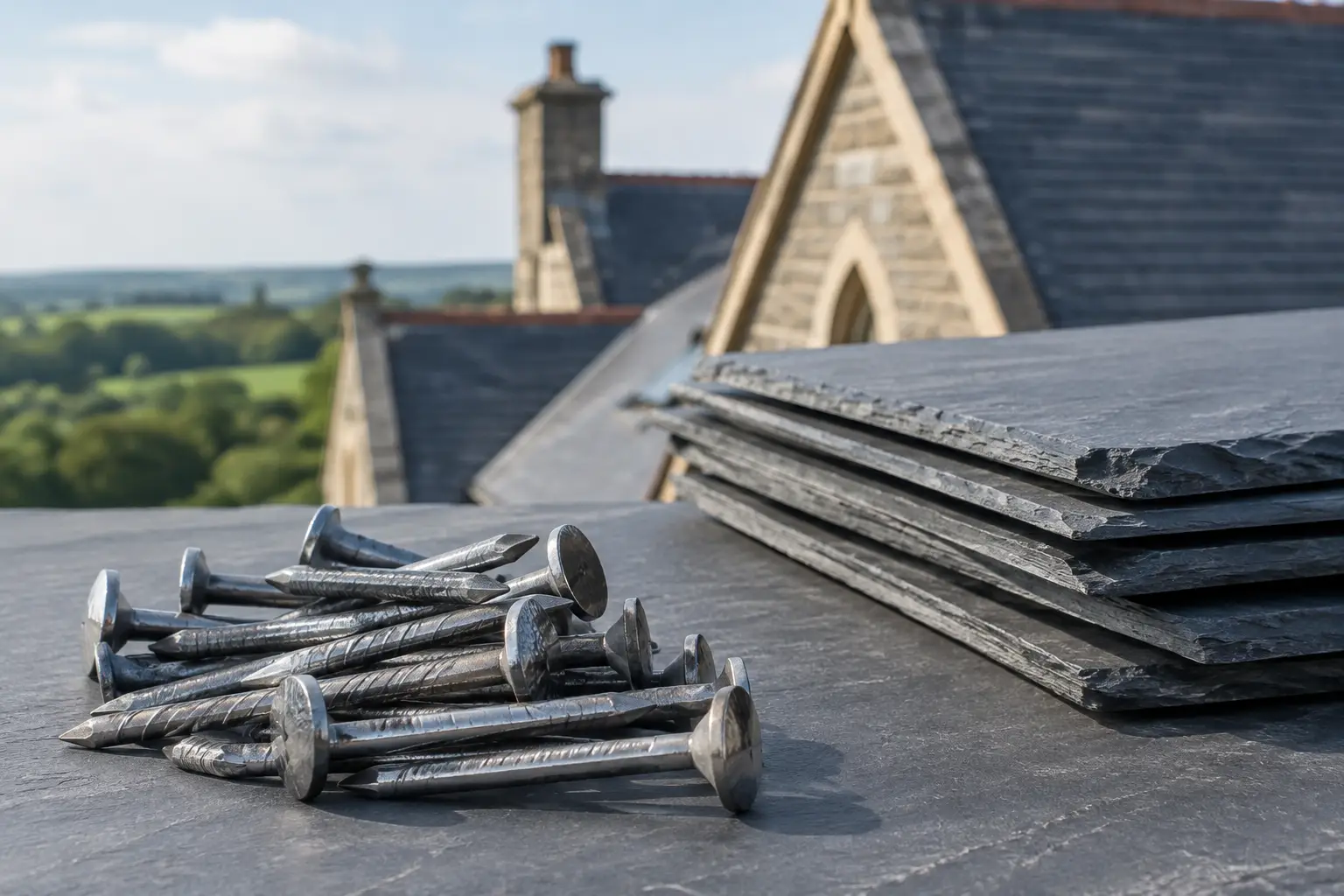
A slate roof can look sound for generations, then fail locally because of a fixing that has corroded, snapped or been driven too tightly. Choosing the best nails for slate roofs is therefore not a minor purchasing decision. The nail must suit the slate, roof exposure, batten specification and expected life of the repair – particularly on period properties where replacement work needs to sit naturally alongside original materials.
For most UK slate roofing work, copper and stainless steel are the dependable choices. Galvanised nails have a place on certain jobs, but they need careful specification. The cheapest nail is rarely the best value when replacing it later means lifting sound slates, disturbing adjacent courses and risking breakage.
Best Nails for Slate Roofs: Copper or Stainless Steel?
Copper slate nails remain the traditional choice for natural slate. They are long-lasting, resistant to corrosion and well suited to heritage repairs, including roofs laid in Welsh slate, Burlington slate and many reclaimed slates. Their softer metal also makes them less likely to cause damage if a slate moves slightly under thermal change or wind loading.
Copper is especially appropriate where authenticity matters. On listed buildings, conservation work and repairs to older roofs, it is often the expected fixing material because it matches established roofing practice and has a proven lifespan. A good-quality copper nail develops a surface patina rather than red rust, helping it continue to perform for decades.
Stainless steel slate nails are an excellent modern alternative where high corrosion resistance is required. Grade 316 stainless steel is particularly worth considering on coastal properties, exposed upland sites and roofs subject to persistent wet weather or airborne salt. It costs more than standard galvanised fixings, but that additional spend is usually modest compared with the labour involved in a slate roof repair.
The choice between copper and stainless steel often comes down to the building and the specification. Copper is the natural fit for traditional appearance and established heritage practice. Stainless steel provides exceptional strength and corrosion resistance, making it a practical choice for demanding environments. Both are considerably more reliable than lightly coated or electro-galvanised nails.
Why Galvanised Nails Need Careful Consideration
Galvanised slate nails are sometimes used for lower-cost repairs or temporary works, but not all galvanising is equal. Electro-galvanised nails have a thin protective coating and are generally unsuitable for a roof expected to last for many years. Once the coating is damaged or wears away, corrosion can begin quickly.
Hot-dip galvanised nails have a much heavier zinc coating and offer better protection. They may be suitable for some standard domestic work where the roof is not in a highly exposed location and the specification allows for them. Even then, they should not be viewed as equivalent to copper or marine-grade stainless steel for long-term slate roofing.
A rusting nail can cause what roofers often call nail sickness. The slate itself may still be perfectly usable, but its fixing has weakened to the point that the slate slips, cracks or falls. On a reclaimed slate roof, this is particularly frustrating: a good original slate can be lost because the fixing was not designed to match its service life.
Match Nail Length to the Slate and Batten
There is no single nail length that suits every slate roof. The correct size depends on slate thickness, headlap, batten depth and the roof covering specification. A nail must pass through the slate and gain adequate purchase in the batten without being so long that it protrudes excessively or risks splitting the timber.
As a working principle, the fixing should penetrate sufficiently into the batten to hold securely under wind uplift. Thicker slates, irregular reclaimed slates and details with additional laps may need longer nails than a regular thin slate roof. Equally, using an overlong nail in a shallow batten is poor practice and can create avoidable problems below the roof covering.
The nail diameter and head also matter. Slate nails are made with a broad, flat head that supports the slate around the fixing hole. A head that is too small can pull through the slate under loading. A nail that is too thick for an existing hole can crack a reclaimed slate, especially where it has become more brittle with age.
Where possible, assess the existing nail holes before ordering fixings for a repair. Reclaimed slates can vary within the same batch, particularly if they have been salvaged from an older roof with hand-cut or mixed-size material. Sorting slates by thickness and condition before laying makes it easier to select the right fixing length and maintain a consistent finish.
Do Not Nail Slates Too Tight
Natural slate is durable, but it is not flexible. A slate nail should secure the slate without clamping it hard against the batten. Driving the nail head tight can place pressure on the slate around the hole, leading to cracking during installation or later as the roof moves slightly.
The correct finish is firm but not forced. The slate should lie flat in its course, with the nail head just seated. This is one of the small details that separates a lasting slate repair from a job that starts shedding cracked slates after a few seasons.
This point is even more relevant when working with reclaimed materials. Reclaimed slates may have existing holes, minor variations in thickness or a degree of weathering that adds character but requires sensible handling. A careful fixing method preserves usable material and helps the repair blend with the surrounding roof.
Consider the Roof Environment, Not Just the Price
The roof’s exposure should influence the fixing decision. A sheltered urban roof has different demands from a property on the coast, a hilltop house or an exposed rural building in West Yorkshire. Strong winds increase uplift forces, while salt, pollution and constant moisture increase the risk of corrosion.
Before selecting nails, consider these practical factors:
- The slate type, thickness and condition, including whether reclaimed slates have existing fixing holes.
- The batten material, depth and condition, as rotten or undersized battens cannot be solved with a better nail.
- The roof pitch, headlap and local wind exposure, which affect the fixing pattern and loading.
- The building’s heritage requirements, particularly where original methods and materials must be retained.
- Nearby materials such as leadwork and treated timber, where compatibility should be checked as part of the overall roof specification.
A roof repair is only as dependable as the system behind it. New copper nails will not compensate for perished battens, poor headlap, incorrectly sized slates or failing lead flashings. Inspecting the surrounding area while the roof is open often prevents a small repair becoming a repeat visit.
Nails, Hooks and Repair Methods
Nails are not the only fixing method used on slate roofs. Slate hooks can be useful on exposed roofs, for certain repair situations or where a nail fixing is impractical. They hold the lower edge of the slate rather than relying on nail holes, which can be valuable when working around difficult details.
However, hooks alter the appearance and may not be suitable for every heritage roof. They also need to be specified for the slate thickness and exposure conditions. For a straightforward repair that must match a traditionally nailed roof, copper or stainless slate nails are usually the cleaner solution.
For isolated slipped slates where access is limited, a professional may use a repair technique that avoids removing a large section of roof. The method should still provide a secure fixing and preserve proper water shedding. Temporary shortcuts, including inappropriate mastic-only repairs, can trap water and make future work more difficult.
Buying Fixings for Reclaimed Slate Work
When sourcing reclaimed slate, order the supporting fixings with the roof covering rather than treating them as an afterthought. This makes it easier to compare slate thickness, existing hole size and batten requirements before work begins. It also avoids the common problem of having carefully matched replacement slates on site but no suitable nails to fit them safely.
For heritage repairs, keep a sample slate and a sample of the intended nail available when checking the fit. A small trial on spare material can confirm whether the nail head sits correctly and whether the hole needs to be reused, carefully adjusted or avoided altogether.
ReclaimedRoofSlates.com supplies reclaimed roofing materials alongside the practical accessories needed to complete repair and restoration work properly. For any roof with unusual slate sizes, severe exposure or conservation requirements, confirm the fixing specification before placing an order.
The right slate nail should disappear into the finished roof, leaving the slate to do what it has done for centuries: shed water, withstand the weather and retain the character of the building beneath it.

