

Reclaimed Welsh Slate Review for Heritage Roofs
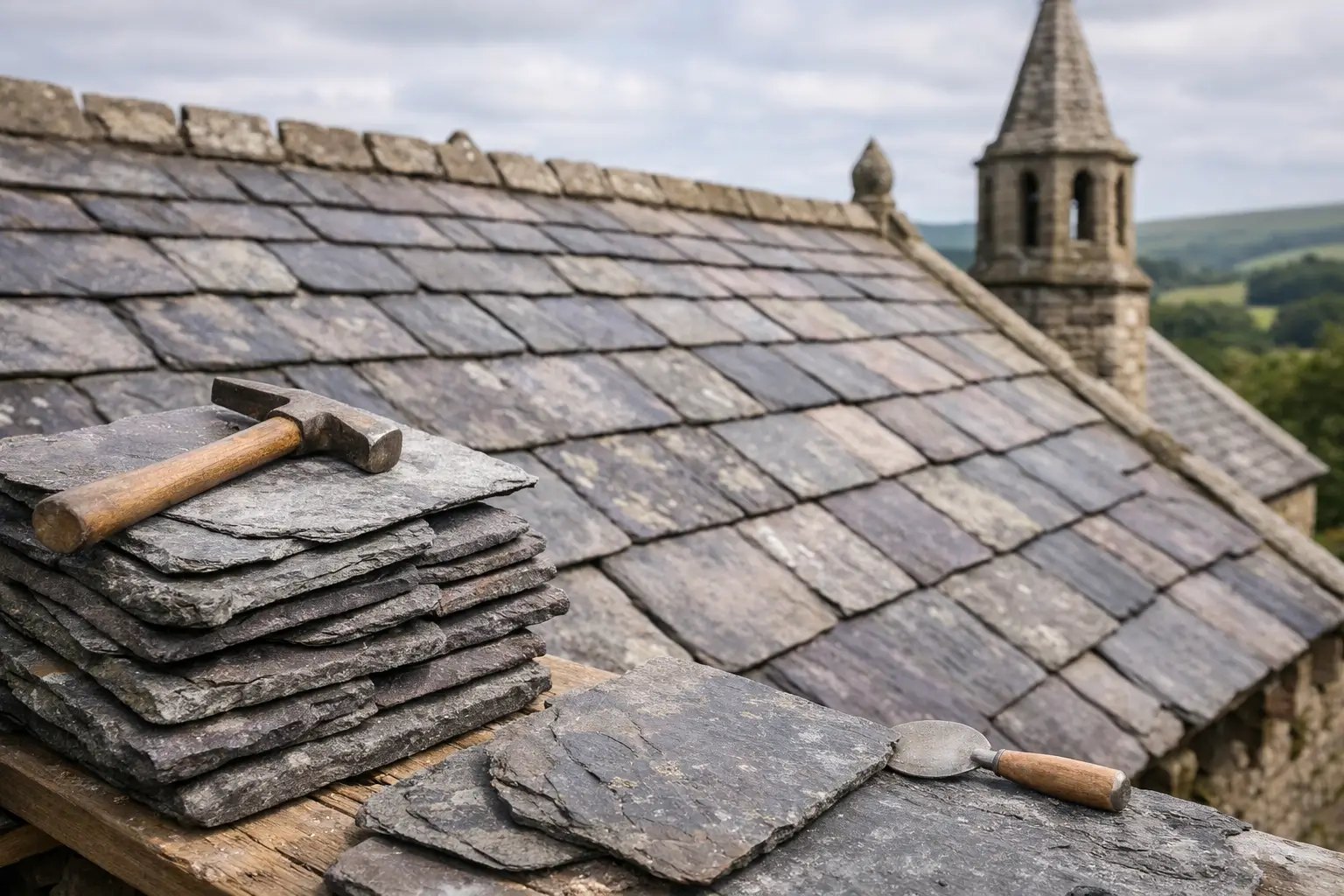
A roof repair can look straightforward until one broken slate exposes the real problem: finding a replacement that does not stand out from the pavement. On period properties, new slate can be technically sound yet still look wrong in colour, texture, thickness or weathering. This reclaimed Welsh slate review considers where reclaimed material earns its reputation, where buyers need to be cautious, and how to specify slate that will perform properly on a working roof.
What Makes Reclaimed Welsh Slate Different?
Welsh slate has long been valued for its dense structure, low water absorption and ability to withstand severe weather. It was used extensively across the UK, from cottages and terraces to civic buildings and country houses, so it remains one of the most sought-after materials for repairs to older roofs.
Reclaimed Welsh slate adds another advantage: it has already proved its durability. A slate recovered from a sound roof that has served for decades may have considerable life left, provided it has been carefully removed, sorted and inspected. Its naturally weathered face also helps it sit comfortably alongside an existing roof rather than creating an obvious patch of fresh material.
That does not mean every reclaimed slate is identical. Welsh slate was produced from different quarries and beds, and can range from blue-grey through grey-green and purple tones. Surface character, thickness, shape and grain can vary too. This variation is part of its appeal, but it means purchasing by the description alone is rarely enough for a sensitive repair.
Reclaimed Welsh Slate Review: The Main Benefits
The strongest reason to choose reclaimed Welsh slate is authenticity. If a property has an established Welsh slate roof, matching it with reclaimed material often gives the best visual result. The slate carries the softened edges, slight tonal variation and natural patina that a roof develops over time.
It is also a practical choice for conservation-led projects. Planning conditions, listed-building requirements or the expectations of a conservation officer may call for repairs that retain the roof’s original appearance. Reclaimed slate is not automatically required, but it is frequently the most convincing route where appearance matters as much as weatherproofing.
Longevity is another major factor. Good-quality Welsh slate can last well beyond the lifespan of many modern roofing products. Reclaimed material must be assessed individually, but sound slates with no damaging laminations, excessive wear or structural weakness remain a sensible long-term investment.
There is an environmental case as well. Reusing existing slate avoids sending a durable natural material to landfill and reduces demand for newly quarried alternatives. For homeowners and contractors looking to minimise waste without compromising the roof, this is a meaningful benefit rather than a marketing extra.
Finally, reclaimed stock can solve problems that modern products cannot. A repair may need a particular random width, a diminishing course pattern, a specific thickness, or a slate that can be dressed on site to suit an awkward detail. Reclaimed Welsh slates are particularly useful when the task is to make a repair disappear into the wider roof.
The Trade-Offs to Consider Before Buying
The main limitation is availability. Reclaimed Welsh slate is finite, and a supplier’s stock changes constantly. A single replacement slate may be easy to source, while a larger roof slope requiring several tonnes in a close match can need more planning. If the work is urgent after storm damage, confirm stock, grading and lead time before stripping out the roof.
Price is another consideration. Reclaimed Welsh slate is not always the cheapest option per square metre, especially when the specification calls for larger sizes, thicker slates or a particularly consistent colour. However, comparing only the initial material price can be misleading. A closer match can protect the appearance and value of a period property, while a durable slate may reduce the likelihood of repeat repair work.
Labour should also be allowed for. Reclaimed slates may need additional sorting, grading, trimming or holing depending on the condition and required fixing method. An experienced roofer will factor this into the programme. It is better to buy the right material and allow time to lay it properly than to force a poor match onto the roof because it appeared cheaper at the start.
There is also no substitute for correct roof design. Even first-rate Welsh slate will not compensate for inadequate headlap, unsuitable nails, weak battens, failed flashings or poor ventilation. A lasting repair depends on the complete roof build-up, not just the face material.
How to Match Slate Properly
For a repair, begin by identifying the existing slate rather than choosing by colour alone. Measure the length and width of several slates from different areas of the roof. Check thickness, edge profile and whether courses run to a regular gauge or a diminishing pattern. Note whether the slates are nailed, hooked or fixed by another method.
The visible colour should be assessed from ground level as well as close up. A blue-grey slate can appear markedly different when wet, dry, in shade or under strong sunlight. Existing roofs commonly contain natural variation, so an exact shade match is less important than achieving a sympathetic overall blend.
Photos are useful, but physical samples are better. Where practical, provide a sound removed slate to the supplier, along with measurements and an indication of the quantity required. For a larger project, ask to see representative samples before committing to a full order. This allows the roofer or client to assess texture and thickness as well as colour.
Do not overlook the roof details. Verge pieces, eaves slates, valleys, hips and abutments can require different cuts or sizes. A repair often fails visually because the field slates are close enough but the surrounding valley tiles, ridge tiles or leadwork have been treated as an afterthought.
What Quality Checks Matter?
A reputable reclaimed slate supplier should sort material for condition and supply it on a clearly understood basis. Slate is a natural product and reclaimed stock will retain character, but character is not the same as damage. Buyers should be clear about whether they need roofing-grade slate for full re-use, lower-grade material for landscaping, or a blend suitable for a less visible area.
When reviewing reclaimed Welsh slate, focus on four practical checks:
- Check for delamination or pronounced splitting along the slate’s layers, particularly around nail holes and edges.
- Look for excessive wear, deep fractures, previous poor repairs or damage caused during stripping and handling.
- Confirm the approximate thickness range, size range and whether the batch is regular or mixed in width and length.
- Establish whether sufficient allowance has been made for breakages, cutting, selection and future maintenance spares.
The last point is often missed. A small number of spare slates stored safely after completion can save considerable trouble years later. This is especially valuable for heritage roofs where matching material may not be available in the same batch once the repair is complete.
Is Reclaimed Welsh Slate Right for Every Roof?
Not necessarily. For a modern extension with a simple, uniform roof design, new slate may be easier to specify and install. It can offer predictable dimensions, a more consistent finish and straightforward quantity calculations. Where the roof is largely hidden or the existing covering is already modern, the premium for a precise reclaimed match may not be justified.
Reclaimed Welsh slate is at its best where the existing roof has heritage value, where visible continuity matters, or where a repair calls for a size and character that modern alternatives cannot reproduce. It is particularly well suited to traditional houses, farm buildings, conservation projects and older urban properties with established slate roofs.
For larger re-roofing work, the decision often comes down to stock consistency. A mixed reclaimed roof can look entirely appropriate on some vernacular buildings, while a formal property may need a tighter size and colour selection. The correct answer depends on the building, the roof pitch, the surrounding materials and the standard of finish expected.
A Practical Buying Approach
Before placing an order, obtain accurate roof measurements and confirm the required slate size, gauge and lap with the roofer. Add a sensible contingency for selection and cuts, especially if the roof has valleys, hips, dormers or other complex details. Buying too tightly can leave the job short of the best-matched pieces at the most inconvenient point.
It is equally worthwhile to source the supporting materials alongside the slate. Suitable fixings, breathable membrane, battens, lead products, ridge components and sealants all affect the quality of the finished work. ReclaimedRoofSlates.com supplies reclaimed slate alongside the everyday roofing components needed to complete repair and restoration projects properly.
The best reclaimed Welsh slate is not simply the oldest-looking slate or the lowest-priced batch. It is the material that matches the building, has been checked for continued roofing use, and is specified with enough care to keep the roof secure for decades to come.

