

Are Reclaimed Roof Tiles Cheaper to Buy?
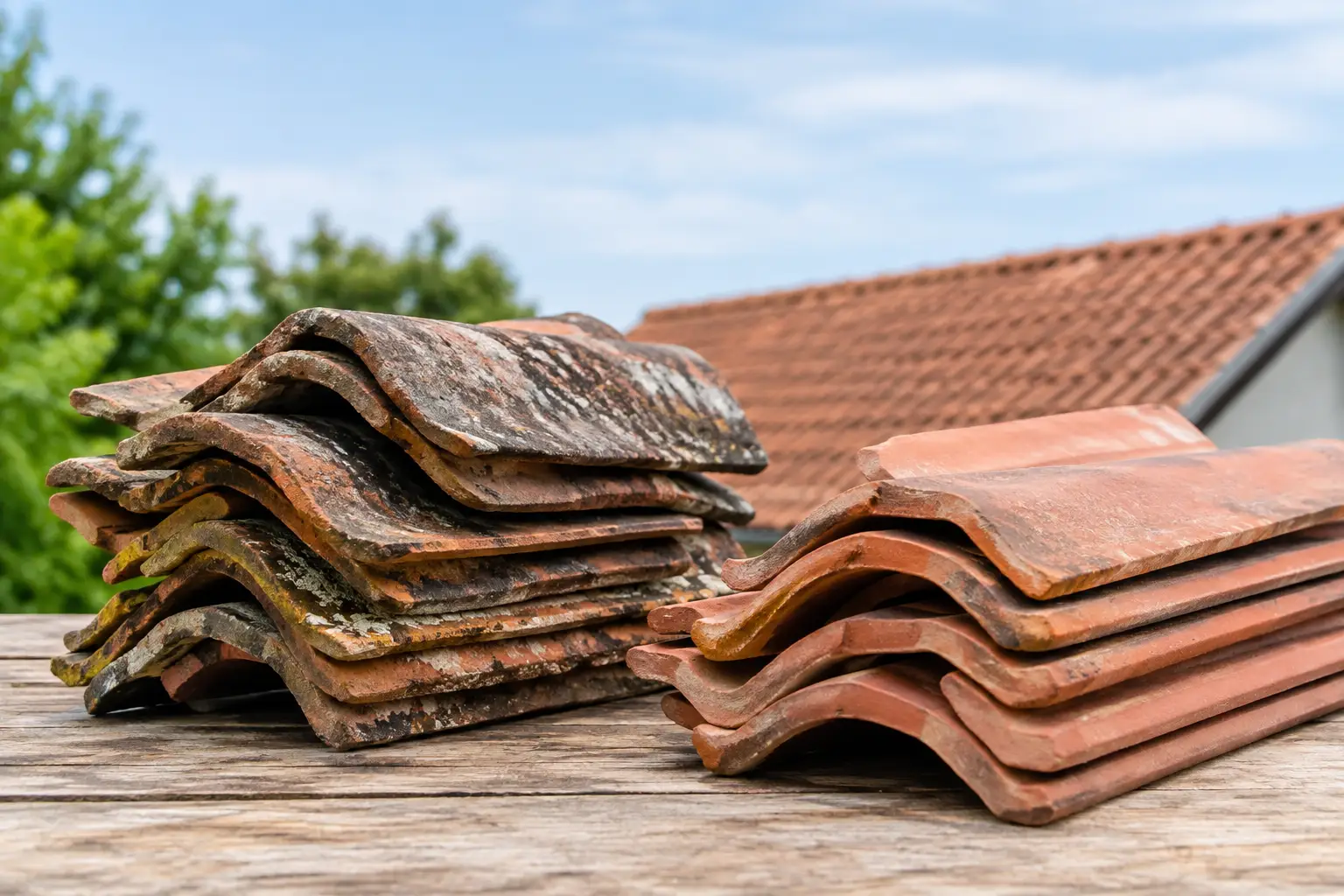
A slipped tile on a Victorian terrace rarely calls for a pallet of new, uniform materials. It calls for a replacement that matches the roof’s colour, profile, weathering and character. That is why the question, are reclaimed roof tiles cheaper, needs a more useful answer than a simple price-per-tile comparison.
Reclaimed roof tiles can be cheaper in some circumstances, particularly for a repair where avoiding a larger re-roof saves money. For a full roof, however, their initial purchase price and preparation requirements can be higher than modern concrete alternatives. The real value lies in getting the right material first time, protecting the appearance of the property and fitting a roof covering with proven longevity.
Are reclaimed roof tiles cheaper than new tiles?
It depends on the tile, quantity and job. A common new concrete interlocking tile will usually be the lowest-cost option to buy in volume. It is factory-made, readily available and quick to lay. Reclaimed clay tiles, especially well-known heritage types such as Rosemary tiles, can cost more per square metre because they must be carefully recovered, sorted, checked and stored before resale.
That does not make reclaimed tiles poor value. On a period property, a cheap new tile can create an obvious patch, alter the roof’s texture and sit uncomfortably alongside original materials. In conservation-sensitive areas, it may also be unsuitable. A reclaimed replacement that blends into the existing roof can be the more economical route once the cost of widespread replacement, visual compromise and potential planning requirements are considered.
For a small repair, the calculation is often clear. Buying a limited number of matching reclaimed tiles is generally far cheaper than stripping and recovering a whole slope simply because a modern substitute does not match. For a full re-roof, compare the complete installed cost rather than focusing only on the unit price.
The price is only one part of the cost
Roofing materials are not interchangeable. A tile’s dimensions, nib position, thickness, camber, side-lock arrangement and headlap all affect whether it can be fitted correctly. A reclaimed tile that matches the existing roof may reduce labour and avoid unnecessary alterations to battens, details or adjoining courses.
Conversely, a reclaimed product that has not been selected carefully can add time on site. Mixed batches may need sorting by size and thickness. Some older tiles require more considered setting out than modern interlocking products. This is normal for heritage work, but it needs allowing for in the quote.
When comparing options, consider the full scope: material price, delivery, sorting, wastage allowance, labour, battens and fixings, ridges and valleys, leadwork, and disposal of old materials. A roof is a system. Saving on tiles while using unsuitable accessories or cutting corners on fixing will not produce a good long-term result.
Matching can prevent a much larger bill
The strongest financial case for reclaimed tiles is often compatibility. A homeowner may initially look for the least expensive replacement after storm damage, only to find that a new tile differs in shade, shape or gauge. If it cannot be blended across the roof, a local repair becomes visually intrusive.
A suitable reclaimed tile allows the roofer to carry out a targeted repair while retaining sound original coverings. That preserves both budget and character. It is particularly relevant on older houses across Leeds, West Yorkshire and other areas with varied local roofing traditions, where roofs often contain materials no longer made in exactly the same form.
Why reclaimed tiles can cost more upfront
Reclaimed materials have already done one job well: they have survived years, often decades, on a roof. Before they can be supplied again, they need recovering, transporting, cleaning where appropriate, grading and inspecting. Broken, distorted or excessively worn pieces are removed from usable stock.
Availability also affects cost. Large quantities of consistent reclaimed tiles are harder to secure than a standard new product ordered from a factory. A customer requiring a few replacements may have several suitable options; a contractor requiring enough matching material for an entire roof needs a more carefully managed supply.
Certain products command a premium because demand is strong and supply is finite. Handmade clay tiles, older Rosemary patterns and regional heritage materials are valued for their appearance as well as their practical role. The cost reflects scarcity, condition and the work involved in making a reliable batch available.
This is why a like-for-like comparison matters. Comparing a quality reclaimed clay plain tile with a budget concrete interlocking tile is not a fair test. They deliver a different appearance, suit different roof types and carry different expectations for a period property.
Condition matters more than age
A reclaimed tile is not automatically suitable merely because it is old. Good reclaimed stock should be assessed for soundness, usable dimensions and excessive frost damage. Surface weathering is often desirable and helps a repair blend in, but structural weakness is not.
Roofers should also check that the selected tile works with the existing roof pitch and fixing method. Clay plain tiles, for example, have specific headlap and gauge requirements. Replacing only the visible covering without considering ventilation, underlay condition, nail corrosion or timber defects can lead to further work later.
For larger projects, ordering a sensible allowance above the calculated coverage is prudent. It gives the installer flexibility for cuts, breakages and final selection, while retaining a few spares for future repairs. The exact allowance depends on the roof shape, valleys, hips, abutments and the consistency of the reclaimed batch.
Where reclaimed tiles deliver the best value
Reclaimed roof tiles are usually strongest value in three situations: local repairs, restoration work and projects where appearance is central to the property’s value. They are also a practical choice where an existing roof contains old tiles that are still serviceable but difficult to match with new manufacture.
For a straightforward new-build roof where heritage appearance is not required, a modern tile may offer a lower purchase price, faster installation and predictable availability. There is no benefit in forcing reclaimed materials into a job that is better suited to a current product.
But where the roof is part of the building’s character, buying the correct reclaimed material is often the sensible commercial decision. It avoids an obvious mismatch and respects the proportions and texture that made the roof appropriate to the building in the first place.
Questions to ask before buying
Before committing to a batch, establish the tile type, dimensions and required coverage. Take clear photographs of the roof and, where safe and practical, retain a sample tile for comparison. Confirm whether the order is for isolated replacements, a repair area or a full slope.
Ask about the condition and consistency of the batch, whether tiles are sold individually, by square metre or by pallet, and what quantity is available. For a full re-roof, check that sufficient matching stock can be reserved before stripping begins. It is also worth discussing ridge, valley and other complementary items at the same stage, as these details have a significant effect on the finished result.
ReclaimedRoofSlates.com supplies reclaimed and heritage roofing materials alongside the essentials needed to complete a proper repair or renovation. The aim should not be to buy the cheapest tile on paper, but to secure a suitable, sound material that a roofer can install with confidence.
A well-matched reclaimed tile may cost more than a basic new alternative at the point of purchase. If it preserves a sound roof, avoids unnecessary replacement and looks right for decades to come, it can be the cheaper choice where it matters most.

