

Leeds Slate Restoration for Heritage Roofs
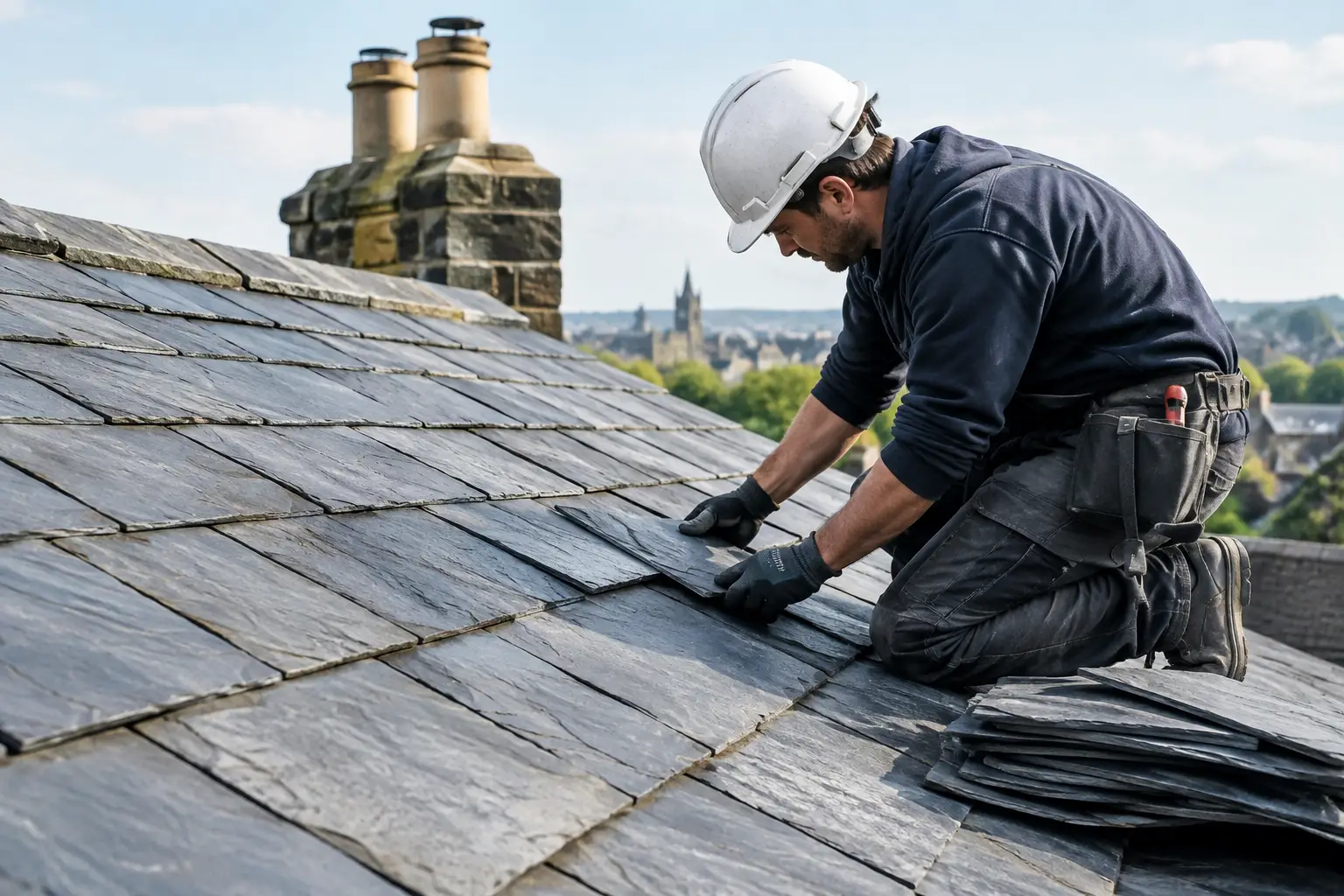
A Leeds slate restoration is rarely a matter of replacing a few broken pieces and moving on. On a period roof, every replacement needs to sit convincingly within the existing covering, shed water properly and respect the roof’s original character. That means identifying the slate, checking its usable condition and matching the roof’s established size, thickness, colour and laying pattern before materials are ordered.
For contractors and property owners alike, the best result comes from treating the roof as a complete system. The slate itself matters, but so do the fixings, underlay, battens, flashings, ridges and the way each course is set out.
Why Leeds slate restoration needs careful matching
Leeds and the wider West Yorkshire area contain a broad mix of Victorian terraces, stone-built cottages, former mills and later suburban homes. Their roofs may be covered in Welsh slate, Burlington slate, Yorkshire stone slate or materials added during earlier repairs. A roof can look broadly grey from ground level while containing several distinct slate sizes and weathered shades.
Using a new slate that is merely similar in colour often produces an obvious repair. Modern slates can be more regular in thickness, texture and edges than an aged roof covering. Reclaimed slates have already weathered, which makes them especially useful where visual continuity is a priority. However, reclaimed does not automatically mean suitable. They must be sorted, inspected and selected against the existing roof rather than supplied as a generic grey slate.
Authenticity also affects performance. Slate dimensions determine gauge, lap and side lap. If a replacement is too short, too narrow or too thin for the position it is intended to fill, the roof may not perform as designed even if it appears acceptable at first glance.
Start with a proper roof assessment
A sound restoration begins from the roof, not from a photograph of one loose slate. Where safe access is available, record the actual length, width and thickness of several slates from different areas. Measure the exposed gauge and check whether the roof uses diminishing courses, random widths or a fixed pattern. Take note of the headlap, side lap and the position of nail holes.
The condition of the surrounding roof should guide the scope of work. A handful of slipped slates may be a local fixing issue. Widespread cracking, delamination or nail fatigue points to a larger programme of repair or re‑roofing. On older roofs, the original ferrous nails may have corroded until the slates begin to slide, often called nail sickness. Replacing only the slates in that situation will not deal with the underlying failure.
Check the roof structure and details at the same time. Rotten battens, failed underlay, open valleys, poor leadwork and defective ridge bedding can all allow water in. Slate is durable, but it cannot compensate for weak supporting components.
Identifying the existing slate
A roofing specialist can often identify the likely slate type from its texture, cleavage, thickness and colour variation. Welsh slate is commonly fine-grained and relatively uniform, while reclaimed Burlington slate may show a distinctive blue-grey tone and natural surface character. Yorkshire stone slate is generally thicker, heavier and often laid in diminishing courses.
Exact identification is useful, but the practical objective is compatibility. A well-selected reclaimed alternative may be the right solution where the original quarry source is unavailable or the roof has already been repaired with mixed stock. The key is to avoid forcing a standard-sized material into a roof built around different dimensions.
Selecting reclaimed slates for the repair
Quality reclaimed material should be assessed before it reaches the roof. Each slate needs to be free from serious cracks, excessive lamination and weakness around the fixing holes. Thickness variation is normal in natural slate, but extremes should be managed through sorting so the roof courses sit correctly.
For local repairs, it is sensible to order a little more than the exact slate count. This allows for selection by shade, thickness and condition, and provides spares for accidental breakages or future maintenance. It is particularly helpful on variegated roofs, where a single exact match is less valuable than a usable range that can be blended carefully across the repair area.
When ordering, provide more than a nominal size. State the measured dimensions, approximate thickness, required quantity and whether slates need to be punched, holed or supplied for a particular fixing method. Mention if the roof has diminishing courses or if materials are needed for valleys, hips, abutments or verges. Clear information prevents costly delays once scaffolding is in place.
ReclaimedRoofSlates.com supplies reclaimed roofing materials for both small matching jobs and larger heritage roofing projects, with the supporting products needed to complete the work properly. That matters when a repair requires compatible slate alongside lead, fixings, battens, ridge tiles or valley tiles rather than a collection of unrelated deliveries.
The details that protect a slate roof
A restoration should retain the roof’s original visual rhythm wherever practical. This includes course lines, bond, overhangs and the relationship between slates at valleys and verges. Slates should not be cut down indiscriminately to make stock fit. Over-cutting weakens the appearance of the roof and can reduce the intended lap.
Fixings deserve equal care. Copper nails are widely used for their durability, while stainless steel may suit particular specifications. The chosen nail must be appropriate for the slate thickness and batten depth. Nails should secure the slate without being driven so hard that they crack or bind it. A slate needs to hang correctly, not be clamped into place.
Underlay and ventilation requirements depend on the roof construction and the wider refurbishment. There is no universal answer for every older building. Some roofs need improved moisture control; others require an approach that preserves existing detailing and avoids introducing unnecessary condensation risk. The right specification follows an inspection of the roof build-up, not a standard shopping list.
Leadwork around chimneys, walls, valleys and dormers should be inspected closely during restoration. Many apparent slate leaks begin at failed flashings or tired soakers. Replacing defective leadwork while access is available is often more economical than returning to the roof after the slate repair has been completed.
When repair becomes partial or full renewal
Not every ageing roof needs to be stripped. A targeted repair is normally the sensible route where the majority of slates remain sound, the roof structure is dry and the defects are confined to a limited area. It retains more original material and can be less disruptive to the property.
Partial renewal is worth considering when one slope has deteriorated more heavily than another, or when repeated patching has left the roof with inconsistent materials and poor details. Full renewal may be justified where nail sickness is widespread, slates are extensively delaminating, battens have failed or the roof no longer provides reliable weather protection.
The trade-off is straightforward: a smaller repair costs less initially, but it is poor value if surrounding slates are close to failure. Conversely, stripping a roof with decades of remaining service in its original slates can be unnecessary. A measured condition survey is the basis for a sensible decision.
Planning materials and access
Heritage projects are easier to manage when slate selection is completed before work starts. Allow time for measurements, samples where needed, sorting and transport. Natural materials are not factory-identical, and that is part of their value, but it also means availability should be confirmed early, especially for larger quantities or unusual sizes.
Think through handling as well. Slate is heavy and fragile at the edges. Delivery access, safe storage, scaffold loading and the movement of materials across the roof all need planning. Keep slates stacked securely, protected from accidental damage and close enough to the working area to avoid repeated handling.
A successful Leeds slate restoration should look settled rather than newly imposed on the building. Match the material carefully, repair the details that cause water ingress and give the roof the fixings and support it needs. Done properly, the work protects the property while preserving the character that made the original roof worth saving.

