

When Should Lead Flashing Be Replaced on a Roof?
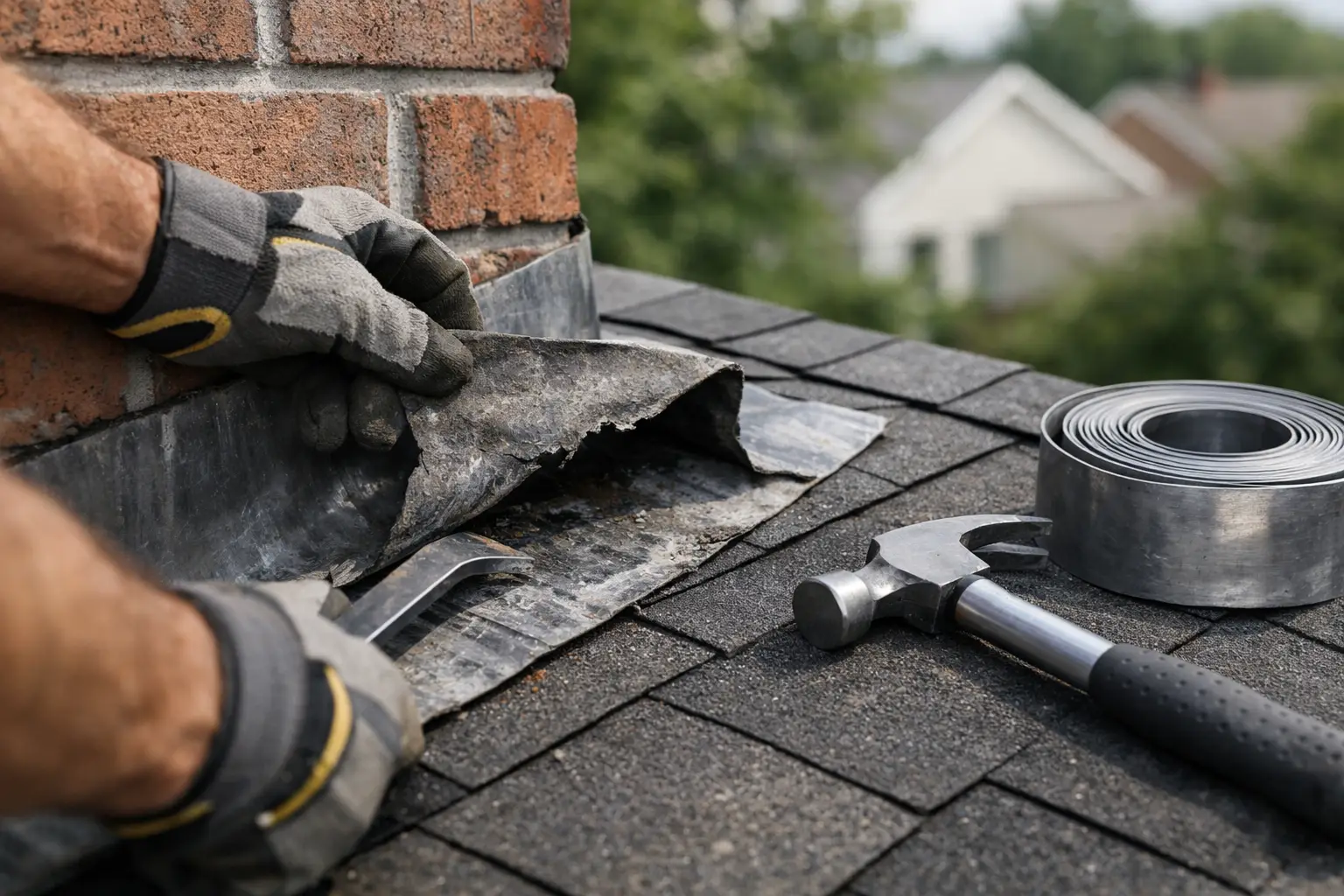
A roof can retain sound slates or tiles yet still admit water through a failed flashing detail. Around chimneys, abutments, dormers and valleys, leadwork takes the weathering that the main roof covering cannot. The practical question is: when should lead flashing be replaced? The answer depends on its condition, the detail beneath it and whether a repair will genuinely provide a durable, compatible finish.
For period properties in particular, lead flashing is not an area for cosmetic patching. Poorly fitted or exhausted leadwork can stain masonry, rot battens and timbers, and cause damage that is far more expensive than replacing the flashing at the right time.
When Should Lead Flashing Be Replaced Rather Than Repaired?
Replacement is usually the right course where the lead has split, thinned significantly, slipped from its chase, or reached the end of its useful working life. A small, localised defect in otherwise sound lead may be repaired, but repeated patching across aged, poorly formed or movement-damaged flashing rarely represents good value.
The key distinction is whether the defect is isolated. If one sound section has been punctured by a broken slate or mechanical damage, a competent repair may be suitable. If cracking, lifting and failed joints appear in several places, the flashing system is no longer performing as a system and should be renewed.
Lead is durable, but it is not static. It expands in warm weather and contracts in cold conditions. Flashings that are laid in oversized lengths, fixed too tightly, or installed without proper allowance for movement can fatigue prematurely. Replacing only the visible split without correcting the original detailing often leads to the same issue returning.
Warning Signs That Leadwork Has Reached Its Limit
The most obvious sign is a visible crack, tear or hole. Even a fine split can admit wind-driven rain, particularly on an exposed elevation or at a chimney where water is concentrated. Look closely at folds, corners and the junction where a flashing turns up a wall, as these are common stress points.
A lifted edge or loose flashing also needs prompt attention. Lead should sit correctly over the roof covering and be securely dressed into the masonry chase where applicable. If it has pulled free, water may track behind it rather than over it. Loose sections can also rattle in high winds and worsen quickly.
Staining on internal walls, chimney breasts or loft timbers is another warning. The leak may not sit directly below the failed leadwork, because water can travel along rafters, felt or masonry before becoming visible. A proper roof inspection should trace the route of water rather than assuming the nearest damp patch identifies the fault.
White staining, deep pitting and a dull, uneven surface can indicate age and weathering, but appearance alone does not always mean replacement is necessary. Lead naturally develops a protective patina. The concern is substantial corrosion, thinning, cracking or loss of shape, not simply an older-looking finish.
Pay attention to patched areas. Bituminous coatings, mastics and tape can sometimes provide a temporary weather seal, but they are not a substitute for correctly detailed lead. They can conceal the condition of the sheet beneath, fail at the edges and make later repairs more difficult. On a heritage roof, they can also look out of place beside reclaimed slate or clay tile.
Areas Where Failure Is Most Common
Chimney Flashings
Chimneys combine several vulnerable details: front aprons, side soakers, back gutters and stepped cover flashings. A failure in any one of these can produce a persistent leak. Replacing the cover flashing while leaving worn soakers beneath may not solve the problem, so the whole chimney detail should be assessed together.
At the back of a chimney, undersized or poorly formed back gutters are a particular concern. They collect a considerable volume of rainwater and need enough depth, correct upstands and a clear route for water to discharge. Debris, failing mortar in the chase and defective brickwork can compound the issue.
Roof-to-Wall Abutments and Dormers
Where a pitched roof meets a wall or dormer cheek, flashing must accommodate movement while directing water onto the roof covering. Cracked lead at the corner, open joints, poorly lapped sections or an inadequate upstand can all allow water behind the roof finish.
On older buildings, movement in the structure can be part of the problem. If masonry has shifted or the roof line has settled, simply installing new lead to the old shape may not be enough. The substrate, mortar joints and timber support should be made sound first.
Valleys and Complex Junctions
Lead valleys handle a high water load, especially where two roof slopes drain into one channel. Wear is often concentrated at the lower end of the valley, beneath debris or where foot traffic has distorted the lead. If the channel has cracked, worn thin or become too flat to drain reliably, replacement is normally more sensible than a patch.
Valleys also need compatible slates or tiles at their edges. Reclaimed roof slates can be particularly valuable on repair work, allowing the roof covering beside a renewed valley to retain its original character and coursing.
Repair, Partial Renewal or Full Replacement?
A repair can be appropriate when the lead is broadly sound, the problem is clearly localised and the surrounding detail is correctly formed. For example, a small puncture away from a fold may be repaired by a qualified roofer using a suitable lead technique. The repair must leave a smooth water-shedding surface and should not restrict the lead’s natural movement.
Partial renewal suits details where one component has failed but adjacent sections remain in good condition. A damaged front apron, for instance, may be replaced while sound side flashing and soakers are retained. This approach is only worthwhile when the old and new work can be joined properly and the existing lead has sufficient life left.
Full replacement is often preferable where access is already in place for re-roofing, chimney repairs or slate replacement. There is little economy in retaining tired flashing beneath newly laid reclaimed slates or heritage tiles. Opening up the area later can disturb the new roof covering and add avoidable labour costs.
The trade-off is straightforward: a careful local repair has a lower immediate cost, but it should not be used to defer a necessary renewal for a few months. A full replacement costs more upfront but provides the opportunity to correct laps, chases, soakers, fixings and drainage in one operation.
What Good Replacement Leadwork Looks Like
Good leadwork begins with the right sheet thickness and code for the application. The required specification varies between a chimney apron, cover flashing, valley or back gutter. Using lead that is too light for a demanding detail can shorten its service life; using an unsuitable method of fixing can cause cracking even with the correct material.
The sheet should be formed in manageable lengths, with suitable laps and allowance for thermal movement. It needs proper support, neat dressing and secure fixing that does not pin it so tightly that it cannot expand and contract. At wall abutments, the chase must be clean and sound, with the flashing properly wedged and pointed using an appropriate material.
Compatibility matters as much as workmanship. Lead should direct water cleanly onto the slate or tile course below without creating a dam, exposing an underlap or forcing an awkward cut into surrounding materials. This is especially relevant on Welsh slate, Burlington slate, Yorkshire stone slate and handmade clay tile roofs, where gauge, thickness and character vary considerably.
When replacing leadwork during a heritage repair, retain as much sound original fabric as practical. New flashing should protect the building without making the repair look conspicuous or forcing an inappropriate modern detail onto an older roof.
Check the Roof Before Ordering Materials
Do not order replacement lead from a photograph of one split alone. Measure the detail, inspect the roof covering around it and establish whether the issue affects soakers, underlay, battens, mortar or masonry. A roofer should also check for broken slates, slipped tiles and blocked gutters, as these can mimic a flashing failure.
Safe access is essential. Lead defects are often located at roof edges, chimney stacks and steep slopes, where inspection from a ladder can be unsafe and misleading. A close assessment from suitable access is the only reliable way to decide whether repair or renewal is justified.
For contractors and property owners matching a period roof, sourcing compatible lead products alongside inspected reclaimed slates or tiles keeps the repair consistent and avoids delays once the roof is opened up. ReclaimedRoofSlates.com supplies heritage-compatible roofing materials and day-to-day accessories for this type of repair work.
A sound flashing detail should disappear into the roof’s job: it sheds water, accommodates movement and protects the materials beneath it. If the lead can no longer do those three things reliably, replace it before a small junction failure becomes a wider roof repair.

