

Roofing Supplies West Yorkshire for Every Roof
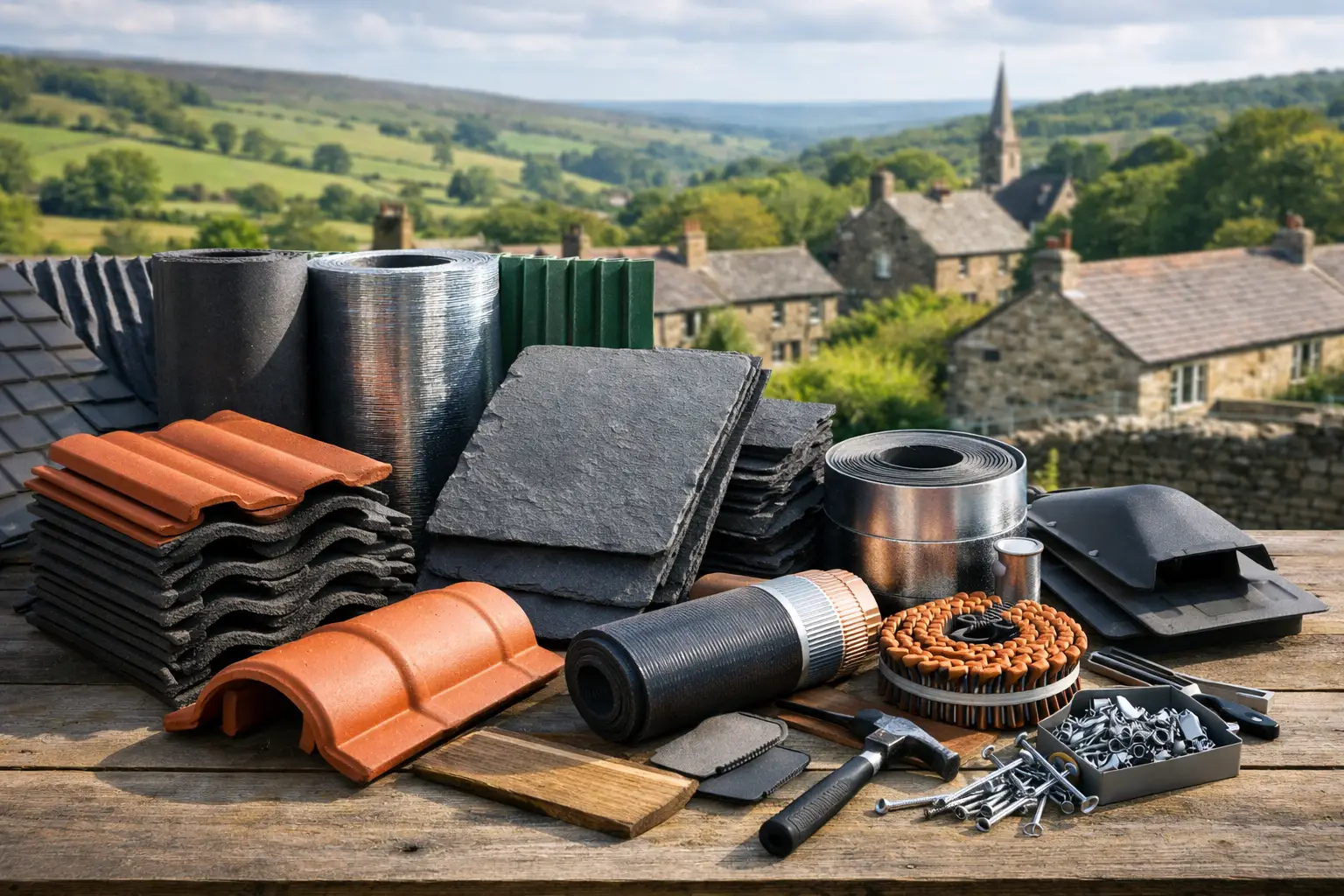
A roof repair can be held up by one missing item: a slate with the wrong edge, a tile that does not sit with the existing course, or leadwork that has been specified too late. The search for roofing supplies West Yorkshire contractors and property owners can rely on is therefore not simply about finding stock. It is about matching materials correctly, securing enough quantity and ensuring every supporting component is fit for the job.
For period properties, the requirement is even more exacting. A replacement material needs to protect the building while respecting its existing character. For trade work, availability, consistency and practical delivery arrangements matter just as much. The right merchant should help with both.
Roofing Supplies West Yorkshire Projects Commonly Need
A sound roof is a system rather than a collection of visible slates or tiles. The covering attracts most attention, particularly on a heritage property, but battens, fixings, underlay, flashings, ridge details and ventilation all contribute to weather resistance and service life.
For a typical repair, the material requirement may be modest but highly specific. A handful of reclaimed slates must be close in size, thickness, colour and weathering to those already on the roof. A larger re-roof demands greater consistency across the full order, alongside reliable quantities of nails, battens, lead and accessories.
The most commonly required categories include reclaimed roofing slates, heritage clay tiles, stone slates, ridge and valley tiles, lead products, fixings, sealants, roofing membranes, battens, plastic components and PPE. Sourcing these together reduces the risk of mismatched specifications or a delayed job while a minor but essential item is located elsewhere.
Reclaimed Slates for Repairs and Heritage Work
Reclaimed slate is often the right choice where a roof has genuine age and established character. New slate may be technically suitable, but it can look too uniform beside a weathered roof. Reclaimed materials bring natural variation in tone, texture and edge detail that is difficult to replicate.
Burlington, Welsh and Yorkshire stone slates each have their own character and practical considerations. Welsh slate is valued for its durability and refined appearance. Burlington slate is widely used for its distinctive blue-grey tones and reliable performance. Yorkshire stone slate provides the substantial, traditional finish seen across many local historic buildings, though its weight and laying requirements must be properly allowed for.
Reclaimed stock should be inspected before sale. Condition, thickness, nail hole wear and usable coverage all affect whether a slate is suitable for re-laying. It is also sensible to order a reasonable allowance for sorting, cutting and future repairs, especially where the roof uses mixed sizes or diminishing courses.
Matching Matters More Than Finding a Similar Slate
A slate that looks close when held at ground level may be wrong once it is laid. Measure the exposed length and width, check thickness, identify whether the roof uses regular or random sizes, and assess the prevailing colour. The fixing method, headlap and roof pitch also influence the correct selection.
For older roofs, existing slates may have been redressed or re-holed during previous repairs. A knowledgeable supplier can help identify practical options, but a roofer should always confirm suitability on site. Material choice cannot be separated from the roof’s construction and condition.
Heritage Tiles and Specialist Clay Components
Clay tiles are another area where visual continuity is important. Rosemary tiles, traditional ridge tiles and valley tiles can make a marked difference to the finished appearance of a renovation or repair. Reclaimed tiles offer an established surface and colour variation that work naturally with older brickwork and render.
However, appearance is only one part of the decision. Tile gauge, nib position, profile, hanging length and compatibility with adjoining materials must be checked. A similar-looking tile with a different profile can create problems at verges, valleys and abutments.
Ridge and hip details deserve particular attention. These are exposed areas where poor bedding, unsuitable mechanical fixing or incompatible replacement pieces can lead to early failure. Where original components are available and serviceable, reclaimed matching pieces are often preferable to forcing a modern alternative into a traditional roof covering.
Do Not Treat Leadwork as an Afterthought
Lead remains a proven material for flashings, soakers, valleys, gutters and abutment details. Its long-term performance depends on correct code, detailing, fixing and allowance for thermal movement. Using lead that is too light, poorly dressed or restricted without suitable expansion provision can cause splitting and water ingress.
For repairs around chimneys, dormers and parapets, inspect the surrounding materials before ordering. Failed mortar, damaged pointing, deteriorated brickwork or broken tiles may be contributing to the same issue. Replacing only the visible lead flashing without addressing these points can leave the roof vulnerable.
The required lead code depends on the application, size of the bay and local exposure. This is not an area for guesswork. Follow recognised roofing guidance and confirm the detail with an experienced roofer where the installation is complex.
Fixings, Battens and Membranes Set the Standard Below the Covering
A reclaimed slate or tile roof is only as dependable as its supporting materials. Use appropriate corrosion-resistant fixings for the exposure and roof covering. Nail length must suit the slate or tile thickness, battens and required penetration, while avoiding damage to the roof structure.
Graded roofing battens should be selected for their intended use rather than treated as a generic timber purchase. They need correct spacing, sound fixing and protection from unnecessary exposure before installation. Membranes and ventilation products must also work with the roof build-up, particularly where insulation upgrades alter how moisture moves through the structure.
There is no single specification that suits every roof. A breathable membrane may be appropriate for one refurbishment, while another roof may require a different approach because of its construction, conservation requirements or ventilation arrangement. The existing roof and proposed build-up should guide the decision.
Buying by Piece, Pallet or Tonne
The best purchasing route depends on the scale and certainty of the work. A homeowner dealing with storm damage may need a small number of carefully selected replacement slates. A contractor undertaking a full re-roof may require material quoted and supplied by the tonne, with consistent sizes and a planned delivery schedule.
Before requesting a quote, have the roof dimensions, proposed coverage, preferred material, access restrictions and delivery postcode available. Photographs of the existing roof and a sample slate or tile can also help with matching. For larger orders, discuss anticipated waste, sorting requirements and whether extra stock should be retained for later maintenance.
Delivery access should not be overlooked. Narrow streets, restricted sites and properties without suitable unloading space can affect the best delivery method. Planning this early avoids a lorry arriving before the site is ready to receive the order.
Choosing a Specialist Supplier
General builders’ merchants are useful for many standard roofing products, but heritage and reclaimed work often calls for more specialist stock and product knowledge. The key question is not whether a supplier has slate or tile available, but whether they can provide the right material in a usable, compatible condition and in the quantity required.
Look for clear product identification, practical advice on dimensions and coverage, and a range that includes the associated items needed to complete the roof. ReclaimedRoofSlates.com supplies reclaimed slates, heritage tiles and the everyday roofing essentials that allow repair and restoration work to move forward without unnecessary compromise.
A good supplier will also be honest where an exact match is unlikely. Some old materials are scarce, and a close compatible alternative may be the sensible solution. That decision should be made with a clear understanding of the visual and technical trade-off, not because suitable stock was not sought early enough.
For any roof, start by identifying the existing covering accurately, measure before ordering and allow time to source materials that genuinely belong on the building. That preparation is what turns a repair from a short-term patch into work that looks right and lasts.

