

Reclaimed Roof Tiles London for Period Roofs
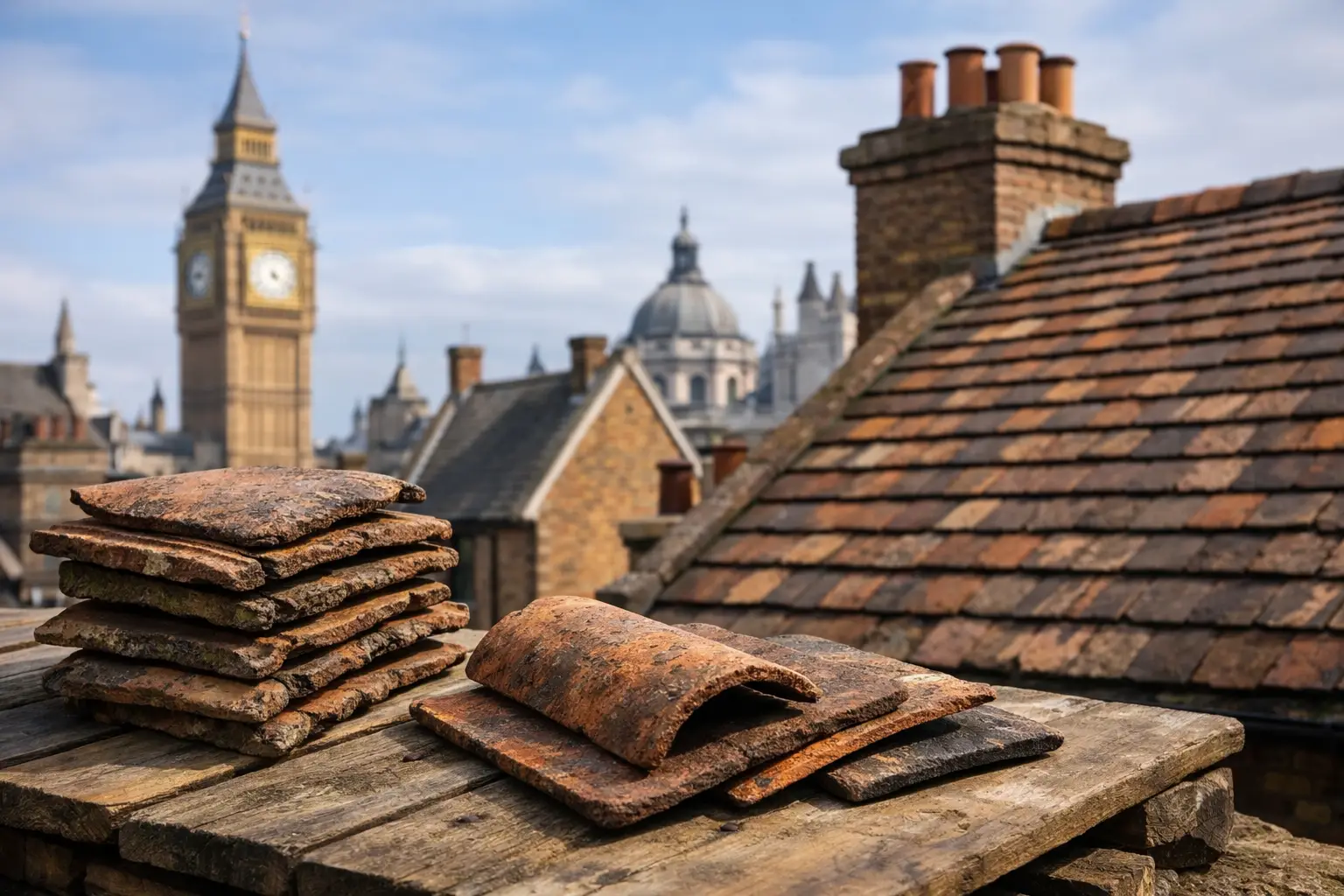
A single cracked tile can make a repair stand out across an otherwise sound period roof. The search for reclaimed roof tiles London roofers and property owners can confidently lay is therefore about far more than finding a tile of broadly the right colour. Profile, gauge, weathering, thickness and fixing condition all affect whether the finished repair looks correct and performs properly.
London has an exceptional mix of Victorian, Edwardian, Georgian and inter-war housing, each with its own roofing character. Reclaimed tiles give contractors and homeowners the best chance of retaining that character while avoiding the unnecessary replacement of a roof that may only need a localised repair.
Why reclaimed tiles are often the right choice
New tiles may be technically sound, but they can look noticeably different beside decades-old materials. Fresh clay is usually cleaner and more uniform; machine-made profiles can also differ subtly from older examples. On a front elevation, those differences are difficult to hide.
Reclaimed roof tiles have already developed a natural surface tone through years of weather exposure. They can provide the variation, texture and patina expected on a traditional roof, particularly where a handful of replacements are needed after storm damage, a chimney repair or the installation of a rooflight.
They are also a sensible material choice where serviceable roofing is being reused rather than sent to landfill. That said, reclaimed is not automatically the best answer in every situation. A large roof replacement may require substantial quantities of consistent material, and the right route depends on the existing covering, the building’s setting and the available stock. A mixed or poorly selected batch can create more problems than it solves.
Matching reclaimed roof tiles in London
A useful match starts with a proper assessment of the existing roof. Looking at a tile from ground level or relying on a photograph alone is rarely enough. A roofer should take a sample where possible and check its dimensions, shape and condition before ordering.
Start with the tile profile
The profile determines how tiles lap together and how the roof reads from the street. Common traditional options include plain clay tiles, Rosemary-pattern tiles, interlocking tiles and pantiles. Two tiles may have a similar red-brown appearance yet be entirely incompatible if the headlock, side interlock or roll profile differs.
On many London period properties, small-format plain tiles are found on steep roofs, dormers and cheeks, while larger interlocking tiles may appear on later housing. Ridge, hip and valley details also need separate attention. Standard new ridge tiles can look wrong against aged reclaimed clay, and the angles must suit the roof pitch.
Check size, gauge and thickness
Measure the tile’s length, width and thickness, then establish the existing batten gauge. A reclaimed tile that is only slightly longer or shorter can throw out courses across a repair area. It may create awkward cuts at the ridge or eaves, compromise headlap, or leave the repair visibly out of line.
Thickness matters too. Older handmade clay tiles are often less uniform than modern products, which is part of their appeal but also something the installer must allow for. Variations should be managed during laying, not forced into a regular pattern that does not fit.
Match the colour range, not one perfect shade
A reclaimed roof rarely has one flat colour. It may contain warm reds, muted oranges, browns, soot-darkened pieces and occasional lighter weathered tiles. The aim is to match the overall range and character of the roof, rather than select every replacement tile to the same shade.
This is especially relevant in London, where pollution, shade from neighbouring buildings and differing roof orientations can alter the appearance of tiles over time. Tiles for a highly visible front slope should be selected carefully and blended through the repair. Less prominent rear slopes may allow more flexibility.
Condition checks before tiles go on the roof
Reclaimed materials need inspection. Age alone is not a fault – many well-made clay tiles have decades of further service life – but every batch should be assessed for damage and suitability.
Look for cracking, excessive erosion, delamination, frost damage and distorted profiles. The nail hole is a particular point to inspect. A tile with an enlarged, broken or poorly positioned hole may not fix securely without an appropriate alternative method. Do not assume a damaged tile can be made serviceable with extra mortar or sealant.
Tiles should also be reasonably clean of loose mortar and debris before laying. Heavy remnants can prevent a tile from sitting properly on the batten or interlocking as intended. Reclaimed tiles are not expected to look factory-new, but they must be sound enough to do the job.
A specialist supplier can help separate usable stock from reject material and identify whether a sample is likely to be clay, concrete or a particular heritage pattern. That inspection is valuable when a repair depends on a close visual and functional match.
Quantity planning: allow for sorting and spares
Ordering only the number of tiles visible in the repair is a common mistake. Reclaimed stock has natural variation, so installers need a sensible allowance to select the best-facing pieces, deal with cuts and replace any tiles rejected during fitting.
For a small repair, it is wise to keep a number of matching spares for future maintenance. For larger works, quantities should be calculated from the roof area and required gauge, with allowance for hips, valleys, abutments, breakages and sorting. Tile coverage varies by product, so a count based only on square metres can be misleading.
Where a full slope is being stripped and retiled, confirm that the available batch is adequate before work begins. A roof can look inconsistent if another batch has to be introduced halfway through because the first delivery was short. If the project calls for a particularly scarce tile, secure the quantity required, including extras, at the earliest practical stage.
Do not overlook the supporting materials
The tiles are only one part of a durable repair. Battens must be correctly graded and set out; underlay should suit the roof design; and fixings need to be appropriate for the tile type, exposure and current roofing requirements. Tiles around verges, valleys, chimneys and roof penetrations often need more careful detailing than the main field of the roof.
Leadwork is another regular consideration on period properties. Poor flashings can cause leaks that are then wrongly blamed on the tile covering. If work includes a chimney, valley, abutment or dormer, inspect the lead and associated details at the same time rather than replacing tiles around a known weak point.
For a traditional appearance, avoid using mortar as a shortcut for incorrectly fitting tiles. The roof should be properly set out, mechanically fixed where required and detailed to shed water. Heritage character and sound roofing practice should work together.
Conservation areas and listed buildings
Many London homes fall within conservation areas, and some are listed. Replacing like for like may be straightforward in certain cases, but it should never be assumed. Visible changes to material, colour, profile or roof form can require consent, particularly on principal elevations or listed buildings.
Before placing a sizeable order, check the relevant planning conditions and speak to the local planning authority where there is any uncertainty. A clear sample, accurate product description and photographs of the existing roof can make these discussions more productive. For listed or historically significant buildings, a conservation professional may also specify the material and laying approach.
Choosing a supplier for heritage tile work
The right supplier should understand that “similar” is not always close enough. They should be able to discuss tile type, dimensions, condition, available quantity and complementary items such as ridge tiles, valleys, lead and fixings. For trade work, stock depth and reliable supply matter just as much as visual match.
ReclaimedRoofSlates.com supplies reclaimed and heritage-compatible roofing materials for repairs ranging from a few hard-to-match replacements to larger restoration projects. Providing a sample, measurements and clear photographs of the roof will help identify suitable options quickly and avoid ordering material that cannot be laid correctly.
The best repair is usually the one that looks as though it has always belonged there. Take the time to match the profile, check the condition and order enough material to sort properly, and the roof can retain its character without compromising its next decades of service.

