

Guide to Roofing Lead Codes for UK Roof Repairs
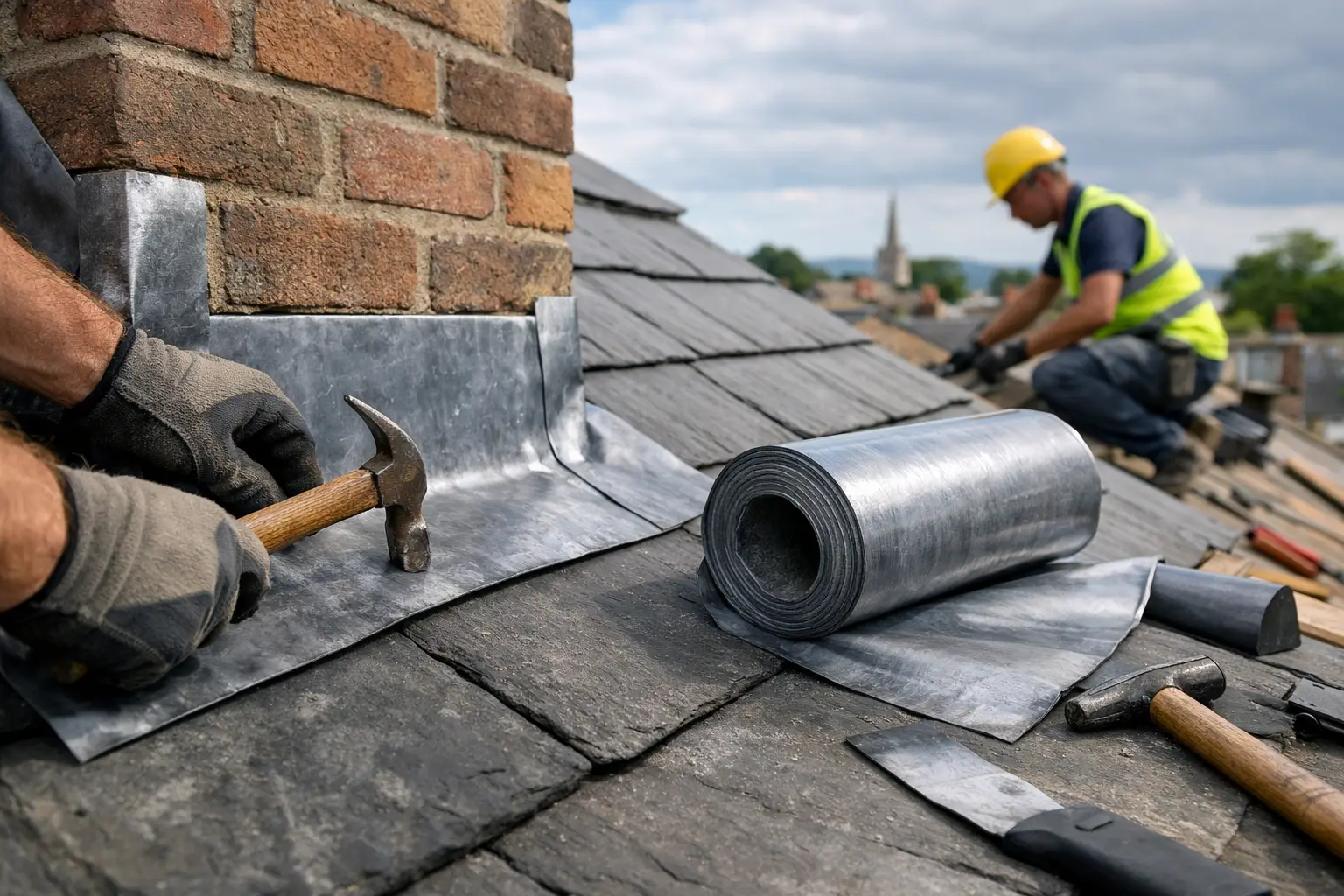
A repair can look right from ground level and still fail prematurely if the lead is too light for the job. This guide to roofing lead codes explains what the code numbers mean, where each thickness is normally used, and why sound detailing matters as much as the lead itself. For period properties in particular, getting this choice right protects the building, preserves its character and avoids reopening work that should have lasted for decades.
Roofing lead is valued because it is durable, workable and compatible with traditional materials such as natural slate, clay tiles and stone slates. It also moves with temperature changes. That movement is useful, but only when the lead is installed in suitably sized lengths with proper laps, fixings and allowance for expansion.
What roofing lead codes mean
The code number identifies the nominal thickness and weight of milled lead sheet. A higher code means a thicker, heavier sheet. It does not indicate a grade of quality or a style of flashing.
Lead sheet used in roofing work should comply with BS EN 12588. In practical terms, the common roofing codes are Code 3, Code 4, Code 5, Code 6, Code 7 and Code 8. The choice depends on the detail, exposure, unsupported span, length of the piece and the surrounding roof covering.
Code 3 is approximately 1.32mm thick and weighs around 14.97kg per square metre. Code 4 is 1.80mm and about 20.41kg per square metre, while Code 5 is 2.24mm and around 25.40kg per square metre. Code 6, 7 and 8 increase further to approximately 2.65mm, 3.15mm and 3.55mm respectively.
These figures matter when ordering, particularly for larger roof works. Lead is commonly priced by weight, so selecting a heavier code than the detail requires increases material cost and handling weight. Choosing too light a code, however, can lead to splitting, sagging, fatigue or distortion over time.
Guide to roofing lead codes by application
There is no substitute for checking the design and the manufacturer or industry guidance for a particular roof detail. Still, the following uses provide a reliable working guide for most domestic and heritage roofing projects.
Code 3 lead
Code 3 is generally reserved for lighter-duty applications. It is often used for soakers beneath slate or tile side laps, small cover flashings, and certain internal details where the lead is fully supported. It should not be treated as a universal flashing material simply because it is easier to dress.
For slate repairs, Code 3 soakers are common where the existing roof detail calls for them. Their job is to direct water back on to the roof covering at abutments or around penetrations. The lead must remain properly covered and supported, with enough upstand and lap to suit the pitch and exposure.
Code 4 lead
Code 4 is one of the most widely used thicknesses in roofing. It is commonly selected for stepped flashings, cover flashings, aprons, soakers, small gutters and other standard weathering details. On many pitched slate and tile roofs, it offers a sensible balance between workability and durability.
A chimney abutment is a typical example. The stepped flashing needs to follow each course of slate or tile, be correctly chased into the brickwork where appropriate, and be secured without preventing thermal movement. The code alone will not make this detail watertight. Chase depth, lap, soaker arrangement and mortar finish all count.
Code 5 lead
Code 5 is frequently used where a detail carries more water, spans a wider area or receives greater exposure. Typical applications include valleys, gutters, large aprons, parapet gutters and certain chimney details. It is a familiar choice on traditional roofs because it has the substance needed for more demanding work without becoming unnecessarily difficult to form.
Open valleys are a good example. The valley must be wide enough for the roof pitch and expected water flow, with adequate laps between lengths and sound support beneath. A narrow valley, even in Code 5, can struggle on a large roof slope or in an exposed location. Equally, a wide valley in a sheltered small roof may not require the same specification.
Code 6, 7 and 8 lead
Heavier codes are used for more substantial details, including wide gutters, large valley troughs, flat-roof interfaces, parapet gutters and areas with greater unsupported spans or high water volumes. Code 6 is common on larger gutter and valley work. Codes 7 and 8 are specialist options for particularly heavy-duty applications.
Using a heavier code is not automatically the safer option. Thick lead can be harder to dress tightly around complex shapes, and its added weight places greater demands on the substrate and fixing arrangement. The right specification is the one that suits the detail, not simply the highest code available.
Thickness is only one part of a lasting repair
Lead failures are often blamed on the material when the real cause is poor detailing. Lead expands in warm weather and contracts in colder conditions. If a long sheet is nailed rigidly across its width, or installed in lengths that are too large, stress can build up until the lead cracks or pulls at the fixings.
This is why installers use appropriate clips, laps and welts rather than relying on excessive nails or sealant. Fixings should hold the lead in position while allowing it to move. For flashings, lead wedges and a suitable pointing material are normally used to secure the sheet into masonry chases. The precise method depends on the substrate and the detail.
Support is equally important. Lead gutters and valleys need a smooth, continuous base that will not damage the sheet or leave it bridging voids. On reclaimed slate roofs, check that the surrounding slates are sound, correctly head-lapped and capable of directing water into the lead channel. Replacing only the visible split slate while overlooking worn valley boards or failing soakers can leave the original leak unresolved.
Avoid long, flat expanses wherever possible. Where they are unavoidable, divide the work into practical bays with correctly formed joints. A competent roofer will assess the run length, fall, outlet position and exposure before deciding on the code and layout.
Choosing lead for slate, tile and heritage roofs
On a heritage roof, compatibility matters. Reclaimed Welsh slates, Burlington slates, Yorkshire stone slates and traditional clay tiles all have different thicknesses, gauges and drainage characteristics. The leadwork must be detailed around the roof covering rather than forced into a generic pattern.
For example, thick stone slates may require a more generous flashing upstand and careful shaping at abutments. Small-format slates can have frequent stepped flashings, where neat dressing and consistent laps are especially visible. Rosemary tiles and other traditional clay tiles may need attention to the profile of the tile so that water is not driven beneath the flashing.
Match the repair to the roof’s original construction where that remains sound, but do not copy a failed detail without questioning it. Older work may have been altered several times, and a patch of cement, bitumen or mastic can hide the true route of water ingress. Lead is a long-life material, but it cannot compensate for inadequate falls, blocked gutters or decayed timber.
Ordering the right material
Before buying lead, measure the developed width rather than just the visible face. A chimney apron, for instance, needs enough material to cover the roof covering, turn up the wall and form the required chase or cover flashing. Add for laps, folds and waste when cutting around corners.
Confirm whether you need lead sheet, soakers, pre-formed flashings, clips or compatible sealants and fixings. Keeping the supporting materials aligned with the job reduces delays once the roof is opened up. For larger works, it is sensible to order enough consistent material for the full elevation or valley rather than mixing pieces from different sources.
Lead patination oil should be applied to freshly installed leadwork where appropriate. It helps reduce surface staining during the early weathering period, particularly where run-off could mark slates, tiles, masonry or rendered walls. It is a finishing measure, not a remedy for poor installation.
When a repair involves reclaimed roofing materials, assess the leadwork at the same time as the replacement slates or tiles. A well-matched reclaimed slate is only part of a durable repair. Correct code lead, carefully formed laps and sound supporting details are what keep the roof weather-tight long after the repair has blended into the original roof.

