

How to Source Replacement Roof Tiles
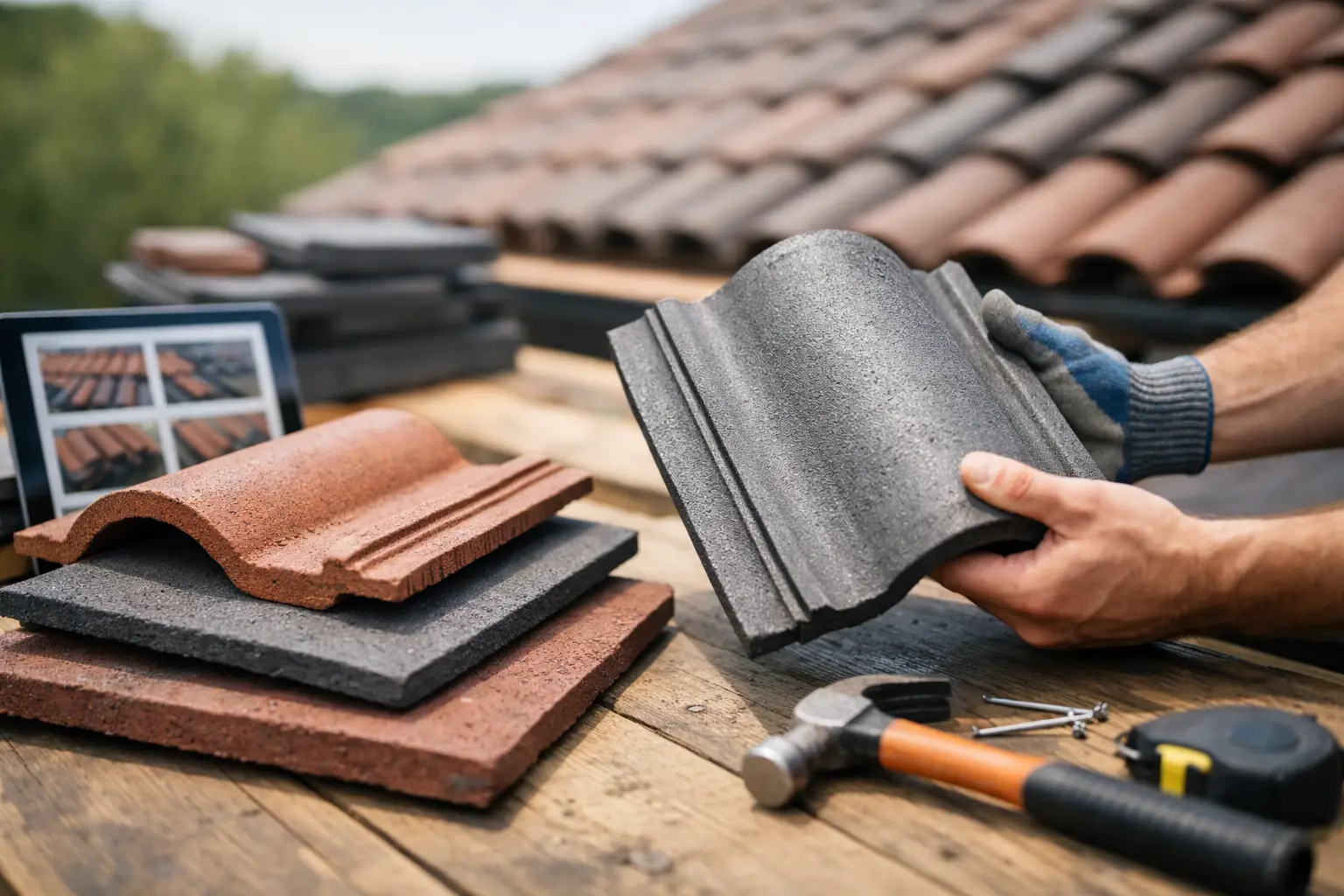
A roof repair often starts with a simple problem – one cracked tile, a slipped course, a patch of storm damage. The hard part is usually not the repair itself, but working out how to source replacement roof tiles that actually match what is already on the roof. Get that wrong, and the result can look poor, weather badly, or create fixing issues on site.
For modern roofs with current production tiles, a like-for-like replacement may still be available. For older properties, discontinued lines, handmade clay, concrete interlocking profiles and heritage roofs, matching becomes more technical. You need to identify the tile properly, check whether reclaimed is the better route, and make sure the replacement will sit, lap and fix correctly.
How to source replacement roof tiles without guesswork
The first step is identification. Many buyers start with colour alone, but colour is only one part of the match, and often not the most important one. A replacement tile needs to be compatible in profile, gauge, overall dimensions, nib position, hanging method and thickness. Two tiles can look similar from the ground and still be wrong when the roofer puts them on the battens.
If you have a sample tile, use it. A physical sample gives you the best chance of matching the roof accurately. Measure the length, width and thickness, and note whether the tile is clay or concrete, machine made or handmade, interlocking or plain. Check the underside for any maker’s mark, stamp or code. On older roofs, there may be no clear branding at all, which is where experience with reclaimed stock becomes valuable.
Photos can help, but they should support identification rather than replace it. Good images include the front, back, side profile, nib detail and a wider view of the roof slope. If the tile is still in place, a photograph showing the lap and bond pattern can also help narrow it down.
Start with the tile type, not the colour
When people ask how to source replacement roof tiles, they often begin by looking for “red roof tiles” or “brown clay tiles”. That is understandable, but it is too broad to be useful. The type of tile matters first.
A plain tile, for example, behaves very differently from a large format interlocking tile. A Rosemary style clay plain tile has different visual character and fixing requirements compared with a concrete double pantile or a Marley Modern. Stone slates, concrete tiles and handmade clay tiles all weather in their own way, and they create very different roof lines.
On period properties, profile and texture are especially important. Even if a new tile is close in size, it may still look out of place because the arris is too sharp, the finish is too uniform or the weathering is too clean compared with the existing roof.
When reclaimed roof tiles are the right option
Reclaimed tiles are often the most practical answer where the original product is discontinued, where the building has heritage value, or where a visible repair needs to blend in rather than stand out. They can also make sense for sustainability reasons, especially if the aim is to preserve usable materials rather than replace an entire slope for the sake of a small mismatch.
That said, reclaimed is not just about age. Quality matters. The best reclaimed stock has been sorted, inspected and graded so buyers are not dealing with excessive breakage, hidden frost damage or wildly inconsistent batches. This is particularly important if you need more than a handful of tiles and want a repair that installs efficiently.
A reputable specialist supplier should be able to tell you what the tiles are, what quantity is available, and whether the batch is suitable for patch repair or a larger reroofing project. For trade buyers, stock depth matters. There is a big difference between finding ten close matches and securing enough consistent material for a full elevation.
Reclaimed versus new – what depends on the job
There is no single rule here. If the roof is fairly recent and the tile is still made, new may be the quickest and most cost-effective route. If the roof is on a listed or character property, reclaimed may be the only sensible option visually and practically.
Cost can also cut both ways. New tiles may be cheaper per piece, but if they do not match and the repair is highly visible, the saving may be false economy. Reclaimed tiles can carry a higher unit cost, yet save time and money by avoiding broader replacement work.
The condition of the surrounding roof matters too. If the existing roof is heavily weathered, a pristine new tile can look obvious for years. If the roof has already had mixed repairs over time, a close functional match may be enough.
What to check before you buy
Before ordering, confirm more than the product name. Roofing contractors will usually want the working dimensions, not just the nominal tile size. Headlap, side interlock, minimum pitch suitability and batten gauge all affect whether the replacement will perform properly.
It is also worth checking the age and condition of the surrounding roof covering. Sometimes the broken tile is only the visible symptom. If battens are failing, fixings are corroded, or adjacent tiles are becoming brittle, a small replacement order may need to be part of a wider repair plan.
For homeowners, this is where a roofer’s input is useful. For roofers and builders, this is the point where supplier knowledge adds value. A specialist roofing merchant can often identify likely matches from dimensions, profile details and photographs far faster than a general builder’s merchant.
Ask about quantity and batch consistency
One tile is a different sourcing problem from one pallet. If you need a few replacements, a close match may be enough provided it fixes correctly and is not visually jarring. If you need enough material for a larger repair, colour range, weathering pattern and consistency across the batch become more important.
This is especially true with reclaimed materials. Natural variation is normal and often desirable, but wide inconsistency can slow installation and affect the finished appearance. Ask whether the stock comes from one recovery source or mixed batches, and whether extra wastage should be allowed for sorting and cuts.
Common problems when sourcing hard-to-match tiles
The biggest mistake is assuming all similar-looking tiles are interchangeable. They are not. Small differences in profile can stop the tile bedding properly into the course. A slightly different nib position can alter gauge. A mismatch in thickness can disrupt the plane of the roof and create a patch that draws the eye immediately.
Another common issue is relying on online images alone. Screen colours vary, weathering is hard to judge in photos, and many older tiles have regional variations that only become obvious when handled in person. Where possible, compare against a sample.
There is also the question of lead time. If the roof is open after storm damage, speed matters. In those cases, buyers sometimes take the first available tile that seems close enough. Sometimes that is reasonable. Sometimes it creates a repair that needs redoing. The better approach is to work with a supplier that holds broad stock and can identify likely options quickly.
How specialists make the process easier
If you are trying to work out how to source replacement roof tiles for a heritage repair, unusual profile or discontinued line, specialist stockholding makes a real difference. A supplier focused on reclaimed slates, heritage tiles and matching accessories is far more likely to recognise obscure products, hold compatible alternatives, and understand what will work on site.
That matters because the tile is only part of the job. Ridge tiles, valley tiles, lead, fixings, battens and associated roofing materials may also need to match the repair approach. On older roofs, compatibility across the whole detail is often what makes the difference between a tidy repair and a short-lived one.
For contractors working to programme, dependable availability is just as important as product knowledge. For homeowners, confidence that the material has been properly checked matters more than chasing a cheap piece from an uncertain source. That is why many buyers use a specialist supplier such as ReclaimedRoofSlates.com when the requirement is exacting and the roof is not suited to guesswork.
A practical way to move from enquiry to order
In most cases, the quickest route is to gather a sample tile, key measurements and clear photographs before making an enquiry. State how many tiles you need, whether the repair is visible from the front elevation, and whether matching appearance or simply functional compatibility is the higher priority. If the building is listed or in a conservation setting, say so at the start.
That gives the supplier enough detail to advise properly. It also reduces the risk of ordering something that is close, but not right.
A good roof repair rarely begins with buying the first tile you can find. It starts with identification, compatibility and choosing stock that respects the roof already in place. Take the time to match the tile properly, and the repair will usually look better, fix more cleanly and last as it should.

