

How to Choose the Best Heritage Roof Tiles
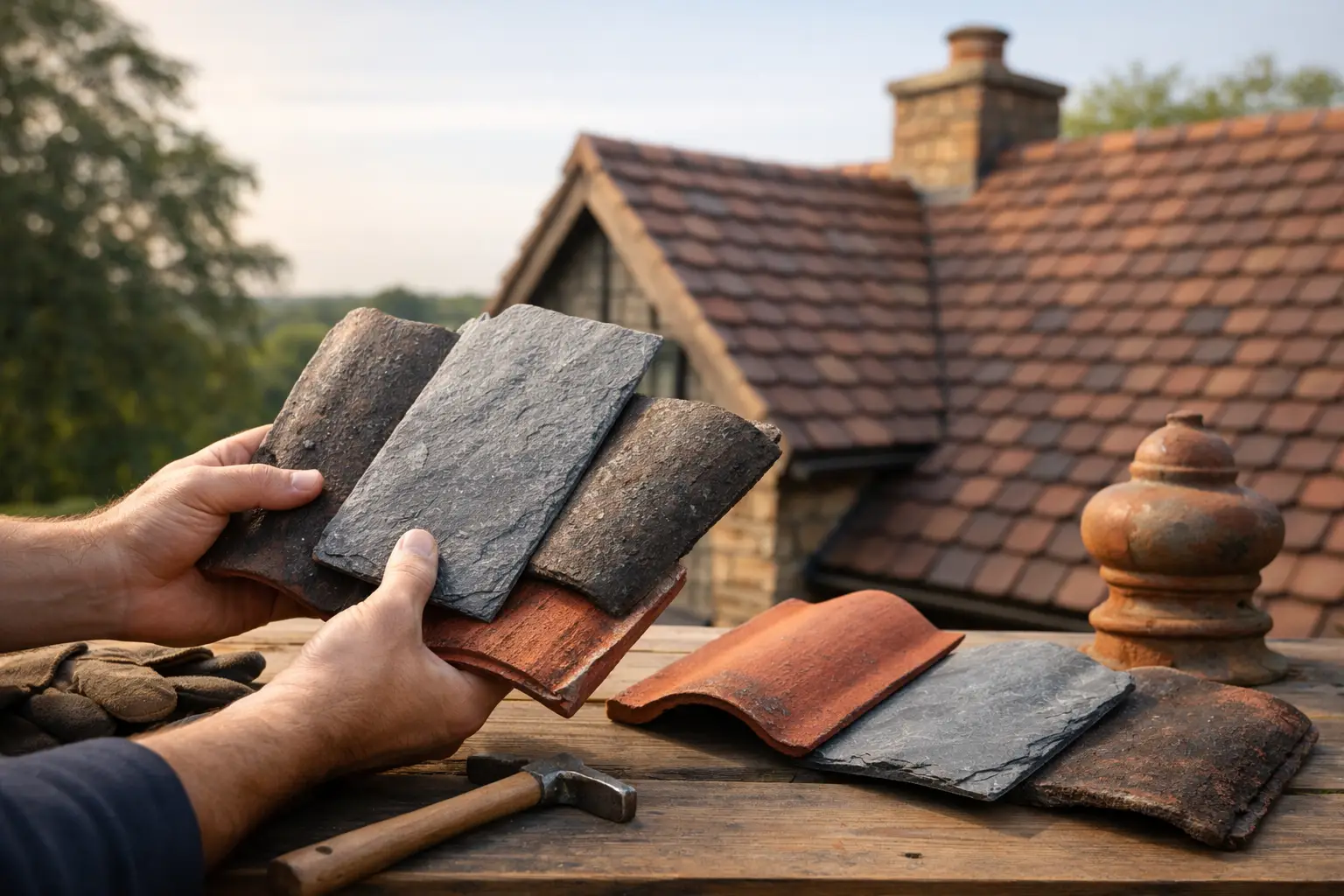
A heritage roof rarely fails in a neat, convenient way. More often, a few slipped tiles, a patch of frost damage or an awkward extension leaves you trying to match a roof that has weathered for decades. That is where choosing the best heritage roof tiles matters. Get it right, and the repair disappears into the roofline. Get it wrong, and the mismatch is obvious from the street.
For period properties, listed buildings and sympathetic renovations, the right tile is not simply the one that looks old. It needs to suit the age, style and pitch of the roof, perform properly in British weather, and sit comfortably alongside the existing covering. In many cases, reclaimed stock is the best route because it gives you the colour variation, surface texture and proportions that new-made alternatives struggle to replicate.
What makes the best heritage roof tiles?
The best heritage roof tiles are the ones that match the building first and the specification second. That sounds backwards, but on older roofs the visual character is part of the specification. A machine-made modern tile may meet a technical standard, yet still look wrong on a Victorian terrace, a Georgian farmhouse or a cottage with a long weathered roof slope.
Good heritage tiles tend to share a few qualities. They have a traditional profile, a surface finish that does not look overly uniform, and dimensions that are appropriate to the roof they are going on. They also need to be sound. Appearance matters, but there is no value in buying reclaimed tiles that are excessively worn, delaminating or inconsistent to the point that laying becomes difficult.
This is why reclaimed stock is so often preferred for repair work. Properly sorted reclaimed tiles give you authenticity without forcing a compromise on performance. They carry the colour and character that only age can produce, while still being practical for reroofing, patch repairs and extension tie-ins.
Best heritage roof tiles for common UK projects
Not every heritage tile suits every property. The right choice depends on the building type, local vernacular and what is already on the roof.
Rosemary roof tiles
Rosemary tiles are one of the most recognisable options for traditional plain tile roofs. They are widely used on period homes across the UK and are often the first thing contractors look for when matching repairs on older plain-tiled roofs. Their appeal is simple: they look right on the kinds of properties they were made for.
If you are repairing a roof with existing Rosemary tiles, reclaimed examples are usually the strongest option for consistency of colour and weathering. New replacements can work in some cases, but a fresh batch beside long-established tiles can create obvious patching, particularly on visible front elevations.
Reclaimed clay plain tiles
For many Victorian and Edwardian properties, reclaimed clay plain tiles remain the safest choice. They suit roofs where subtle variation is an asset rather than a problem. Their size, texture and softer colour shifts often sit more comfortably on older buildings than modern concrete alternatives.
They are also useful where planning sensitivity is a factor. Conservation officers may not always insist on reclaimed material, but they will usually expect a close visual match. Reclaimed clay plain tiles make that far easier to achieve.
Handmade and peg-style heritage tiles
Older cottages, farm buildings and some high-value restoration projects can require something less standard. Handmade clay tiles and peg-style tiles often have irregularities in shape and finish that are part of the roof’s character. On these jobs, perfect uniformity is not the aim. In fact, too much regularity can make a repair look out of place.
This is where specialist sourcing becomes important. Heritage work often depends on finding stock with the right proportions and wear, not just the right broad description.
How to judge heritage roof tiles properly
The main mistake buyers make is choosing by colour alone. Colour matters, but it is only one part of the match.
Start with the tile type and profile. A plain tile must match the neighbouring plain tiles in shape and lap characteristics. A slightly different nib detail or thickness can affect how it beds on the roof. Then look at dimensions. Older reclaimed tiles can vary, and that variation may be normal, but it still needs managing if the roof is to be laid cleanly.
Surface texture is just as important. Some heritage roofs have a softly worn, matt finish. Others carry kiln variation, soot ageing or lichen staining that gives the roof depth. If you install tiles that are technically similar but visually flat, the repair can stand out badly.
Condition should be checked with the same care. Sound reclaimed tiles should be usable, not just saleable. Look for excessive spalling, cracking, edge damage and any signs that repeated freeze-thaw cycles have weakened the tile body. On a heritage project, the tile has to do two jobs at once – preserve appearance and deliver service life.
Reclaimed or new-made heritage tiles?
There is no single answer here because it depends on the job.
For isolated repairs, reclaimed is usually the best fit. It gives you the best chance of blending into an existing aged roof, especially where only a few square metres need attention. A new-made heritage-style tile may be close in theory but still read as a new patch against surrounding slopes.
For larger reroofing projects, the decision can be more balanced. If the roof is being completely stripped and retiled, a quality heritage-style new tile may be suitable, particularly where planning allows it and visual continuity with an older retained section is not required. Even then, many contractors still prefer reclaimed on period buildings because the finished roof tends to look more settled from day one.
Budget plays a part, but it should be viewed in context. Cheap mismatched tiles can create a problem that costs more to correct later. Heritage roofing is one of those areas where buying the right material once is usually better value than chasing the lowest line on the quote.
Why sourcing matters as much as the tile itself
A heritage roofing job is only as good as the supply behind it. Even an experienced roofer can lose time if tiles arrive with too much breakage, poor sorting or avoidable variation across the batch.
That is why specialist suppliers matter on period work. You need stock that has been checked, categorised properly and supplied with some understanding of what the roof actually needs. Trade buyers know this already. Homeowners often discover it halfway through a repair, when a generic supplier cannot help match the existing roof or supply enough consistent quantity to finish the job.
For projects involving reclaimed materials, stock depth is a practical advantage. Small runs are one thing. Matching a full elevation, sourcing ridge tiles, valley tiles and associated roofing essentials alongside the main covering is another. Having those elements available from one specialist source makes programme management easier and reduces the risk of visible variation between separate supply lots.
Best heritage roof tiles for repairs versus full reroofs
The best heritage roof tiles for a repair are not always the same as the best option for a complete reroof. On repairs, matching is everything. The priority is to make the new work disappear into the old. Reclaimed tiles with similar weathering, dimensions and tone are normally the right answer.
On a full reroof, you have more freedom, but not unlimited freedom. The building still sets the terms. A period property with strong architectural character can look wrong very quickly if the chosen tile is too crisp, too heavy or too uniform. The right specification should still respect the age and style of the property, even when every tile on the roof is being replaced.
If there is an extension involved, the judgement becomes more nuanced. Some clients want the new roof area to blend in immediately. Others prefer an honest distinction between old and new, while keeping the materials sympathetic. Both approaches can work, provided the choice is deliberate rather than accidental.
Planning, conservation and practical checks
On listed buildings and homes in conservation areas, do not assume any heritage-looking tile will be accepted. Planning requirements vary, and roofing materials are often a point of scrutiny because they affect the whole appearance of the building.
Even where formal consent is not required, it is worth checking what is appropriate for the area. Local roofing traditions matter. The best heritage tile for a London terrace may not be the right choice for a West Yorkshire property with a different local character and roofscape.
It also pays to confirm the basics before ordering. Check roof pitch, gauge, headlap requirements, battens and the compatibility of fittings such as ridges, valleys and fixings. Heritage appearance should never come at the expense of correct installation.
When buyers ask for the best heritage roof tiles, what they usually mean is this: tiles that look right, last properly and do not create problems once the job starts. That narrows the field quickly. In most cases, the answer comes down to authentic reclaimed material, carefully matched to the building and supplied by someone who understands period roofing rather than treating it as a sideline.
If you are repairing or restoring an older roof, slow the decision down just enough to match the material properly. A well-chosen heritage tile does more than cover a roof – it protects the character of the building for years to come.

