

Bird Comb Roof Eaves Explained
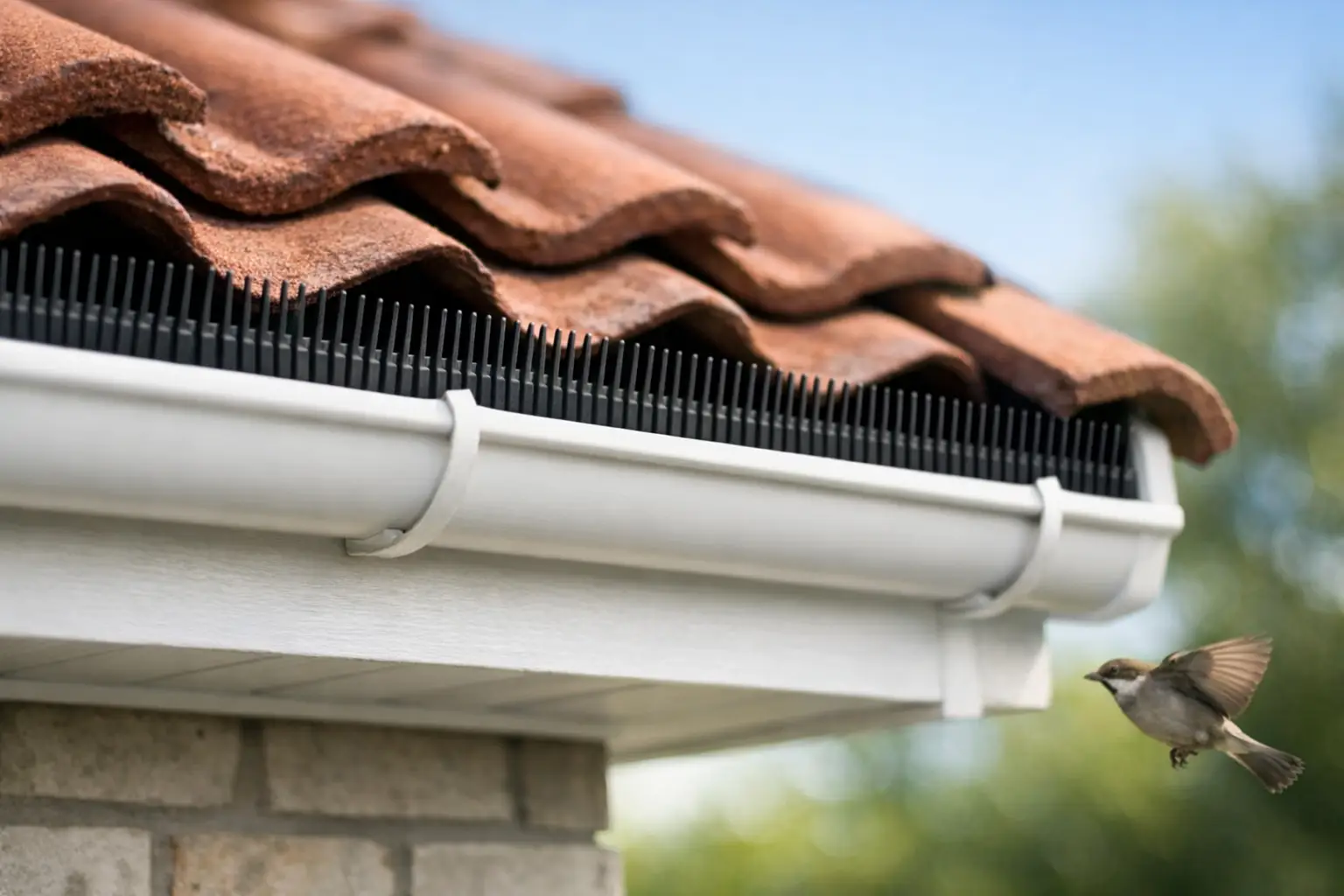
If birds are getting into the roof space at the eaves, the problem is rarely dramatic – but it can become expensive. Nesting, blocked ventilation paths, disturbed insulation and repeated call-backs often start at the same vulnerable point. That is why bird comb roof eaves details matter on both new work and repair jobs, particularly where slates or tiles leave openings at the roof edge.
A bird comb is a simple component, but it does an important job. Fixed along the eaves line, it helps close the gap beneath the first course of tiles or slates, making it much harder for birds to enter while still allowing airflow where the roof build-up requires it. On period properties, extensions and straightforward re-roofing alike, it is one of those small items that can make the finished roof perform properly rather than merely look complete.
What bird comb roof eaves actually do
At eaves level, roofs need a careful balance. You want to stop pest access and wind-blown debris getting under the covering, but you do not want to create a detail that traps moisture or interferes with ventilation. A bird comb is designed for that exact junction.
The comb profile sits against the underside of the tile or slate edge and forms a physical barrier. Birds cannot easily pass through it, and larger debris is kept out as well. At the same time, the shaped profile allows air movement at the eaves when used as part of a suitable ventilated roof detail.
This matters because the eaves line is one of the busiest parts of any roof. Water discharge, fascia alignment, underlay support, gutter positioning and ventilation all come together here. If the detail is weak, the roof often shows it early.
Where bird combs are most useful
Bird comb roof eaves details are especially common on tiled roofs where the profile of the covering creates clear openings at the eaves. They are also useful on some slate roofs, depending on the build-up, eaves support arrangement and the size of the gap being left beneath the first course.
On modern interlocking tiles, the need is often obvious because the tile shape naturally creates voids. On heritage work, it can be less straightforward. A reclaimed slate roof on an older building may need a more considered eaves detail, especially where appearance, airflow and compatibility with existing materials all need to be respected.
That is where trade judgement matters. The right answer depends on the roof covering, the pitch, the underlay system and whether the project is a full replacement or a localised repair. A bird comb is useful, but it is not a substitute for getting the whole eaves arrangement right.
Bird comb roof eaves on heritage and reclaimed roofing
For heritage roofs, small plastic accessories can sometimes be treated as an afterthought. That is a mistake. Even when the visible finish needs to remain traditional, modern support components at the eaves can improve long-term performance without changing the character of the roof when viewed from the ground.
On reclaimed slate and tile projects, consistency at the eaves is especially important because the covering itself may vary slightly in thickness, nib position or profile. Reclaimed materials bring character and authenticity, but they also demand better setting out. If the eaves line is uneven or the opening beneath the first course is inconsistent, bird access becomes more likely.
A well-chosen bird comb helps regularise that vulnerable edge. It also contributes to a neater finish where replacement materials are being blended into an existing roof. For contractors trying to match old and new work without leaving weak points at the perimeter, that is practical value rather than a cosmetic extra.
Getting the eaves detail right
A bird comb should be viewed as one part of the eaves package, not a standalone fix. The full detail usually involves fascia support, underlay support trays where needed, correct batten positioning, gutter relationship and suitable ventilation provision.
If the eaves overhang is wrong, or the first course is not set correctly, fitting a comb will not rescue the detail. Likewise, if the roof requires a defined ventilation path, the chosen component arrangement must preserve it. Too often, problems arise because one element is fitted in isolation without considering how the rest of the edge has been built.
On repair work, this is even more relevant. A roofer may be replacing a section of slipped or damaged tiles and find evidence of bird entry at the same time. In those cases, it is worth checking whether the original eaves detail was incomplete, poorly aligned or simply worn out. Repairing the covering without addressing the access point usually means the issue returns.
Common mistakes at the eaves
The first is assuming every roof needs the same comb. Tile profile and spacing matter, and so does the actual gap being dealt with. A component that works neatly on one roof can be a poor fit on another.
The second is compressing or misaligning the first course so the comb no longer sits as intended. That can create pressure points, an untidy eaves line or local openings.
The third is ignoring ventilation requirements. Blocking entry for birds is sensible. Blocking airflow into the roof structure is not.
How to tell if a bird comb is needed
You do not always need visible signs of birds to justify one. If the roof covering leaves open access at the eaves, prevention is usually the better route. Waiting for nesting material, noise in the loft or fouling around the gutter line is a poor maintenance strategy.
There are, however, some clear indicators. If you can see obvious gaps beneath the first course, if there is a history of bird activity around the fascia, or if previous repairs have left the eaves edge inconsistent, a comb is worth considering. It is also sensible on re-roofing work where the old eaves detail offered little resistance to pest entry.
For homeowners, the signs may be simpler: scratching sounds, repeated debris dropping from the eaves, or birds regularly disappearing under the roof edge. For trade buyers, the decision is usually more technical – assess the opening, assess the ventilation strategy, and choose a component that suits the covering.
Choosing components that suit the roof
As with any roofing accessory, fit and compatibility matter more than broad description. A bird comb should suit the profile of the roof covering and integrate cleanly with the rest of the eaves detail. On reclaimed and heritage roofs, that often means paying closer attention to dimensions and to the practical realities of older structures that are not perfectly uniform.
This is where specialist supply makes a difference. Contractors working on period properties often need more than the main covering material. They also need the supporting items that help the roof perform properly once laid. Being able to source reclaimed slates or tiles alongside battens, fixings, lead products and eaves accessories keeps the job moving and reduces mismatches between components.
For projects where authenticity matters, the aim is not to modernise the look of the roof. It is to build an eaves detail that is discreet, effective and compatible with the covering above it.
Trade-offs to keep in mind
There is no value in pretending every roof should be detailed in exactly the same way. Some roofs need a stronger emphasis on ventilation, some on pest exclusion, and some on preserving the appearance of an existing historic arrangement. In many cases, you can achieve all three, but the route there depends on the build-up.
On a straightforward pitched tiled roof, a bird comb is usually an easy decision. On a heritage roof with unusual eaves construction, you may need to be more selective and make sure any added component does not conflict with the broader conservation approach. That does not mean leaving gaps open by default. It means choosing carefully and fitting properly.
The same goes for repair versus replacement. If only a small area is being patched, the best approach may be to improve the local eaves detail without disturbing more of the roof than necessary. On a full strip and re-cover, there is a better opportunity to design the edge correctly from the start.
Why small roofing details matter
A roof often fails in the margins before it fails in the field. The main slates or tiles may be sound, but if the eaves details are poor, the roof becomes vulnerable to pests, moisture issues and avoidable maintenance. Bird combs are not glamorous products, and they are not sold on looks. They matter because they solve a common, practical problem at one of the roof’s most exposed junctions.
For anyone working with slate, tile or reclaimed roofing materials, the lesson is straightforward: treat the eaves with the same care as the covering itself. Small components at the perimeter often decide whether the job stays quiet, dry and trouble-free after the scaffold comes down.
If you are planning a repair or a full re-roof, it is worth looking closely at the roof edge before the first course goes on – because that is where a modest detail can prevent a long list of avoidable problems.

