

Clay Valley Tiles for Heritage Roof Repairs
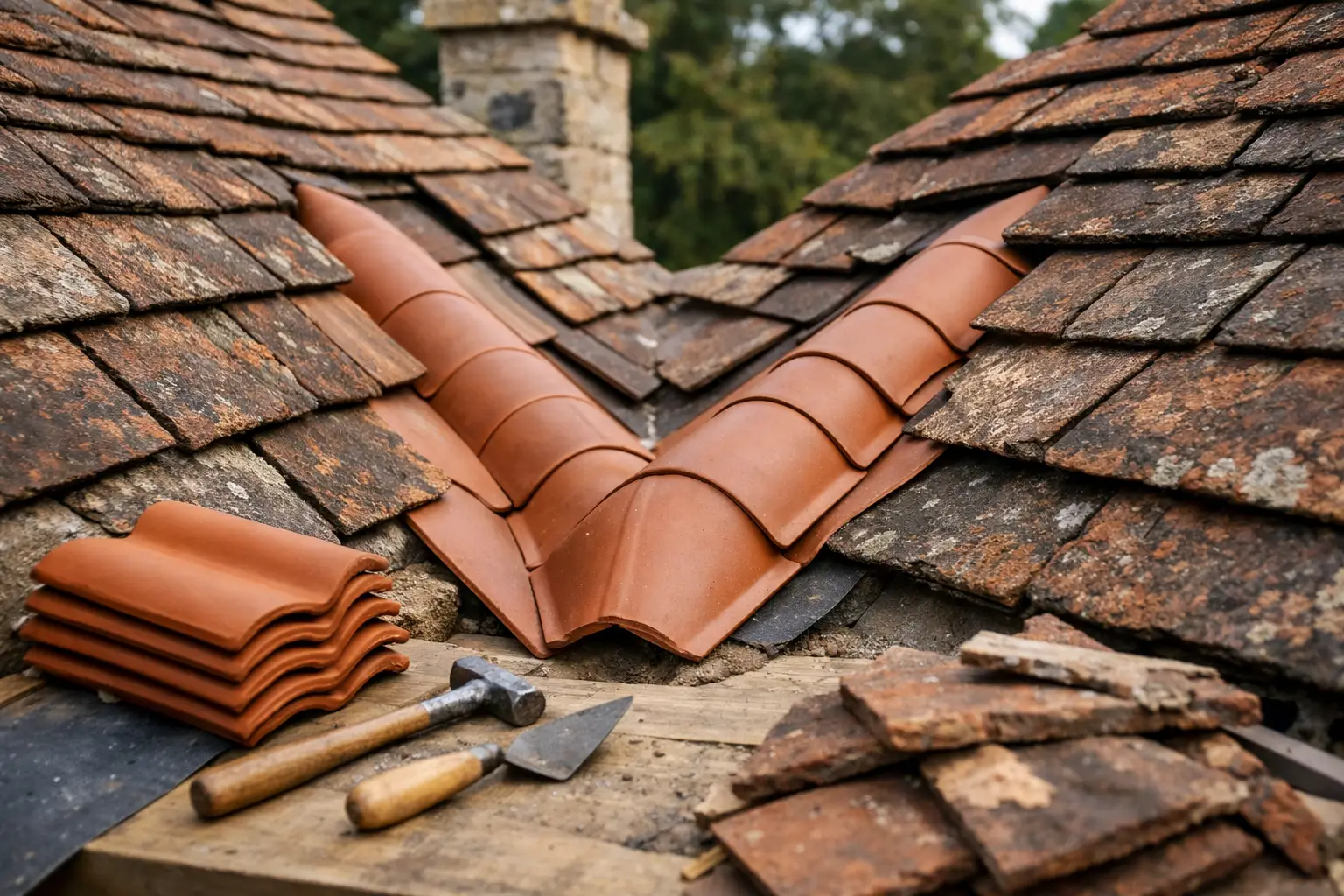
When a roof starts failing at the valley, the problem rarely stays small for long. Water runs hard through this junction, and if the wrong replacement is used, even a sound roof covering can end up with persistent leaks, staining, or a patch repair that looks out of place. That is why clay valley tiles matter on both practical and visual grounds, especially on period properties where matching the existing roof is part of doing the job properly.
For roofers, builders, and property owners dealing with repair or restoration work, the valley is one of the details that deserves closer attention. It carries concentrated water from two roof slopes, so the material has to cope with regular flow, weather exposure, and movement over time. On older roofs, clay valley tiles also contribute to the character of the finished elevation. Replace them badly and the result often stands out for the wrong reasons.
What clay valley tiles do
A roof valley is the internal angle where two roof slopes meet. It is one of the most vulnerable points on any pitched roof because rainwater is channelled into a narrow run. Clay valley tiles are designed to line and protect that junction, directing water safely down to the eaves while working with the surrounding roof tiles.
On traditional roofs, these tiles are often chosen because they suit the appearance and construction of clay-tiled coverings better than more modern alternatives. They can provide a neater, more sympathetic finish on heritage buildings, and when the size, profile, and colour are right, they help maintain continuity across a repaired roof.
That said, there is no single answer for every project. Some roofs will require a like-for-like clay replacement to satisfy conservation requirements or preserve the existing look. Others may allow a different valley detail if performance, budget, or site conditions point in that direction. The right choice depends on the roof itself, the surrounding tile type, and the standard of finish expected.
Why clay valley tiles still matter on older roofs
On period properties, roofing details are rarely just functional. The texture, profile, and weathered finish of traditional materials contribute to the overall appearance of the building. Valley details can be easy to overlook from the ground, but poor replacements quickly become obvious once they contrast with the rest of the roof.
This is where clay valley tiles still have a clear place. They sit comfortably alongside heritage clay roof tiles and reclaimed materials, particularly where the aim is to preserve original character rather than impose a visibly modern repair. For listed buildings and sensitive renovations, that compatibility can be as important as water management.
There is also the question of proportion. Older roofs were often built around traditional materials with specific gauge, lap, and profile relationships. Introducing a valley system that does not suit the roof covering can create awkward junctions or detailing compromises. A proper match tends to give a cleaner result and reduces the chance of makeshift adjustments on site.
Matching clay valley tiles to the existing roof
Matching is where many repairs either succeed or fall short. In straightforward terms, you need the valley tile to work structurally and visually with the surrounding covering. That means looking beyond the simple description of clay and checking the actual profile, dimensions, colour, and degree of weathering.
A new clay valley tile on an aged roof may be technically sound but still look too sharp, too uniform, or too bright. On a visible roof slope, that can spoil the finish of an otherwise careful repair. Reclaimed stock is often the better route when the roof already has age and variation built into it.
Profile matters just as much as appearance. The valley tile must sit correctly with adjacent plain tiles or other clay roof tiles, allowing proper laps and weathering. If the geometry is wrong, water can track where it should not, and installers may be forced into cuts or bedding details that weaken the job.
For trade buyers, consistency across the batch matters too. One or two replacement pieces may be enough for a localised repair, but larger valley works need stock with dependable sizing and condition. A mixed lot with too much variation can slow installation and affect the final line of the roof.
Reclaimed or new – what suits the job?
There is no blanket rule here. Reclaimed clay valley tiles are often the best fit for heritage work because they offer an aged appearance that sits naturally within an existing roof. They are particularly useful where only part of the valley needs attention and the surrounding materials have already weathered over decades.
New clay valley tiles may still be suitable on full re-roofing jobs, newer extensions, or projects where exact reclaimed matching is less critical. They can also be the practical choice when larger quantities are required and a consistent fresh finish is acceptable.
The trade-off is straightforward. Reclaimed material tends to offer better visual compatibility, but availability can vary and exact matches may take more effort to source. New material is usually easier to standardise, but it may look too clean or too uniform against an established roof. On many period properties, appearance carries enough weight that reclaimed becomes the sensible option.
What to check before you buy clay valley tiles
Before ordering, it pays to confirm more than just the name of the item. Valley repairs can go wrong when buyers assume one clay valley tile will do the job of another. In practice, the details matter.
Start with the roof covering around the valley. Plain clay tiles, interlocking tiles, and heritage profiles all create different requirements at the junction. Then check the dimensions and shape of the existing valley components, along with their condition. If only some sections have failed, look at whether a partial replacement will leave an obvious mismatch.
Condition is especially important with reclaimed stock. Good reclaimed roofing materials should be checked for soundness, not just appearance. Cracks, frost damage, and excessive wear can shorten service life. For that reason, buying from a specialist supplier with inspected stock is usually a safer route than relying on uncertain salvage.
It also makes sense to think about the wider roofing package. Valley work often leads to associated needs such as ridge tiles, fixings, underlay, battens, lead, or sealants. Sourcing all of that through a specialist merchant can keep the job moving and reduce the risk of ending up with incompatible materials halfway through a repair.
Installation standards matter as much as the tile itself
Even the right clay valley tiles will not compensate for poor workmanship. Valleys handle a high volume of water, so setting out, support, laps, and alignment all need to be right. Any weakness here can turn a sound-looking repair into a call-back.
This is one reason roofers tend to be cautious about improvised substitutions. A tile that almost fits can create enough of a discrepancy to affect run-off or the fit of adjacent courses. On steep roofs or exposed sites, small errors become bigger problems.
Good installation also depends on the roof as a whole. If the battens are tired, the underlay has failed, or neighbouring tiles are slipping, replacing valley pieces alone may only deal with part of the issue. A proper assessment should look at the complete junction, not just the visible cracked section.
Sourcing clay valley tiles with confidence
For many buyers, the hardest part is not knowing that a valley repair is needed. It is finding stock that actually suits the roof. Heritage roofing projects often involve discontinued profiles, inconsistent dimensions, or weathered materials that are difficult to match through general builders’ merchants.
That is where a specialist supplier adds value. Access to reclaimed and heritage roofing materials, combined with product knowledge, gives buyers a better chance of securing a practical match rather than settling for a near miss. This is particularly useful for contractors managing repairs on older housing stock or homeowners trying to keep a period property looking right after storm damage.
A business such as ReclaimedRoofSlates.com is geared around exactly that kind of requirement – helping customers source hard-to-match roofing materials with the supporting products needed to complete the work properly. For buyers balancing authenticity, availability, and budget, that specialist approach can save both time and costly mistakes.
When replacement is the right call
Not every valley tile needs replacing at the first sign of age. Surface weathering alone is not necessarily a fault, and older clay products can often remain serviceable for many years. The issue is whether the material is still doing its job.
Cracking, displacement, persistent leakage, and signs of long-term water ingress around the valley usually point to a need for action. If the surrounding roof is otherwise sound, a targeted repair may be enough. If the valley failure is tied to broader roof deterioration, more extensive works may be the better investment.
The key is not to treat valley details as an afterthought. They carry too much water and sit in too critical a position for that. Get the material right, match it properly, and the repair tends to look better and last longer.
If you are sourcing clay valley tiles for a repair or restoration, the best starting point is always the roof in front of you – its age, its profile, its exposure, and the standard the finished job needs to meet.

