

Green Roofing Materials That Actually Last
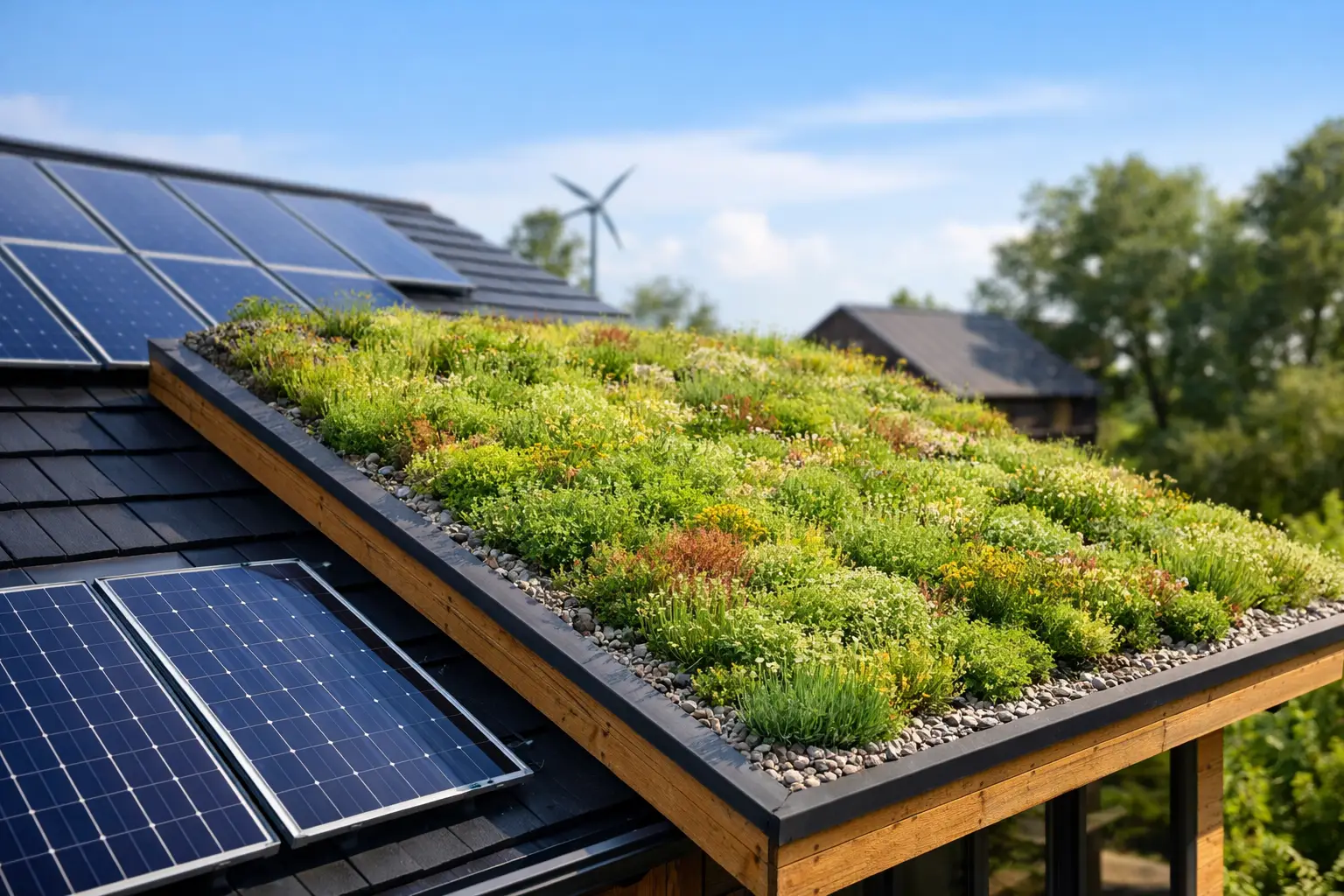
A roof replacement usually becomes a sustainability conversation the moment skips arrive on site. What comes off, what goes back on, and how long the next covering will last all matter. When people talk about green roofing materials, they often focus on recycled content or new eco credentials. In practice, the best choice is usually the material that suits the building properly, lasts for decades, and avoids unnecessary waste from poor matching or early failure.
That is especially true on period properties, patch repairs, and extension work where appearance, planning expectations and long-term performance all have to line up. A roof that looks wrong, weathers badly, or needs replacing too soon is not a greener option just because it came with an environmental claim on the packaging.
What makes roofing materials genuinely green?
For most UK projects, sustainability in roofing comes down to four practical factors: lifespan, reusability, embodied energy, and suitability for the building. A material with a very long service life can outperform a cheaper short-life product even if the upfront cost is higher. A reclaimed product that can be used again without heavy reprocessing has an obvious environmental advantage. Equally, if a roof covering is compatible with the pitch, exposure and character of the property, it is far less likely to create remedial work later.
This is where broad claims can be misleading. Some modern products are marketed as eco-friendly because they contain recycled content or are lightweight in transport. That may be relevant, but it is only part of the picture. On a Victorian terrace, a listed building, or a stone cottage in an exposed location, the wrong substitute can create more waste and more cost over time.
Reclaimed slate as one of the strongest green roofing materials
Reclaimed natural slate remains one of the most credible green roofing materials available for UK roofs. It combines reuse with longevity, and it is often the right visual and technical match for existing buildings. When sound reclaimed slates are sorted and checked properly, they can deliver many more years of service while preserving the character of the roofline.
For heritage work, this matters. A reclaimed Welsh slate or Burlington slate will usually sit more naturally alongside existing coverings than a modern alternative trying to imitate the look. The same applies on partial repairs after storm damage, where the aim is not simply to make the roof watertight but to maintain consistency of size, thickness, texture and colour.
There is also a straightforward waste argument. Reusing slates that still have serviceable life in them avoids sending viable materials into the waste stream and reduces demand for newly manufactured replacements where they are not necessary. That makes reclaimed slate a practical environmental choice, not just a cosmetic one.
The trade-off is supply and grading. Reclaimed materials need careful inspection because consistency cannot be taken for granted. Sizes, nail holes, delamination risk and edge condition all need attention. That is why specialist sourcing matters, particularly when matching existing roofs or ordering by volume.
Where reclaimed slate works best
Reclaimed slate is especially well suited to period-property repairs, conservation-led refurbishments, and extensions where an obvious mismatch would undermine the finished job. It also makes sense for clients who want a long-life roof covering without relying on newly manufactured materials where a reclaimed option is available.
It is less straightforward where budgets are very tight, installation programmes are compressed, or the project needs highly uniform stock in large quantities at short notice. In those cases, availability can shape the decision as much as specification.
Clay tiles and the sustainability case for reuse
Reclaimed clay tiles also deserve serious attention. Traditional plain tiles and machine-made heritage profiles such as Rosemary tiles remain popular because they suit a wide range of period and character properties. Like slate, they can offer a strong environmental case when reclaimed stock is sound, well sorted and appropriate for the roof.
A reclaimed clay tile roof often carries the weathered appearance that new tiles take years to develop. For visible elevations, that can be just as important as the sustainability benefit. On repair work, the right match avoids the patchwork effect that can make even a technically correct roof look unfinished.
Again, suitability comes first. Tile condition, frost resistance, nib integrity and dimensional consistency all matter. Reclaimed clay tiles can be an excellent option, but they are not interchangeable by default. The correct profile and gauge have to be considered along with the existing roof construction.
New natural materials versus reclaimed stock
Not every project can be completed with reclaimed materials, and that does not automatically rule out a responsible specification. New natural slate and quality clay tiles can still be sensible choices where reclaimed stock is unavailable, unsuitable, or unable to meet the required quantities.
The key is to avoid treating all new materials as equally green. A durable natural product with a long service life is generally a stronger proposition than a short-life covering designed around low upfront cost. If the roof is likely to outlast several cycles of cheaper alternatives, the environmental arithmetic changes quickly.
That said, on heritage buildings and repair work, reclaimed stock usually has the advantage where a close match is needed. A new material may be technically sound but visually wrong. If that leads to broader replacement than the job really required, the greener choice may already have been missed.
Modern alternatives and where they fit
There are modern roofing products that have a place in sustainable construction. Recycled-content tiles, composite slates and lightweight systems can reduce load requirements and may suit certain new-build or low-structure projects. On some sites, easier handling and reduced structural demand are valid considerations.
But this is where context matters. A modern substitute may look acceptable from ground level on a straightforward extension, yet be completely inappropriate on a listed building or a roof where neighbouring slopes retain original coverings. Claims around eco performance should always be weighed against longevity, repairability and whether the product actually belongs on that property.
For contractors, the practical question is simple: will this specification still look right and perform properly in twenty or thirty years? If the answer is uncertain, it is worth being cautious about any material sold mainly on marketing language.
Green roofing materials and whole-roof thinking
The covering itself is only part of the sustainability picture. Battens, fixings, flashings, underlay, ventilation and leadwork all affect service life. A roof built with reclaimed slates but poor support materials is not a sustainable roof. If detailing fails, the environmental benefit of the covering is quickly cancelled out by avoidable remedial work.
This is one reason trade buyers often prefer sourcing from a specialist supplier that understands full roof build-ups rather than treating slates or tiles as isolated items. Matching the primary covering is critical, but so is getting the supporting components right for the roof type, pitch and exposure.
On older properties, details become even more important. Valley tiles, ridge tiles and lead products need to work with the reclaimed covering rather than fight against it. The greener option is the one that reduces future intervention, not the one with the simplest label claim.
How to choose the right option for your project
If you are comparing green roofing materials for a live project, start with the building rather than the brochure. Ask whether the roof is a full replacement, a partial repair or a heritage-sensitive restoration. Then consider what the existing covering is, what local planning or conservation constraints apply, and how close the visual match needs to be.
After that, look at lifespan and availability. Reclaimed slate or tile may be the best answer, but only if the stock is suitable and sufficiently consistent. On larger jobs, reliable quantities matter. On small repairs, finding a close match can matter more than headline price.
It is also worth being honest about budgets. Reclaimed products are not always the cheapest route at the point of purchase, especially when careful selection is needed. But when they prevent over-stripping, preserve character and avoid premature replacement, the value becomes clearer.
For many UK roofs, the strongest environmental choice is not the newest or most heavily marketed product. It is the material that already proved it can do the job, still has serviceable life left in it, and fits the building as though it belongs there – because it does.
At ReclaimedRoofSlates.com, that is the practical case for reclaimed roofing: less waste, better matching, and a roof that respects both the building and the materials already in circulation. If you are choosing carefully now, you are far more likely to avoid doing the same job again before you should.

