

What Is the Best Slate for Roofing?
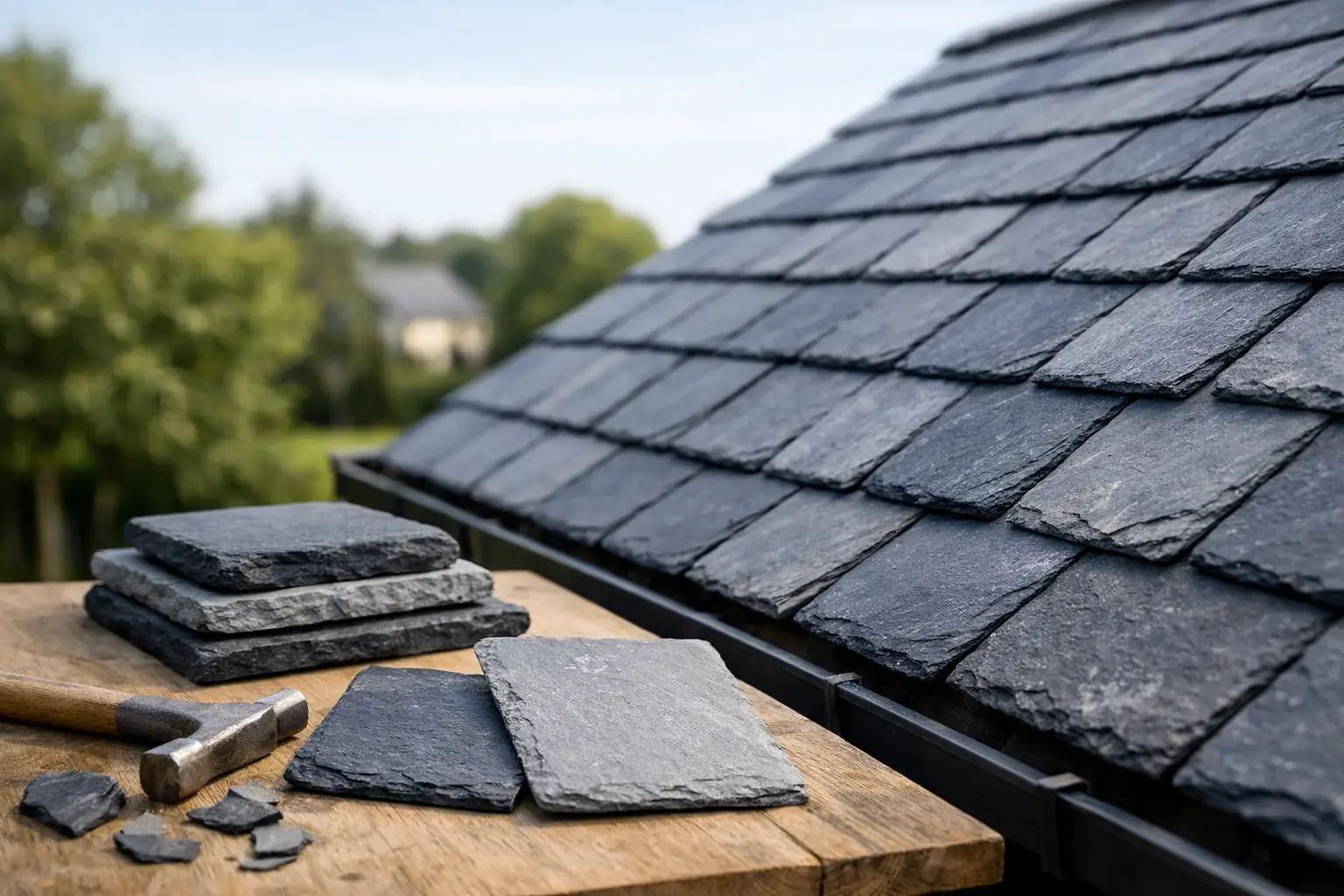
If you are asking what is the best slate for roofing, the honest trade answer is this: the best slate is the one that suits the building, the roof pitch, the exposure, the planning requirements and the standard you need the roof to meet over time. There is no single slate that is right for every job. A listed cottage, a Victorian terrace repair and a new-build natural slate roof all call for different decisions.
That said, some slates consistently stand out for durability, appearance and long-term value. In the UK market, Welsh slate, Burlington slate and quality reclaimed slates are usually the main contenders when performance and authenticity matter.
What is the best slate for roofing in the UK?
For outright reputation and lifespan, Welsh slate is often regarded as the benchmark. It has a long record on British roofs, a strong name in heritage work and an appearance that suits a wide range of traditional properties. Good Welsh slate is dense, reliable and visually consistent, which is why it remains a preferred option for high-specification projects and conservation-led repairs.
Burlington slate is another top-tier choice. Quarried in the Lake District, it is well known for strength, low water absorption and a distinctive appearance. It can be an excellent answer where a premium natural slate is required, especially on projects where appearance and service life are both central to the brief.
Reclaimed slate is often the best option when matching an existing roof is more important than buying newly quarried material. On repairs and partial reroofs, reclaimed slates can be the only sensible route if you want a consistent finish. For period properties, this is often the difference between a patch that stands out and a repair that disappears into the roofline.
The real question is suitability, not just quality
People often look for a simple winner, but roofing slate is not chosen in isolation. A very high-quality slate can still be the wrong product if it does not match the existing roof in size, thickness, colour tone or regional character. That matters on heritage buildings, but it also matters on ordinary domestic repairs where the client wants a clean visual match.
Roof pitch is another factor. Some slates are better suited to certain fixing methods and lap requirements than others. Exposure also matters. A roof in a sheltered area may allow more flexibility than one facing harsh weather on an exposed elevation.
Budget has a place too. The cheapest slate is rarely the best value if it leads to early breakage, sorting issues or an obvious mismatch. Equally, the most expensive slate is not always necessary if the job is a localised repair and a well-selected reclaimed batch will do the work properly.
Welsh slate – the premium benchmark
When roofers and specifiers talk about the best slate available, Welsh slate is usually part of the conversation. Its reputation is based on more than branding. It has a long history of performance on British roofs, often lasting for generations when fixed correctly and maintained properly.
The main strengths of Welsh slate are durability, appearance and status in heritage settings. It tends to offer a fine, dense structure with good weather resistance. It also carries the visual credibility many period-property owners and conservation professionals are looking for.
The trade-off is cost and availability. Welsh slate is a premium material, and that is reflected in pricing. For complete reroofs, that can be a significant part of the budget. For repairs, reclaimed Welsh slates can make much more sense where a close match is needed without changing the character of the roof.
Burlington slate – high performance and strong visual character
Burlington slate is one of the strongest alternatives to Welsh. It is widely respected in the trade and has a proven track record. Its colour and texture give it a distinct look, and for many projects that is part of the appeal rather than a drawback.
From a performance point of view, Burlington is a serious roofing slate. It is hard-wearing and suitable for demanding applications. On the right building, it gives a roof real presence while still delivering the lifespan expected from premium natural slate.
The main consideration is compatibility. Burlington has its own look, so it is not always the right answer for matching an older roof laid in a different regional slate. On a full reroof, that may not matter. On a repair, it often does.
Reclaimed slate – often the best option for repairs
For many UK roofing jobs, especially on older houses, reclaimed slate is the practical answer. If the existing roof was laid decades ago, using reclaimed slates of the same type, size and weathered character is usually the best way to maintain visual continuity.
This is where quality control matters. Reclaimed slates should not just be old slates pulled from a roof and stacked for resale. They need proper sorting and inspection, with attention paid to thickness, condition, nail hole wear and general usability. A good reclaimed batch gives the roofer workable, consistent material. A poor batch creates waste, delays and uneven results.
Reclaimed slate also makes sense on sustainability grounds. Reusing serviceable roofing materials reduces demand for new extraction and helps keep traditional materials in circulation. For period-property owners, that environmental benefit comes alongside a more authentic finish.
What makes one roofing slate better than another?
The best slate for roofing is usually judged on five things: lifespan, strength, water absorption, consistency and appearance. Lifespan is obvious. A slate roof should last for decades, not just look good when first laid.
Strength matters during fixing and over the long term. Weak or poorly split slates are more likely to break or fail. Low water absorption is important because it helps the slate resist frost damage and weathering. Consistency matters because the roofer needs a batch that lays properly without constant sorting out of unusable pieces.
Appearance is not just cosmetic. On a visible roof slope, variation in tone, size or thickness can affect the whole finish. On heritage work, appearance is often as important as technical performance because the roof has to sit properly with the age and character of the building.
New slate or reclaimed slate?
If you are reroofing a property from scratch, new slate may be the cleaner option. It gives greater batch consistency and may simplify specification on straightforward projects. Where a uniform finish is required and there is no need to match an older covering, new premium slate can be the right call.
If you are repairing, extending or partially reroofing an older building, reclaimed slate often wins. Matching the existing roof is usually the priority, and reclaimed material gives you the best chance of getting the right size, tone and weathered face. On many traditional properties, that is the difference between preserving character and losing it.
This is why specialists in reclaimed roofing materials are valuable. A broad stock of sorted reclaimed slates gives roofers and property owners more chance of finding the right material rather than settling for a poor substitute.
What is the best slate for roofing when budget matters?
When budget is tight, the best slate is the one that gives dependable service without creating problems later. That does not automatically mean the cheapest price per slate. Cheap imported material or inconsistent stock can cost more in breakages, wasted labour and shorter service life.
A well-selected reclaimed slate can offer strong value, especially on repairs and heritage projects. You are paying for compatibility as well as material. On complete reroofs, there is often a balance to strike between premium new slate and a reclaimed option that suits the property just as well.
For trade buyers, availability matters as much as headline cost. A competitive price is no use if the supplier cannot provide enough matching stock to complete the roof properly.
How to choose the right slate for your roof
Start with the building. If it is a period property, look at the existing roof covering, local character and any conservation considerations. Then look at the practical side – roof pitch, exposure, fixing specification and the quantity required.
If it is a repair, matching should come first. Measure the existing slates, check thickness and identify the slate type if possible. If it is a full reroof, decide whether the priority is maximum lifespan, heritage authenticity, visual style or cost control.
A specialist supplier can help narrow that down quickly. That is particularly useful when you need reclaimed Burlington slates, Welsh slates or other hard-to-match materials in workable quantities, rather than spending time chasing mixed or uncertain stock.
The best slate roof is rarely the one chosen from a brochure alone. It is the one chosen with the building in mind, with proper regard for durability, appearance and compatibility. If you get that right at the start, the finished roof will look right, perform properly and continue to earn its keep long after the scaffolding comes down.

