

How Much Are Reclaimed Roof Slates?
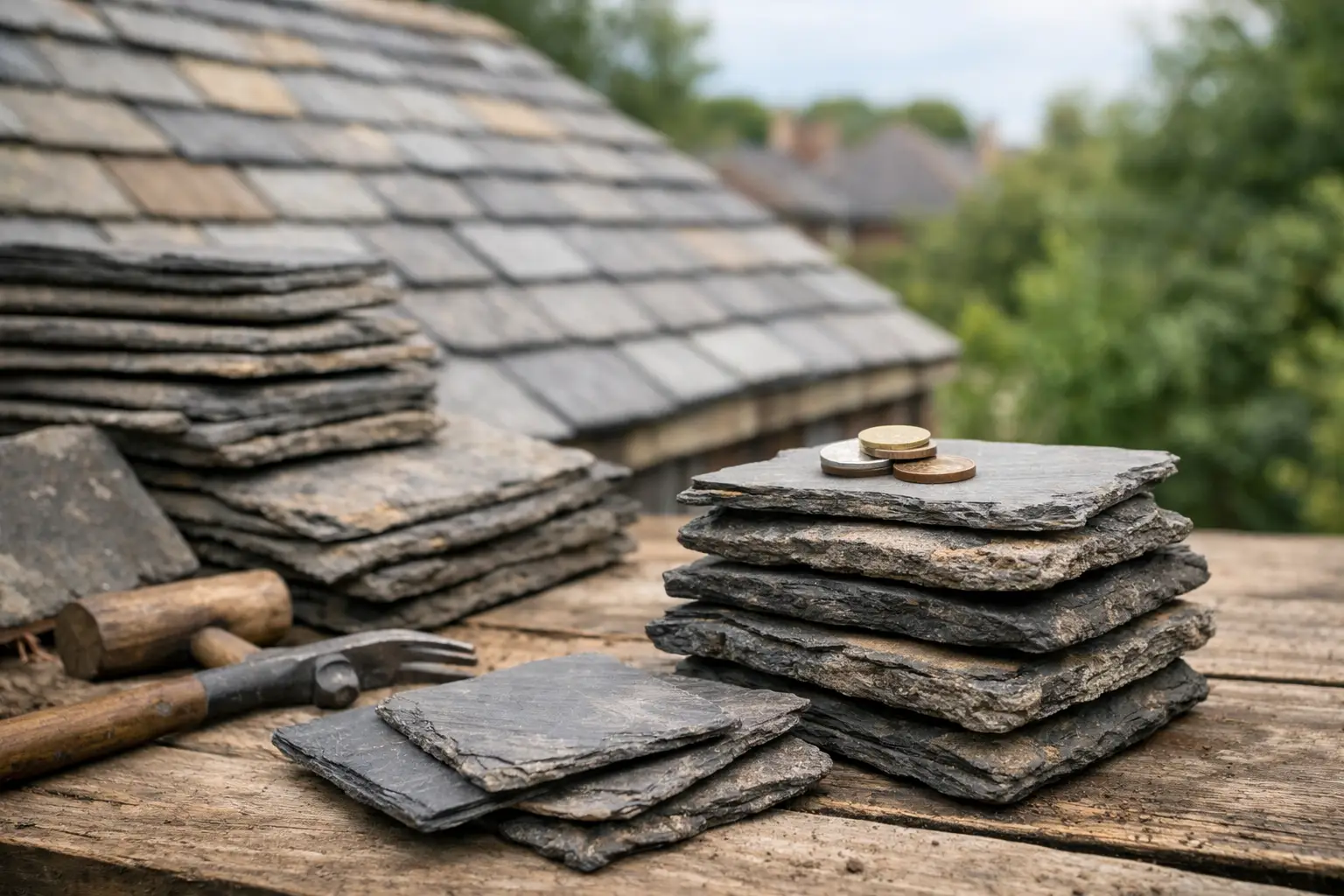
If you are asking how much are reclaimed roof slates, the honest trade answer is that price depends on far more than simple piece count. Type, size, thickness, condition, sorting, quantity and roof access all affect what you will actually pay. A single matching slate for a repair job is priced very differently from a tonne of graded slates for a full re-roof.
For period properties and repair work, reclaimed slates are often the right choice because they give you a closer match in colour, texture and weathered appearance than most new alternatives. They can also be the only sensible option when you are trying to preserve the character of an existing roof or satisfy conservation requirements. The cost reflects that value, but it also reflects the labour involved in recovering, sorting and checking usable material.
How much are reclaimed roof slates in practice?
In practice, reclaimed roof slates are commonly sold in several ways. You may see pricing per slate, per square metre, per tonne or per pallet, depending on the material and the quantity required. Small repair orders are usually priced per piece, while larger trade and renovation orders are often costed by batch size and slate specification.
A basic reclaimed slate for patch repairs may be relatively modest in price when compared with premium heritage material, but the figure rises quickly if you need a specific origin such as reclaimed Welsh slates or reclaimed Burlington slates. Larger slates, heavier slates and slates with strong demand in the heritage market generally command more. Yorkshire stone slates sit in a different category again, as they are thicker, more variable and closely tied to traditional stone roofing work.
That is why headline prices can be misleading. Two batches described simply as reclaimed slates may differ sharply in value because one is mixed and unsorted, while the other is graded, de-nailed and ready for laying.
What affects the price most?
The biggest factor is slate type. Reclaimed Welsh slates, for example, are highly sought after because of their long service life, clean appearance and compatibility with a huge number of existing roofs across the UK. Burlington slates also attract strong demand where a Cumbrian slate match is required. Stone slates are typically priced differently again because they are not a like-for-like substitute for standard roofing slate and often involve specialist laying methods.
Size matters just as much. If you need a common repair size, supply is often easier to manage. If you need a less common dimension to blend into an older roof, sourcing becomes more selective and prices may rise. Thickness also changes the value. Heavier slates may be more desirable for some heritage applications, but they affect transport, handling and sorting time.
Condition is another major point. Proper reclaimed stock should be checked for breakage, lamination, excessive nail hole damage and general suitability for roofing use. Buyers sometimes assume reclaimed means cheap. In reality, good reclaimed material has already gone through recovery and selection, and that process has a cost attached to it.
Quantity can work in both directions. A very small order for a few replacement slates may cost more per piece because the supplier still has to identify, handle and pack a specific match. On the other hand, full-roof quantities may offer better value per unit, although transport and unloading then become more relevant to the total bill.
Why one reclaimed slate costs more than another
The reason one slate costs more than another usually comes down to match quality and scarcity. If you are repairing a visible front elevation on a period property, a close visual match is worth paying for. A supplier may need to locate slates from a particular quarry type, colour range or size band to avoid an obvious patch on the finished roof.
There is also the difference between mixed salvage and saleable stock. Slates that have been stripped from a roof are not automatically ready to go back on one. They may need sorting, grading and cleaning. The more consistent the batch, the more useful it is to the roofer, and the stronger its market value tends to be.
For trade buyers, reliability often matters more than the cheapest line on paper. A lower price means little if the batch arrives with inconsistent sizing, excessive wastage or poor compatibility with the existing roof. On site, those problems cost time and labour very quickly.
Buying for repairs versus full roof projects
If you need reclaimed slates for a repair, your priority is usually a close match rather than the lowest possible cost. You may only need a handful of pieces, but they must sit naturally within the existing roof covering. In that situation, paying slightly more for the right slate often saves money overall because it avoids a poor-looking repair or unnecessary disturbance to surrounding areas.
For larger reroofing or restoration work, the calculation changes. You are looking at coverage, wastage, consistency and total project cost. A larger batch needs to be reasonably uniform, especially if the roof is prominent or subject to heritage scrutiny. Here, the price should be judged against how much sorting has already been done and how ready the material is for efficient laying.
It is also worth remembering that slate cost is only one part of the roofing budget. Battens, underlay, fixings, leadwork, ridges, hips, labour and access will all affect the final figure. On many jobs, trying to save a small amount on slate supply can be false economy if it creates delays or compromises the finish.
How reclaimed roof slates are priced by suppliers
When suppliers price reclaimed slates, they are usually taking into account source, grading, dimensions and availability. Material that has been sorted into clear size groups is easier for roofers to use and often more valuable. Slate sold as mixed and unchecked may look cheaper, but the buyer then carries more risk.
Transport is a practical factor as well. Slate is heavy, fragile and expensive to move badly. Delivery cost can make a noticeable difference, particularly for smaller orders or remote sites. If access is restricted or unloading arrangements are awkward, that may also affect the overall price.
For specialist materials, quotes are often more accurate than generic online pricing. That is especially true where the requirement is not just reclaimed slate, but a particular heritage match. ReclaimedRoofSlates.com works in that space because the real question is rarely just cost alone – it is cost for the right material, in the right quantity, ready for the job.
How to judge value, not just price
The better question is often not how much are reclaimed roof slates, but what are you getting for that price. A cheap batch that is badly mixed, heavily holed or inconsistent in thickness can create more waste than expected. Once labour is factored in, it may cost more than a properly graded batch from the start.
Ask whether the slates have been checked, whether sizes are consistent, and whether the supplier understands the roof type you are matching. If you are buying for a listed building, conservation area property or obvious front-facing slope, appearance matters. If you are buying for a less visible agricultural or secondary structure, your acceptable range may be wider.
Trade buyers tend to look for dependable supply and realistic grading. Homeowners often focus first on piece price, but compatibility and finish are what determine whether the repair disappears into the roof or stands out for the wrong reasons.
When reclaimed slates are worth the extra cost
Reclaimed slates are usually worth the extra cost when the roof already has age, character and established weathering that new slates cannot easily replicate. They are also worth it when local planning expectations, conservation standards or client requirements call for authentic materials.
They make sense for selective repairs after storm damage, for extending an older roof where continuity matters, and for full heritage reroofing where new materials would look out of place. In those cases, the value lies in visual consistency, long-term suitability and preserving the building properly.
There are situations where a new slate alternative may be considered, particularly on less sensitive roofs or where budget is the main driver. Even then, it is worth weighing the immediate saving against the risk of a poor match and the effect on the finished elevation.
A sensible buying decision starts with the roof in front of you, not a generic price table. If the aim is to match existing character, secure sound material and keep the job moving, the right reclaimed slate usually pays for itself in a better result. Get the specification right first, and the price becomes far easier to judge.

