

Cottage Tile Restoration That Respects the Roof
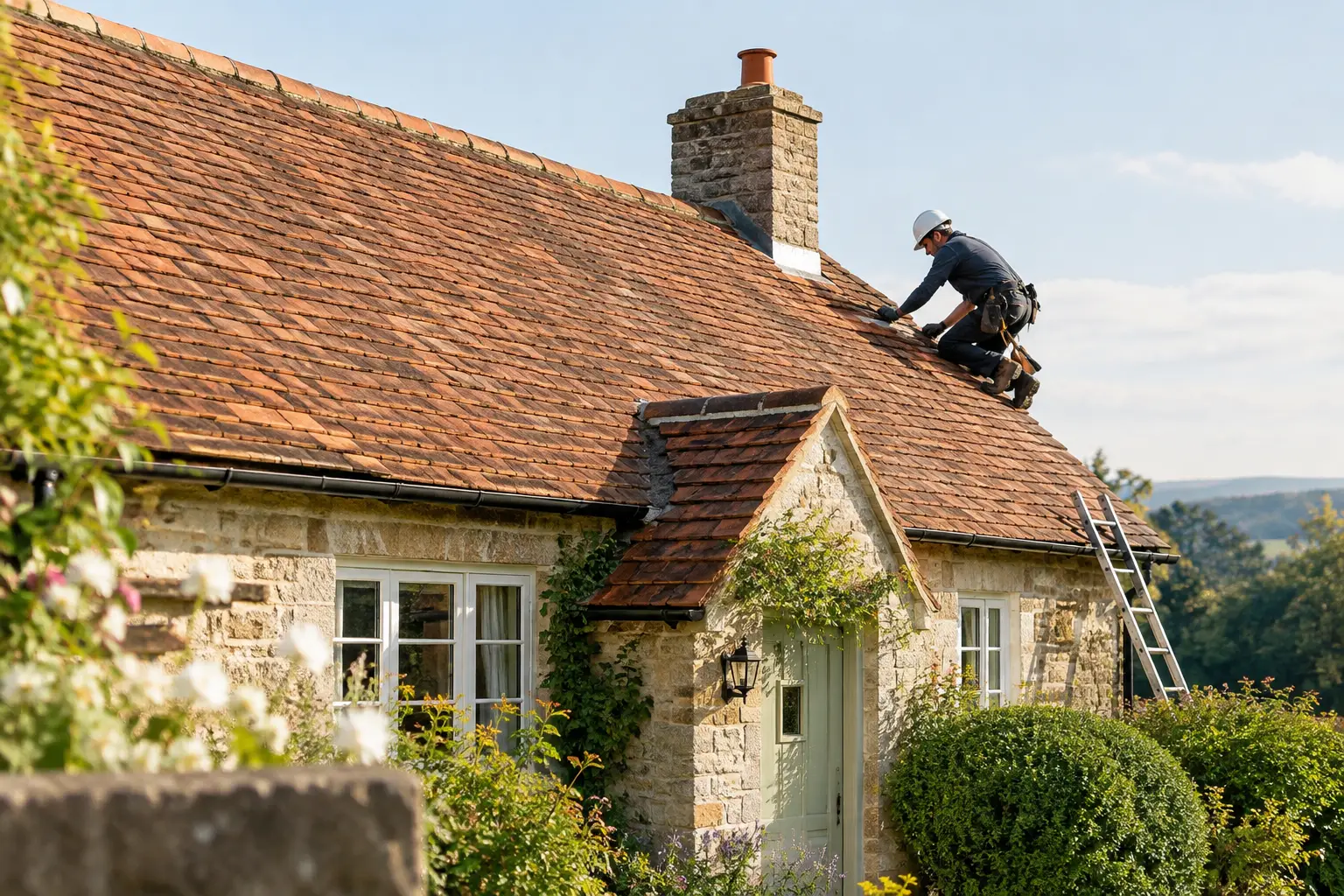
A cottage roof rarely fails in one dramatic moment. More often, a slipped tile, worn nail, cracked valley or blocked gutter allows water to work quietly behind the surface. Effective cottage tile restoration is therefore not about making an old roof look new. It is about retaining its character while reinstating a weather-tight, properly detailed roof that will perform for decades.
For period cottages, the roof covering is a large part of the building’s identity. Handmade clay tiles, weathered Rosemary tiles, stone slates and traditional ridges each carry a colour, texture and profile that modern alternatives can struggle to match. Getting the material and the method right protects both the property and its value.
What cottage tile restoration really involves
Restoration starts with an assessment, not an order for replacement tiles. A roof may look tired from ground level yet remain largely sound, needing only local repairs and maintenance. Equally, a neat-looking tiled roof can conceal failing underlay, decayed battens, corroded fixings or defective flashings.
The aim is to establish whether the roof needs selective repairs, a substantial strip and relay, or a full renewal using retained and reclaimed materials. This decision affects cost, disruption and the amount of original fabric that can be preserved.
A competent inspection should consider the condition of the tiles, ridge and hip bedding, valleys, abutments, chimney flashings, eaves, verges, gutters and timber beneath the covering. Inside the roof space, look for daylight, staining, damp insulation and evidence of movement in the rafters. Water does not always enter directly above the visible stain, so the detail work matters as much as the field tiles.
Match the tile before work begins
The most obvious mistake in cottage tile restoration is treating every clay tile as interchangeable. Two tiles may appear broadly similar from the road but differ in size, camber, thickness, nib position, headlap requirement and surface finish. A mismatch can create uneven coursing, poor lap coverage and an intrusive patch in an otherwise settled roof.
Start by measuring several existing tiles rather than relying on one sample. Record the length, width and thickness, then check the exposed gauge on the roof. Note whether the tile is machine-made, handmade, plain or interlocking, and assess its colour range in dry and wet conditions. Old clay develops variation over time, so a single uniform red replacement often looks wrong beside an established roof.
Reclaimed tiles are particularly useful where visual continuity is essential. They have already weathered, and good stock can provide a closer match in texture and tone than newly manufactured alternatives. However, reclaimed does not mean unexamined. Each tile should be checked for excessive frost damage, lamination, severe distortion, broken nibs and cracks around nail holes.
For a larger project, it is sensible to secure enough matching material before stripping the roof. There will always be losses during handling and sorting, and a small allowance for future repairs is worthwhile. Trusted suppliers such as ReclaimedRoofSlates.com can help identify compatible heritage tiles and provide the associated roofing materials required to complete the work properly.
Keep usable original tiles in the roof
Where original tiles remain sound, retain them. They are usually the best possible match because they belong to the roof. During a strip and relay, careful sorting separates reusable tiles from damaged stock. Sound tiles can be returned to the most visible elevations, while compatible reclaimed tiles are used in less prominent areas or mixed across the slope to avoid a blocky repair.
Do not assume every stained or mossy tile is defective. Surface growth needs consideration, but aggressive cleaning can remove the aged finish and damage soft, weathered clay. The priority is to deal with the cause of persistent dampness, often blocked drainage, overhanging vegetation or poor ventilation, rather than simply making the roof look cleaner.
Do not overlook the roof structure and detailing
A traditional tile roof is a system. Tiles shed the bulk of rainfall, but battens, underlay, flashings, valleys and fixings manage what reaches the layers beneath. Replacing tiles without addressing weak details can leave a cottage looking restored but still vulnerable to leaks.
Old roofs may have no modern membrane, and that is not automatically a defect. The right approach depends on the roof construction, the tile type, ventilation arrangement and the condition of the timbers. If underlay is being renewed, choose a suitable product and ensure the roof remains correctly ventilated. Poorly planned upgrades can trap moisture in an older roof structure.
Battens should be structurally sound, correctly graded and set out to the required gauge. Fixings must suit the tile, exposure and roof pitch. In exposed locations, mechanical fixing requirements may be more demanding, particularly around perimeters, verges, ridges and hips. Local conditions, building height and the roof’s design all influence the specification.
Leadwork deserves close attention. Chimney aprons, back gutters, soakers and valleys are common failure points when poorly installed or nearing the end of their service life. Reusing tired lead simply because it remains in place can be a false economy. Correct laps, support, expansion provision and dressing are essential if water is to be directed safely away from the building.
Choose repair, strip and relay, or renewal
A local repair is appropriate when the roof covering is generally secure and the fault is isolated. Replacing a limited number of broken tiles, renewing a short section of flashing or repairing a slipped verge can extend the roof’s life at modest cost. The key is not to disturb surrounding tiles unnecessarily.
A strip and relay becomes more sensible where many tiles are loose, nails have deteriorated, battens are failing or repeated repairs have left the roof uneven. The existing tiles are carefully removed, assessed and reused alongside matched reclaimed stock after the underlying roof is put right. This route retains the cottage’s established appearance while improving its weather resistance.
Full renewal is sometimes unavoidable where the roof covering has widespread frost damage, the structure requires major work or prior alterations have compromised the roof beyond practical repair. Even then, replacement should respect the original material, scale and detailing. A roof that is technically new can still sit comfortably on a historic cottage when the tile choice and workmanship are right.
If the cottage is listed or located in a conservation area, check whether consent is required before changing the roof material, profile or appearance. Planning controls vary, and the fact that a replacement is an improvement in performance does not necessarily make it acceptable from a heritage perspective.
Allow for the details that finish the job
Ridge and hip tiles, valleys, bonnet tiles, verge pieces and chimney details should be planned at the same time as the main covering. These are not minor extras. They define the roofline and are often where unsuitable modern components make a restoration look out of place.
Traditional ridge tiles may be bedded, mechanically fixed or both, depending on the roof design and current requirements. Valley construction also needs careful selection. Some cottages suit traditional lead-lined valleys, while others may have purpose-made clay valley tiles. The correct choice depends on the existing roof, pitch, drainage demand and heritage considerations.
Avoid relying on mortar alone to compensate for poor tile selection or uneven setting out. Mortar has its place in traditional detailing, but it cannot cure inadequate lap, badly positioned battens or incompatible components. Sound preparation produces a roof that looks settled because it is properly built, not because defects have been covered over.
Plan material quantities and future maintenance
Order quantities should account for breakages, sorting losses and cuts around abutments and roof features. A simple roof may need only a modest overage, but dormers, valleys, hips and irregular cottage rooflines create more waste. It is better to hold a sensible reserve of matching tiles than search for a close substitute after a storm several years later.
Once the work is complete, maintain clear gutters and valleys, keep vegetation from overhanging the roof and investigate slipped tiles promptly. Avoid walking on old clay tiles unless necessary, particularly in cold weather when brittle materials are more vulnerable. A brief annual visual check from the ground or loft can catch small faults before they become damaged ceilings or decayed timbers.
The best restored cottage roof does not announce itself with a uniform new finish. It looks appropriate to the building, drains water where it should and uses materials that belong there. Take time to match the tiles, inspect the details and source enough sound reclaimed stock to complete the job without compromise.

