

Welsh Slate or Spanish Slate?
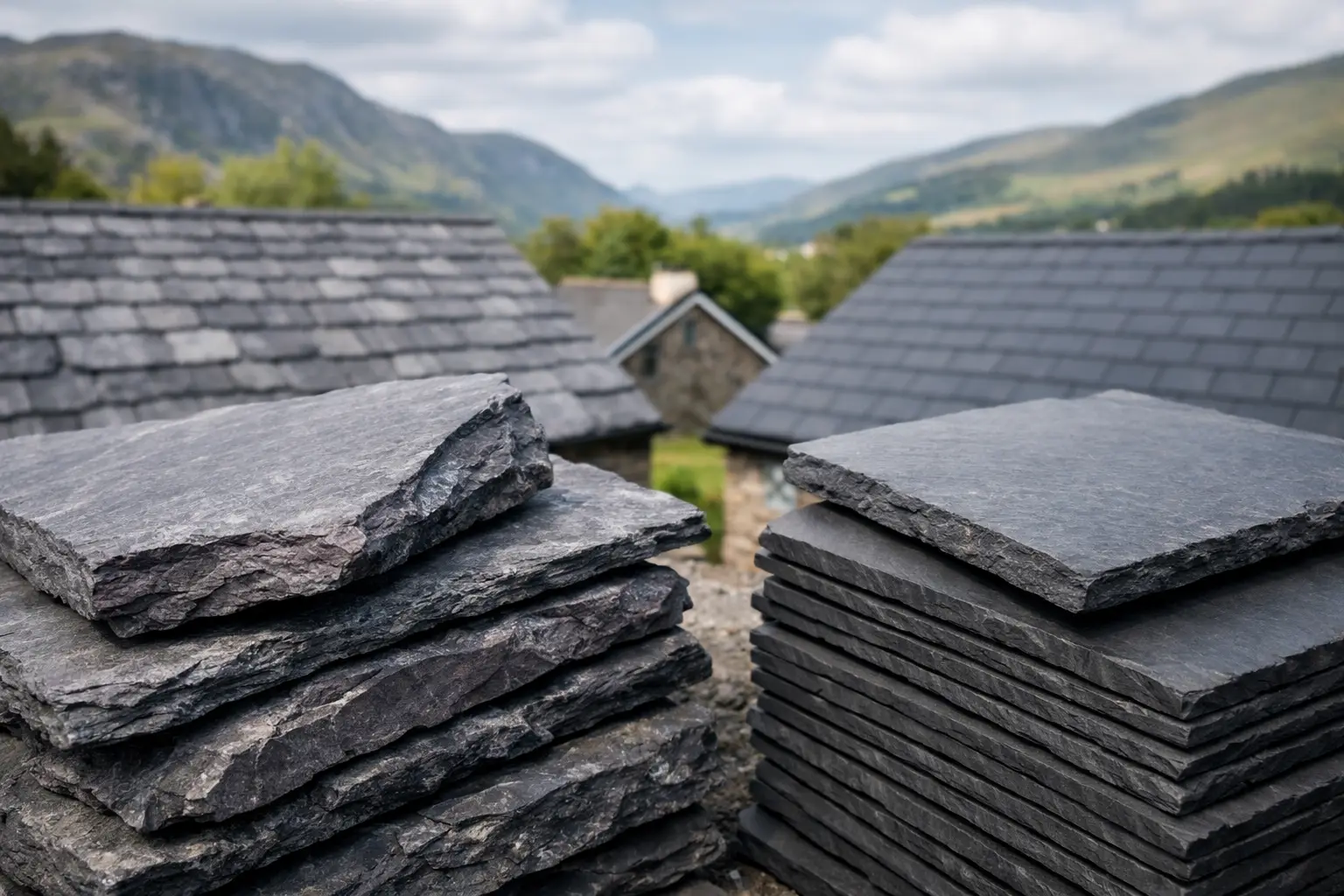
If you are weighing up Welsh slate or Spanish slate, the right answer usually comes down to the roof in front of you rather than a simple price comparison. A listed cottage, a Victorian terrace needing patch repairs, and a new-build extension will not have the same requirements. Slate choice affects appearance, lifespan, resale value, planning compliance and how easily you can match future repairs.
For contractors and property owners alike, this is one of those decisions where the cheapest square metre rate can become the most expensive mistake. Slate is not just a finish. It is part of the roof system, and when you are trying to match existing courses, maintain character or build in long-term reliability, the source and quality of the slate matter.
Welsh slate or Spanish slate – what is the real difference?
At a basic level, Welsh slate is known for its long life, distinctive appearance and strong reputation on heritage and high-end roofs. Spanish slate covers a much broader part of the market. Some Spanish slates perform very well, while others are chosen mainly because they are more affordable and readily available.
That difference in range is important. Welsh slate has a narrower identity in the market because it is associated with established quarries, recognised quality and proven durability. Spanish slate is not one single product standard. It can vary significantly by quarry, thickness, grading, texture and consistency. Anyone asking whether Welsh or Spanish is better needs to compare like with like, not just country of origin.
Appearance and roof character
On period properties, appearance is often the first issue and the one that creates the biggest problems when the wrong material is chosen. Welsh slate typically has a tighter, more refined look with a consistent, high-quality finish. It sits well on heritage roofs where the existing character is part of the value of the building.
The colour can also be a deciding factor. Welsh slate is often selected for its classic blue-grey tones and the depth of finish that comes with age. Reclaimed Welsh slates in particular tend to weather beautifully and are often the best option where visual continuity matters.
Spanish slate is available in a range of shades and finishes, usually darker greys through to blue-black tones. On a complete new roof that may be perfectly acceptable. On a repair to an older roof, it can stand out more than expected. Even if the nominal size matches, the surface texture, thickness and edge finish can make the patch obvious from ground level.
That is why repair work is different from specification work on a blank canvas. Matching the roof already in place is often more important than choosing what looks best in a sample.
Lifespan and long-term performance
Welsh slate has a long-established reputation for exceptional service life. Properly laid and maintained, it can last for well over a century and often much longer. That track record is one reason it remains the benchmark for premium and heritage roofing.
Spanish slate can also perform well, but lifespan depends heavily on grade and source. Higher-quality Spanish slate can provide good long-term service, especially on straightforward modern roofing projects. Lower-grade material may be more prone to issues such as variation in thickness, inconsistent durability or a shorter practical lifespan.
This is where buyers can get caught out. Two loads of Spanish slate may look similar on paper but behave very differently on the roof over time. If the product has been selected purely on price, without proper attention to grading and suitability, the saving at purchase can disappear into earlier maintenance, sorting time on site or premature replacement.
For many trade buyers, the question is not whether Spanish slate can work. It is whether the specific slate being supplied is consistent, properly graded and right for the pitch, exposure and property type.
Cost – upfront spend versus whole-life value
The price gap is usually the reason this comparison comes up in the first place. Welsh slate generally commands a higher price, particularly where quality, provenance and matching are important. That is not just a branding issue. It reflects durability, limited supply and the demand for authentic material on period and prestige projects.
Spanish slate is often chosen because it offers a lower entry cost. For full re-roofing on a tighter budget, that can make it an attractive option. It may also suit projects where heritage matching is not a concern and where the client wants a natural slate roof without the premium associated with Welsh material.
But cost should be judged over the life of the roof. If Welsh slate lasts substantially longer, retains a more desirable appearance and avoids mismatch issues on protected or character properties, the higher upfront spend may represent better value. Equally, if the project is a modern extension where visual matching is less critical and a good-quality Spanish slate meets the specification, paying for Welsh may not be necessary.
There is no universal rule here. The best-value slate is the one that fits the building, the budget and the expected lifespan of the project.
Heritage work, listed buildings and repairs
This is where Welsh slate often moves from preference to necessity. On listed buildings, conservation-led refurbishments and period properties with surviving original roofs, retaining or matching the existing slate is often the correct route both visually and practically.
Reclaimed Welsh slates are especially valuable where only part of a roof needs attention. Storm damage, isolated failure or phased repair work rarely call for a completely different slate. They call for a credible match in size, thickness, colour and weathered finish.
Using new imported slate on an older Welsh roof can create immediate visual inconsistency. It can also affect the character of the building and, in some cases, complicate planning or conservation expectations. Heritage roofs are not improved by near enough. They are improved by using materials that respect what is already there.
For that reason, reclaimed stock remains an important option in the market. It gives roofers and property owners a route to source genuine slates that sit naturally alongside existing material rather than competing with it.
Welsh slate or Spanish slate for a full re-roof?
For a complete re-roof, the decision is usually more open. If the property is modern, the budget is controlled and the specification is practical rather than heritage-led, a good-quality Spanish slate may be entirely suitable. The key words there are good quality. It should be sourced from a reputable supplier who understands grading, consistency and roof application.
If the property is a high-value period home, a traditional farmhouse, a church building or a prominent heritage asset, Welsh slate is often the stronger choice. It supports the architecture, protects the long-term appearance of the roof and aligns with the expectations attached to older buildings.
There is also a middle ground. Some clients want the look and service life associated with traditional slate but cannot justify the cost of new premium material across a whole roof. In that case, reclaimed Welsh slates can make strong commercial sense, particularly where authenticity and sustainability are both priorities.
Supply, consistency and what to ask before you buy
The biggest practical issue is not the country label on its own. It is whether the slate has been properly assessed before it reaches site. Roofers need to know what they are getting in terms of size, thickness, finish and usability. Property owners need confidence that the roof will look right and perform properly once fixed.
That is why specialist sourcing matters. A merchant dealing in reclaimed and heritage roofing materials should be able to discuss slate dimensions, approximate coverage, thickness variation, visual character and suitability for matching work. On reclaimed stock, inspection and sorting are especially important. On imported slate, consistency and grading are just as critical.
If you are comparing quotations, ask what slate is actually being supplied, whether it is suitable for the property type, and how close the match will be if the work is a repair rather than a full strip and re-cover. A vague line item for natural slate tells you very little.
Which one should you choose?
Choose Welsh slate when the roof demands authenticity, proven longevity and a close visual match, especially on period and heritage buildings. It is also the stronger option where long-term value outweighs a lower initial spend.
Choose Spanish slate when the project calls for natural slate at a more accessible price point and the property does not depend on a traditional Welsh appearance. Just be selective. Quality varies, and the right Spanish slate is very different from the cheapest one available.
For many repair jobs, the answer is neither new Welsh nor new Spanish, but reclaimed slate that matches what is already on the roof. That is often the most sensible route both aesthetically and technically.
A roof only looks simple from ground level. Up close, every course tells you what kind of slate it wants next.

